We welcome as members individuals and organisations who care for Hammersmith

As a Member, you will receive regular updates outlining our activities, giving you the opportunity to participate in consultations and campaigns. We'll invite you to our Awards Evening and AGM, and other events. Members are always encouraged to take an active part in the work done by the committee – come along and see if you can help.
The membership year runs from 1st Jan, and only costs £6 for individuals, £8 for couples or families, and £15 for organisations. Additional voluntary donations always welcome.
 Join Here
- Published: 12 Jun 2023

RMH Block A – May 2023 proposal
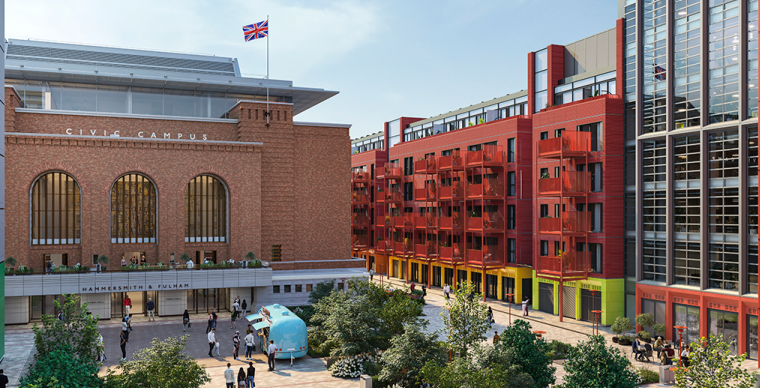
Ideas for the development of the Ravenscourt Park Hospital campus are beginning to emerge from the new owners Telereal Trillium with their architects SPPARC Studio. There’s an interesting ‘information pack’ with historic photos and maps on their project website; here we include the key views from the May 2023 exhibition boards.
We’ve also seen detailed comments from the two adjoining Residents Associations – Ravenscourt Gardens and Ravenscourt Square – who both have significant concerns about adjacency and the effect of access requirements for a substantial housing development on their doorsteps. These have been submitted to the council, and while noting them, here we look more at the effect the proposals would have on the Grade II* listed building and its setting.
As proposed, the development would harm the buildings it’s supposed to improve.
The scheme proposes that the 1930’s hospital buildings would be enlarged by adding two, three or four upper floors, generally set back from the building edge, and faced with saw-tooth profile glazed curtain wall shown in the CGI’s above. The roof extensions would be limited to one level on the outer blocks of the principal building “Block A” facing Ravenscourt Park, which would be refurbished and converted for a community use yet to be defined; the remaining buildings would be refurbished and converted to residential use. We would welcome an open and inclusive process of co-design to evaluate possible future uses of Block A, to arrive at a defined and sustainable use that works for the community and developer.
The 1978 surgical and ancillary building on the northwest corner, beside Ravenscourt Square, is proposed to to be replaced by a residential block and a separate care-home block, shown as undefined white blocks “E” and “F” in the model above.
The hospital building is a stand-alone architectural whole, a form which does not readily invite extension. It employs a restrained, consistent architectural language, with regular geometric brick forms, orderly window perforations, playful articulation separating the building elements with circular balconies and pavilions, and a bold, heroic principal block facing the park. These unique qualities would be overwhelmed by the changes proposed. The roof extensions would impose an architectural levelling-up, bringing an inappropriate sameness to the distinctly separate elements of the buildings. The eye-catching angular glazing design would be at odds with the quiet regularity of the buildings below, and would hardly reflect the visual subservience required in planning policy.

RMH Blocks E & F as proposed May 2023
The new buildings proposed for the northwest corner “E” & “F” are shown only in diagram form on the display board image adjacent, and further design information is needed, including contextual views showing the relationship of the new blocks to the hospital buildings, the overall campus, and the neighbouring buildings of Ravenscourt Square – especially Grade ll No. 11, and locally listed No. 17 on the corner.
There is also proposed access East-West through the site, between blocks “D” and “E”, which is not currently possible, and it’s fair the say that there are mixed views about this proposed feature in the adjoining communities.
The NPPF (National Planning Policy Framework) sets out the relevant policies for listed buildings, and requires that alterations proposed to heritage assets are assessed by Historic England according to the extent of harm they would cause, and states that ‘…substantial harm to a grade ll* listed building should be wholly exceptional’ (NPPF para 200). Some concessions may be allowed where the changes would support the future conservation of the building, or would bring about significant public benefit.
These criteria rule out the current proposals: the extensions would bring very substantial harm to this wonderful building. While they could generate funds for the conservation of the building and gardens, the accommodation they provide would bring no benefit to the public.
Conclusion
The early opportunity for public involvement is welcome, and we have carefully reviewed the May 2023 proposals, and set out our response above, together with a letter containing the same points to the council planners.
Continued
- Published: 14 Apr 2023

Shepherds Bush Market proposal, from Goldhawk Road
Property company Yoo Capital, who are currently undertaking the ambitious expansion of Olympia, bought Shepherds Bush Market in 2020. Over recent months we’ve advertised and attended a number of public consultations, revealing plans for the area. These include (i) the redevelopment of the Old Laundry site, the triangular area behind the east side of the market, and (ii) the upgrade and renewal of the market facilities.
Two buildings are proposed for the Old Laundry site: (i) a mixed-use commercial building, of 6 upper floors, ground floor and mezzanine, and a full basement floor below, together providing for office space and Imperial College research facilities, and (ii) located on the north end of the site, a smaller building providing 40 affordable flats in 5 upper floors and ground floor.
This is a dense, complex scheme, inserting a substantial building bulk in a site landlocked behind the 2-storey shop terraces of Goldhawk Road, and 2 & 3-storey residential terraces of Pennard Road. For reference, the main commercial building is the same height as the Dorsett Hotel.
Commercial building

Shepherds Bush Market proposal, looking approximately North from Goldhawk Road
Looking North, this building would be visible from Goldhawk Road, rising above the shop terraces, and the substantial stepped, craggy elevation would not be out of place in the busy mix of style and scale, and could enrich the visual jazz of the area. From the west the building would be seen chiefly from the passing trains, and would form a new, east side to the market thoroughfare, with stalls partly tucked into the ground floor area, this would create an enclosure which could bring a sense of urban intimacy to the market thoroughfare, akin to the feel of Borough market.
On the east side, the building would be a dominant presence for the adjacent terrace of houses on Pennard Road, close to the rear gardens and crowding the outlook from rear windows. The design of the new building acknowledges this problem, and brings some mitigation with progressive stepping back at upper levels, and a landscaped area alongside the Pennard Road boundary: rules for this arrangement are set out in the Local Plan SPD (Section HS6), and the developer advises that the proposals comply with the dimensional restraints required. Resolution of this possible discord is fundamental to the development concept.
Continued
- Published: 22 Mar 2023

OPDC PlaceLab1 – 15 minute city
We attended the first Placelab session held next to the North Acton gyratory at Gypsy Corner, to help shape plans for Old Oak West. Representing our affiliate Old Oak Neighbourhood Forum, Henry Peterson was there, as were a good cross-section of neighbours and resident groups. For those of you unfamiliar with Old Oak, please read Henry’s piece Taking a View from last year, where he sets out the issues around this Mayoral Opportunity Area, and its planned expansion westwards in the wake of the CarGiant debacle.
Currently the area comprises around 90 acres of post-industrial no man’s land, and is proposed to provide 9000 homes and 2.5m sq. ft. of commercial space to the northwest of Victoria Road, between North Acton and Harlesden/Willesden Junction.

Old Oak West
With notable resonances of Earls Court, including comparable planned housing density of 250/ha, though twice the land area and in a rather less salubrious spot, the main development area is triangular in shape and similarly surrounded by railways, which provide mixed blessings for access, but it has the benefit of the Grand Union Canal rather than the West London Line through the middle. It doesn’t include the large Elizabeth Line depot alongside, because as reported, someone unfortunately forgot to specify foundations strong enough to support over-development! HS2 enabling works currently occupy a significant portion.
Why is it important to Hammersmith?

Boat race + North Acton towers [BBC]
Though strictly in Ealing, it’s right on our borders, closely associated with Wormwood Scrubs and HS2/Oak Oak Common, and your skyline is likely to be affected as it has been already, by the 55 storey tower pictured below and adjacent, during the boat race. We think Historic England could ‘champion England’s Heritage’ better by proactively managing this ‘listed building setting’ rather more effectively.
If the developers have their way unfettered, as Henry describes, and as is the M.O. in Opportunity Areas where the normal planning shackles are largely off, they’ll add several more, and significantly overbuild. The leader of our council was the sole dissenter at the Local Plan adoption last year as Henry describes – the plan really must be deficient.
Workshop
The workshop format was a sort of mini-charrette organised on behalf of the Mayoral development organisation, OPDC, by consultants Soundings, where about 30 people spread among 3 tables, were asked a series of questions about desirable locations for particular types of infrastructure, beit shops, parks, workspace, housing etc. There were, unsurprisingly, no picture cards of anything like Pilbrow’s planned 50+ storey towers for Imperial at 1 Portal Way.

Old Oak West placemaking
The fashionable subject of 15 minute cities was aired as we show above, which these days is a byword for walking and cycling. We were asked to prioritise what type of infra should be located in annular zones 5 minutes’ walk apart from the centre. The range of views you can see shows how difficult placemaking can be, not least with a lack of an identifiable ‘centre’ or even definition of what a centre looks like, causing significant consternation on our table. In another similarity with Earls Court, we didn’t get a strong steer from OPDC as to any particular identity, making the area again fall into the awkward category of all things to all (wo)men.
Continued
- Published: 01 Mar 2023

Earls Court site panorama, on “The Table”, looking approximately North. Temporary BBC Experience under construction in foreground.

Earls Court site panorama – TfL’s Lillie Bridge Depot
Earls Court is one of those projects that keeps on giving. We wrote about the shenanigans surrounding former owners CAPCO at the hand of a well-known former prime minister, while reviewing 25 years of property development in one of our 2021 lockdown projects.
Background
![Earls Court Crane March 2017 [Keltbray]](https://i0.wp.com/www.hammersmithsociety.org.uk/wp-content/uploads/2023/03/EC-Crane-Image-March-2017.jpg)
Earls Court Crane March 2017 [Keltbray]
Earls Court and Earls Court 2 were totally demolished over the period 2015-18, leaving the huge empty, but complicated, 40 acre site pictured, straddling our borough and adjacent RBKC. At a stated demolition cost of £97M, needing the world’s largest crane to lift 61 of the up to 1500 tonne beams, this and other factors inevitably broke the former owners, never mind the carbon budget, with over 15,000 tonnes of concrete beams removed.
On the LBHF side, there was a long-running battle over ownership of the social housing – Gibbs Green and West Ken. estates – which were once sold to CAPCO and eventually returned in a deal with Delancey and the council in 2019. The net effect is that by not involving the adjacent estates, this master-plan covers the smaller area of 40 acres compared to the original CAPCO proposal that foundered, covering around 80 acres. According to some resident representatives we met, the condition of parts of these estates remains poor.
Enter the Earls Court Development company (“ECDC”) with Delancey and others joining forces with TfL again. The recent site walk showed us just how much railway there is around and under Earls Court, and why little can be done without TfL involvement. Blessed with a station at each corner (Earls Court, West Brompton and West Ken.), the site unsurprisingly benefits from the maximum 6b PTAL rating.
Over the last couple of years, ECDC have run a number of workshops and local community engagement exercises to steer the master-plan, several of which we advertised to members and/or attended. Now it’s ready for all to see, and exhibition details appear in our diary (starting 23rd Feb), together with a webinar and public meeting date.

Earls Court model looking approximately SW. The white translucent model (foreground) is the consented Tesco redevelopment (100 West Cromwell Road)
The scale of the proposed development is as immense as earlier the demolition task, with buildings up to 39 storeys around the existing landmark Empress State Building (ESB) shown, itself 31 storeys high. In West London, this makes the proposed tall buildings second-only to the North Acton towers – no boasting matter.
Railways
The model shows that the masterplan uses much of the railway and existing infrastructure to guide new structure placement – the routes through the site are predominately directly above the tunnels which are only just below the surface and insufficiently strong to be built on. A pleasing advantage of this more carbon-friendly approach, is that the routes have to be curved, indeed some of the smaller scale housing in the foreground (above) is in crescent format, the like of which we’ve rarely seen since the brutalist Hulme or Golden Lane crescents of the 60’s, or subsequently more successfully at the Barbican.
“The Table” is a concrete cover over part of the West London Line that bifurcates the site, forms the borough boundaries and was the camera location for the above panoramas. Built as part of the base for former Earls Court 2, it’s of unknown strength and therefore assumed too weak to be built on, but forms an above/below grade datum for much of the site. Servicing of all varieties is most definitely below stairs.
Tall buildings
Continued
- Published: 15 Nov 2022

RMH isometric from https://www.ravenscourtparkhospital.info
Earlier this month we met with the new owners of RMH, Telereal Trillium, their planning consultants, Turley, and Trevor Morriss of SSPARC architects appointed for the redevelopment, who you may remember giving a presentation on the Olympia redevelopment at our AGM in 2019.
They gave us a rundown of Telereal Trillium’s background (mainly a large portfolio of former public sector property, a large proportion of which were in the BT and DWP estates, formerly owned by Land Securities). This is not their first listed building redevelopment – the example they gave us was the one on the website, the Grade II listed Tooting Police Station. As it’s early days, there were no more details available other than that on the website boards, shown above and on their website.
Telereal Trillium describe themselves as an £8 billion family owned property development company owned by the William Pears Group. They say that they are not “operators”, they have moved from being owners to owner/developers recently, and are not currently planning on going further into running buildings.

RMH block plan view
The 80’s block at the back of the site shown in pink adjacent, “Block E”, was suggested as the location for the main redevelopment activities, the rest of the estate is more a case of preserve, enhance and convert into luxury accommodation, with restoration of the surrounding gardens, which is good news.
Discussions with the council started in June, but there have been no formal planning pre-application meetings yet. We mentioned that we’re extremely keen to engage early, offering our experience and local knowledge on behalf of the wider community. Meanwhile we’re looking at how National (NPPF), London-wide (London Plan), and borough (Local plan) guidance applies to this project.
The large public spaces in the listed parts of the estate (“Block A”) are where the community use and engagement is critically important. We discussed possible educational and other uses, but only in outline at this initial stage.
We’re pleased that this important building has an engaged new owner, and look forward to its unique interiors being open for public enjoyment again in an appropriate form. Your suggestions for suitable uses are most welcome.
- Published: 26 Oct 2022

King Street – M&S proposed frontage elevation
Many of you will have been to the exhibition at the Lyric recently to view the proposals and displays. We exhorted the development team to show full elevations, but the best we achieved at the time were partial CGI images. They have now come forward with North and East elevations, which are on the consultation website, along with the exhibition boards, and above / below, and appear to be part of a pending planning application. The large towers in the background are the proposed Landmark House, as yet unbuilt, and we believe subject to change of ownership, and therefore possibly design change too.
As you can see, our very approximate CGI in the earlier article was reasonably accurate dimensionally, if not aesthetically, and at 47m, this undistinguished proposal is of alien scale, substantially higher than the Lyric, and a large intrusion on the King St. horizon. The 15m setback from the street helps reduce this intrusion only marginally, which you can see below.

King Street – M&S elevation, East
More importantly, acceptance at this dimension would set a bulk and height precedent along King St., much as we’ve recently seen used in the 66 Hammersmith Road proposal, especially in the continuing absence of an issued Town Centre Masterplan, or planning brief, a subject on which we repeatedly remind the council is nearly 5 years overdue. We haven’t even mentioned a likely West-East prevailing wind tunnel, increased if others were to follow suit.
Continued
- Published: 26 Oct 2022

Black Bull Tavern 122a Holborn, 1901 [pubwiki.co.uk]
The Black Bull was modelled in the early 19th century by Obadiah Pulham from Pulham & Son. In Victorian times, this was a well-known Suffolk-based firm specialising in the production of garden ornamentation for prestigious sites across the country and the material used would have been ‘Pulhamite”, a particular blend of artificial stone they had devised.
Brought into London by Thames barge, the bull’s destination was to serve as the sign for the Black Bull coaching inn at 122a Holborn, an establishment mentioned by Dickens in Martin Chuzzlewit. He adorned the front of that building until 1904 (seen below the second floor window alongside the Black Bull nameplate), when the old inn was demolished to make way for a corner extension to the original Gamages department store.

Black Bull transitioning to Gamages, 1904, [pubwiki.co.uk]
Reporting this event with some regret as the loss of a favourite destination for American tourists, the New York Times wrote on May 20, 1904: … “the old Black Bull of Holborn was lowered from his perch yesterday, and his retirement from public life marked the demolition of the famous old London inn that bore his name”.

Sir William Bull MP’s offices at 269 King St, bull over entrance [H&F Archives]
But saved from destruction by the Hammersmith MP Sir William Bull, our bull was transported over to King Street and relocated above the entrance of the Georgian terraced offices of the MP’s law firm, then at number 269. There he stood for over half a century until those buildings too were demolished.
Rescued again, he was brought down to earth to be unsuitably positioned head-on, on a plinth in the forecourt of an undistinguished ‘estate-style’ pub called the Ravenscourt Arms, later renamed the Black Bull, built in 1966 on the site next to Vencourt House, now a Premier Inn, at 257 King Street. In recent years, that pub too closed, leaving the Black Bull of Holborn stranded in the tumbleweed, and once more seeking a suitable Hammersmith home.
The Ravenscourt Arms was owned by Charrington, its successor the Black Bull was part of Punch Taverns, but according to the council, current ownership looks to be connected to the hotel adjacent. Do you know any more? We, alongside Heritage of London Trust, would like to have him restored, and found a more appropriate home.

The Black Bull in King St. 2022
- Published: 27 Sep 2022

66 Hammersmith Road – Big Yellow – 2022 proposal
We wrote about this site nearly five years ago, and in summary, our view then was that it was rather overbearing on the listed buildings opposite, and adjacent conservation areas. Since then, Olympia has come along and given us a whole new perspective on large redevelopments in the vicinity. You can see a CGI of their (under construction) theatre block in the foreground.

66 Hammersmith Road – earlier 2017 proposal
The 2017 plans will lapse in November, and though not being pursued, importantly were consented under 2017/04752/FUL a full two years after being lodged. This means that it’s (legally) significantly harder to roll back from such a substantial scale, and goes a long way to explaining why the new proposal bears more than a passing resemblance to the earlier one.
As an aside, we’d urge the planners and developers to spend a little more time meaningfully consulting earlier in the process with LBHF setting a high bar when considering such substantive impacts on the townscape. Hammersmith Road, like the Town Centre, needs a planning brief so that buildings are not proposed willy-nilly without context. There are several 1980’s blocks along the road where Cadby Hall once stood, and unless forethought is applied, a mish-mash of undistinguished buildings may soon be proposed – notwithstanding the present object – to replace the existing ageing and undistinguished mish-mash. Despite boilerplate sustainability statements, such substantial concrete-and-steel proposals are unlikely to feature as highlights on the council’s Climate Emergency agenda, or tick the boxes of the Architects’ Journal RetroFirst campaign, already in its fourth year. We’re again being “consulted” moments before the public, which begins to look like consultation lip-service, and means that in effect little change can be made.
Architecturally, the expressed external structure introduces an inappropriate visual complexity which at the same time creates a perception of additional bulk at roof level, with an unnecessarily prominent parapet in the sky silhouette.
Close by in the next block is the Grade 2 listed façade of Olympia, soon to be joined by dominant neighbours – the jazzy new theatre on the Olympia west side shown above, and the rooftop hotel on the east side. The busyness of the proposed façade of No. 66 would add to this discord. CGI images from a viewpoint west of No. 66, and incorporating Olympia G theatre and the retained Olympia façade, would be an instructive exercise in considering the contribution the proposals would bring to the setting of the listed building.
Some good news!
The proposed building is set back a little more than the 2017 version shown, and is not significantly larger. It’s not painted bright yellow, but the developers might like to consider just how far a little red goes. The public realm is better served by the slightly improved landscaping, and the detailing of the building is better. Access via Blyth Road is a little better than as currently via the end of Lyons Walk, which allows the latter to be better landscaped (by LDA design), and coordinated with Olympia adjacent.
There is some community space, which, given the Lyons and LEO heritage, might best serve as a computer club or similar technology education facility, suitably themed, perhaps involving an association with local schools such as Avonmore primary? The location around the LEO plaque itself is planned to be improved, or the plaque better sited – we’re in contact with the LEO Computers Society who are also being consulted.
We requested the developers look at the space around the bus stop adjacent, the pavement around which is currently very cramped, though changes in the cycle lane alongside, post-Olympia, may change all this.
A public consultation exhibition is being held on 5th October – details are in the diary – and there’s a consultation website with a few more images and details. Let us know what you think.
Continued
- Published: 23 Aug 2022

M&S Hammersmith King Street – historic image – 50’s/60’s
You may have seen the website https://27kingstreet.co.uk recently created for a consultation related to the proposed redevelopment of Marks and Spencer in Hammersmith. Like many high street shops, this location has become a little tired in the nearly 100 years of its existence, and our M&S has additionally had a curiously broken roofline for as long as anyone can remember, caused we’re told by partial demolition and the machinations of former planning constraints. The above historic photo shows it as it was before its front teeth fell out.

M&S visualisation 27 King St
Fresh from a dressing-down over the proposed Oxford Street redevelopment with Pilbrow & partners, M&S have unsurprisingly chosen a different group to work with here – Reef Group – and with rather different intents. We were provided a fuller picture of the plans for a welcome refurb at a presentation meeting with the developer and M&S in the first week of July.
The plan, though only mentioned in passing on the above website, is a complete rebuilding of the site to create 400 student rooms in a substantial 10 storey block above the store, thereby we assume funding its redevelopment, which like Chiswick’s, would become a larger, but food-only affair of 15000 sq. ft (currently 6000), and based on a market hall concept developed in Clapham. The façade would be retained, the existing gaps filled sympathetically, and the 10 storey block would sit behind and above the façade. This would considerably improve the food offering, but other offers, such as clothing, would become click-and-collect only.

M&S visualisation with the proposed Landmark House some way behind (22 storeys). The proposal is 10 storeys + podium.
Unfortunately the website visualisation provided (reproduced above) is at such an extreme angle as to mostly hide this substantial building, which is higher than the Broadway buildings, and about the same as the striped glass-clad office building next to the Hammersmith & City Line station, known officially as ’10 Hammersmith Grove’.
We were provided with the adjacent visualisation, still at a rather unsatisfactory angle, and over the long hot weeks since, we’ve been pondering the developer’s coyness at showing the scale of the student blocks, and their effect on the streetscape, light and the Lyric. We’ve asked for ‘Verified Views’ or ‘Accurate Visual Representations’ (AVR) more than once now.
With time passing and the requested visualisations unavailable, we had little option but to use the above information to project our own approximation overlaid onto a Google Earth 3D view of King Street, which is shown below. It uses the above visualisation to project the view at an appropriate angle, showing the approximate scale of the proposal.
With the Lyric on the North side, predominant light from East, West and importantly the South, is not blocked. By contrast, this proposal would cast a substantial shadow over the street, Lyric and particularly Lyric Square, significantly reducing it’s appeal.

Marks and Spencer proposed redevelopment – approximate 3D overlay onto ‘Google Earth’
Continued
- Published: 27 Jun 2022

27 of yore, at Hammersmith bus station
There’s some evidence that politics are again in charge of poor transport policy. Those of you taking note of the words in the article on Cycleway 9 just three months ago, may be rightly disappointed that the gambit proposed – actually somewhat tongue-in-cheek – was in reality already planned.
“Perhaps this is part of the grand plan, to make TfL redundant, the Mayor abandon most of his responsibilities, and the great unwashed go back to using their feet ? “
A logical extension of converting peak-time multipurpose bus lanes into full-time single-purpose cycle lanes – not just in Hammersmith – but across London, with a consequent disbenefit to 97% of the population, was that something like this could well be on the way.
While the Mayor of London blames a 4% central government funding cut, the Transport Minister has responded that the cuts were already planned over a year ago, and there’s some evidence deep in a sustainability plan from Jan 2021 to support that. One side of the political divide may also be playing games with the other, choosing to “park its tanks on the opposition’s lawn” by perhaps imposing more cuts on their supporters patch, and also meaning that our bridge continues to be unfunded as the Cinderella of this melodrama. Overall, the reduction in total peak bus frequency is 424 to 324 per hour, or a 25% reduction in the affected services, according this spreadsheet made from TfL data by Sian Berry, chair of the GLA transport committee, which might reasonably surprise you.
Please complete the consultation by 12th July so that there is a record of dismay, regardless of outcome. The story is covered in local press in more detail, the summary being that some of the oldest routes such as 11, N11, 14, 27, 31, 49, 72 and 74 will be cut, or no longer serve the borough, The 27 is again a pawn in this game, it having already been cut back as the picture above reminds us – it went as far as Chiswick Business Park in recent memory. It’s now proposed to replace the C3 route where it’s never ventured before, and no longer serve H&F at all.
Continued

News Topics
Our Diary
-
2026 AGM and Awards Evening
📆 Tue 13th Oct | 18:30 - 20:30
🚩 The Sulgrave Club, 287 Goldhawk Road, W12 8EU (map)
-
Committee meeting
📆 Mon 23rd Nov | 18:00 - 20:00
Recent News


The area outside Goldfinger’s Grade II* Greenside school has been transformed with a landscaping scheme funded by the Council’s Green Investment scheme …


Local and Affiliate News
One news item from each selected source – more on our Local and Affiliate news page. Subscribe to our weekly highlights
- Alan Read to give talk for the Chiswick Arts Society Read more »
 Alcohol can be served and music played until 3am at the site Read more »
- Earlier this year, I decided that early next year I would put On London into a state of suspended animation – or… Read more »
 Capacity to Build is a skills and capacity funding offer by MHCLG to councils, delivered in partnership with Homes England and the… Read more »
 We have welcomed the decision of an inspector acting for the Welsh Ministers to refuse commons consent for an extension of the… Read more »
- Shepherd's Bush Council Taxes are scheduled to rise very significantly as the Government changes the way it funds local councils. Because Shepherd's Bush… Read more »
 What do you think of when you hear the term “Health and Wellness”? a spa? A meditation app? A suite of supplements… Read more »
 Next up cellist Leo De Flamminies and pianist Enoch Wong perform Read more »
- Get your little ones ready for a half-term adventure as In Bloom comes to Lyric Square from Sunday 4 October to Friday… Read more »
- Dear all,URGENT RESPONSE REQUIRED … We wish to bring the following licensing requests to your attention as the KFC at 171 Uxbridge Road is… Read more »
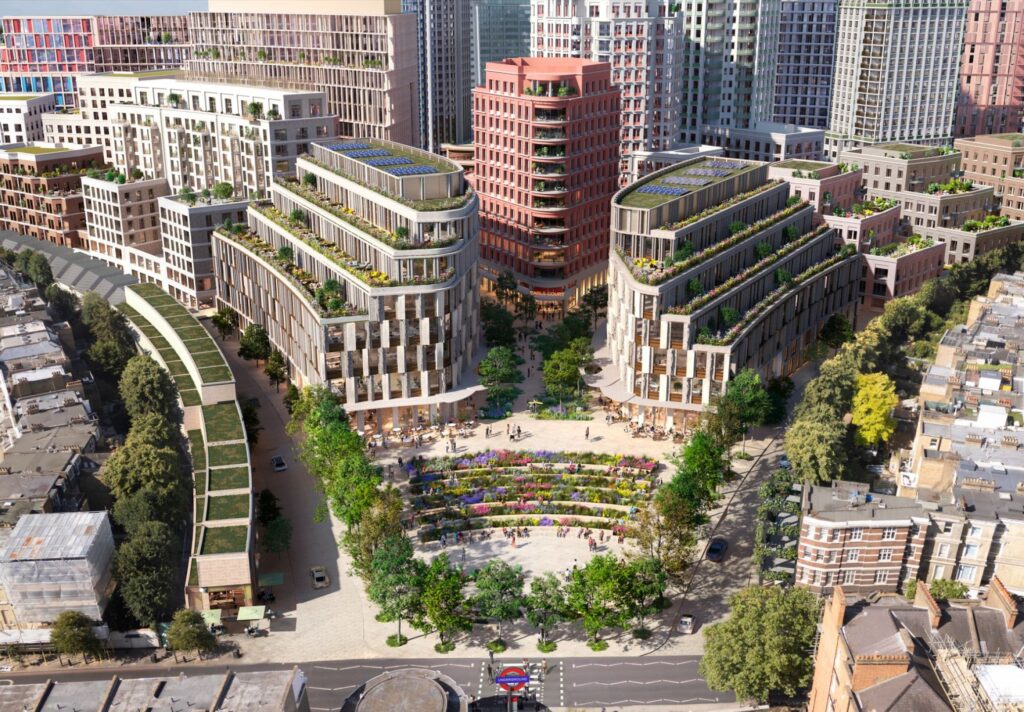 London Plan policies on housing density on major sites have long been based on net rather than gross residential densities. These net… Read more »
- The Annual General Meeting (AGM) of the Friends of the Scrubs will be held on Wednesday 30th September at Brickfields Hall, 68A Eynham Road,… Read more »
- Duck food, sourced and packaged by The Friends of Ravenscourt Park is now available from the Paddenswick Tea Gardens cafe! Buying a… Read more »
 It’s that time of year again! Our AGM is your chance to hear how the association has got on over the past… Read more »

Most Popular Articles This Week


 ©2026, The Hammersmith Society | Privacy | Contact | Join | @ Subscribe | ⓘ
Campaigning for over sixty years