We welcome as members individuals and organisations who care for Hammersmith

As a Member, you will receive regular updates outlining our activities, giving you the opportunity to participate in consultations and campaigns. We'll invite you to our Awards Evening and AGM, and other events. Members are always encouraged to take an active part in the work done by the committee – come along and see if you can help.
The membership year runs from 1st Jan, and only costs £6 for individuals, £8 for couples or families, and £15 for organisations. Additional voluntary donations always welcome.
 Join Here
- Published: 30 Aug 2020
Health scares, 18 metre masts, autonomous vehicles, economic recovery, critical national infrastructure, Huawei… It’s a long list.

2020/01852/TEL56: Rylett Road / John Betts House: 5G proposed mast and cabinets
In Hammersmith we’ve started to see planning notices for 5G base stations, ironically mostly from the company named Three, and yes, since you ask, they are using Huawei.
From the Society’s perspective, our concerns centre on the mast height, positioning, and the associated, rather retro, street clutter. There’s some further reading at the foot of the article, but first, to get some perspective, let’s get our terminology clear, review the most prevalent public concerns and take quite a hard look at the benefits – both real and more far-fetched.
The most widely used 5G band in the UK will be 3.6GHz…
…5G is just as safe as 4G, 3G and GSM.
– Institution of Engineering and Technology
A quick canter through some confusing G’s

1G to 5G phones
Here 1G means ‘First Generation’ AKA Analogue ‘brick’ phones of the 1980’s, 2G (AKA ‘GSM’ or ‘Global System for Mobile Communications’), a typical Nokia from the late 1990’s, 3G, the first phones with really usable Internet connections, and today’s 4G, typified by a smartphone – Apple or Android. There was even a 2.5G and we mention 4.5G later.
The gifts of Heinrich Hertz, or a billion of them, come in the form of a Gigahertz (GHz), the frequency a thousand times the Megahertz we’ve had since VHF FM radio days. 1G to 4G phones have used various radio frequencies over the years, depending on operator and country, from 800MHz up to 2.6GHz, but the operating frequency used doesn’t directly affect the data speed as far as the user is concerned. WiFi is sometimes confusingly termed 2.4G or ‘2.4 Gig’ or ‘5 Gig’, referring to bands – 2.4GHz (the same frequency as a microwave oven but a minuscule fraction of the power) and 5GHz: a less congested, shorter range band that has nothing to do with 5G: 5th generation mobile technology.
In the digital world we similarly have Megabits describing the speed of received data – whatever the technology that delivered it – and the Gigabit of your scribe’s home, and likely your office’s high speed Ethernet wired network. We won’t discuss the many flavours of WiFi on top of the frequency bands mentioned: A, B, G, N AC, AX… a story seemingly involving yet another G, until WiFi leapfrogs 5G by changing it’s letters to numbers, becoming WiFi 4, 5, and 6, and in future extending into a new 6GHz band. That’s the GG’s corralled 🐴
Members will doubtless have read the conspiracy theories about 5G and the pandemic, as well as other suggested health dangers. However, for 5G, the radio spectrum is in fact being used in very much the same way as earlier generations of mobile technology – even reusing some of the same bands – yet more efficiently, and we now have 30+ years of evidence on the effects of electromagnetic emissions from mobile handsets, 1G to 4G. Specific new concerns arise around the possible use of millimetre-band (26 GHz), but this is a long way off being implemented, and only then for some very specific & limited applications due to extremely short range.
The most popular 5G band, 3.6 GHz, is slightly higher than current ranges, the implication may be more base stations as range is slightly reduced, but other bands may be used to compensate. The 700MHz band for example, cleared in June this year (responsible for the loss of several HD TV channels from Crystal Palace), has yet to be auctioned off, but is earmarked by OFCOM for 5G.

Mobile emissions
If you are at all concerned about health effects, first check and understand the implications of the SAR value for your existing 2G/3G/4G phone, which have been published by manufacturers since the days of 2G when such concerns first arose – or better, stop using it now !
Unfortunately in addition to the above health concerns, the 5G cause has been muddied, and probably harmed by overzealous marketing, too many G’s and spurious claimed benefits – we prefer to keep to the tried-and-trusted recipe of ‘more & faster’, on which it certainly will deliver.
Continued
- Published: 06 Jul 2020

12-14 Wellesley Ave – 2019 proposal
The Hammersmith Society is supporting our affiliate, the Brackenbury Residents Association and the local action group in objecting to the development proposed for the former Aston Martin garage at 12-14 Wellesley Avenue.
The application scheme proposes a 3-storey building, significantly higher than the street building line, with 1,800 square metres of office space for an estimated 150 employees, in a street with a residential population of around 80. We reported that an earlier application for a larger scheme was refused planning consent and lost a subsequent appeal – refer to our related stories with more recent coverage in last winter’s newsletter. The current, slightly reduced scheme was again refused consent earlier this year.

Former Nicholas Mee garage, Wellesley Ave
The applicant is appealing against the refusal, and the local residents group is inviting support for their petition against the development.
 Hammersmith Society’s letter of objection
Posted in Consultations News
Tagged Affiliations Ravenscourt/Grove Smaller Developments
- Published: 27 Jun 2020
Civic Voice launched its Manifesto 2020-2023, 50 years after the Skeffington Report on Public Participation in Planning, which arose from growing concern about the top-down nature of post-war planning and development and growing interest in the idea of ‘participatory democracy’ (that ordinary people need to be engaged in decision-making rather than simply voting for representatives to make decisions on their behalf).
 A Civic Voice members survey last year found that 80% of people feel that developers do not effectively engage with the community and 72% said the same about local authorities. Recent research by Grosvenor Britain & Ireland also found a significant distrust of the planning process within communities. Just 2% of the public trust developers and only 7% trust local authorities when it comes to planning for large-scale development.
This week’s news concerning the housing minister, the role of large developers and oblique arguments about viability, plus the role of CIL, brings these issues into sharp focus
The Civic Voice ambition is to move away from ‘confrontation to collaboration’ and from ‘consultations to conversations’. Its manifesto consists of the following three key recommendations to the Government and to Local Authorities, which aim at placing Civic Societies like the Hammersmith Society at the heart of their communities:
- Create a more ‘accessible, balanced and collaborative’ (ABC) planning system with communities at the heart.
- Move towards a citizen-led, participative model of governance for our towns, cities and villages.
- Ensure local authorities have the appropriate resources and proper powers to enhance the historic environment to make better places.
Continued
- Published: 08 May 2020
The Council is struggling to finance the upkeep of its school estate, a portfolio which includes over forty primary schools. Limited funds have been available since the government Building Schools for the Future programme was terminated in 2010, and in March last year the Council introduced a “Community Schools Programme”, proposing to finance the improvement works by the building of affordable housing on school grounds. The programme starts with Flora Gardens and Avonmore Primary Schools.

Flora Gardens School Site
We are concerned at the direction of this policy: the unquestionable priority of good public education facilities does not justify the loss of public open space.
Public open space is sacred, it is a rare and precious commodity, and the acceptance of a practice which permanently removes the open space to alleviate a temporary financial shortfall is a mistake: it erodes the quality of our urban surroundings to the detriment of the public realm, and removes potential sites for future social facilities such as youth clubs and provision for the elderly, but also removes spare capacity essential to accommodate the likely increase in space requirements arising from the current review of school standards.
Continued
- Published: 29 Apr 2020
181 Talgarth Road is the site where the former West London Magistrates building stands, located between the Ark office building and the BP garage, at the foot of the flyover.

West London Magistrates court: Initial design – now superseded
After the closing of the court facilities in 2017, the site was sold for commercial use, and in January 2019 the new owner submitted a planning application for a 800-bed hotel development. The proposals attracted widespread opposition from the local community including the Hammersmith Society, and as a result, in an unusual and public-spirited move, the developer, The Dominvs Group, chose to set aside the application, despite receiving a planning report recommending approval.
After discussions with LBHF, the Dominvs Group appointed a new design team with architects Rogers Stirk Harbour and Partners (RSHP), who are also the architects for the Town Hall Civic Campus project.

West London Magistrates Court: RSHP redesign
The new design team were set to work to a demanding programme, and the Society joined a series of consultation meetings with the site neighbours, in particular the residents of the streets south of the site, whose outlook would have been dominated by the double slab block of the earlier scheme.
A planning application for the new scheme was lodged at the beginning of April, and the Society has now reviewed the proposals and returned comments to LBHF. The application may be viewed on the planning website here: 2020/00915/FUL.
UPDATED: Our detailed review is here:
Letter to LBHF – Hammersmith Society comments
Continued
- Published: 29 Apr 2020

Women’s Pioneer Housing, 227 Wood Lane
We reported in the Winter 2019-2020 newsletter that a proposal was being prepared by Architects Allford Hall Monaghan Morris for a new 25-storey tower block to the north of the A40 on Wood Lane.
The proposals replace Browning House, which is a 4-storey social housing block owned by Women’s Pioneer Housing (WPH). They are a housing association providing specialist accommodation.
An application has been submitted for a 29-storey tower, the proposals increasing the number of 2-person, 1-bedroom flats for WPH from 36 to 80, plus creating an additional 350 co-living accommodation units to be rented by developer HUB. These provide compact 1-person studio flats serviced by communal kitchens, living spaces and other facilities.
One justification for the 29-storey tower is the approval granted for the recently completed 34-storey ‘Ziggurat’ tower on the Imperial College White City campus site on the opposite side of Wood Lane. The latter was unpopular locally, but was approved on the basis that it was within the White City Regeneration Area. Tall buildings are only permitted under LBHF Planning Policy and the Mayor’s London Plan if they are considered ‘appropriate’, and are within one of four development areas identified in the Local Plan.
The proposed tower is located outside of the White City development area, which raises the questions: how are applications decided for tall buildings located outside, but adjacent to the outer boundary of development areas ? And whether approvals within development areas can be used as precedent to justify nearby developments outside of the area, that would otherwise not comply with planning policy ?
Continued
Posted in Consultations News
Tagged Local Plan London Plan Major Developments White City
- Published: 29 Apr 2020

coronavirus (imperial.ac.uk)
Hammersmith and Fulham Archives want to hear about people’s experiences during the pandemic. Working with our partner charity UNITED In Hammersmith and Fulham, the Archives is documenting the experience of the coronavirus pandemic of all those who live, work or play in the Borough.
All submissions will be deposited permanently in the Borough Archives as a community memory of this unprecedented time. The Archives staff are seeking selfies with personal stories, photographs featuring empty streets, children’s rainbows, your workplace or shop notices, and artwork or poetry. Details of what sounds like a fascinating community project can be found here
For those interested in family history, Ancestry Library Edition has kindly been made available remotely to library members during the H&F library closures – details here
- Published: 15 Apr 2020
Heathrow Expansion was temporarily derailed by the Judicial Review (JR) in February, ruling the Airports National Policy (ANPS) illegal through its non-compliance with the existing UK Climate Change Act, and by extension, the Heathrow expansion plans that relied on it. By law, the Climate Change Act commits the UK government to reducing greenhouse gas emissions by at least 100% of 1990 levels (net zero) by 2050.

Heathrow expansion 2019
There have been many setbacks to the Airport’s expansion plans over the years from Terminal 5 onwards: claims that several top politicians would stop expansion, elongated planning enquiries, and many anti-expansion campaigns, but like the addict it appears to be, suffering Compulsive Shopping Disorder, Heathrow Airport Limited (HAL) keeps coming back for just one more hit, claiming that it will then be satisfied. Like it’s maniacal namesake in Stanley Kubrick’s epic 2001 – a Space Odyssey, to accept this would be to seriously misjudge the machine.
HAL’s public response to the JR is “10,000 quality apprenticeships by 2030, New Routes and 180,000 new Jobs”, plus the inevitable appeal against the judgement. While new routes could be created easily with a new runway, they could also be created by displacing cargo and short-haul flights onto greener options, such as rail or electric vehicles (remembering that Heathrow is actually the UK’s largest cargo destination, with 1.8 million tons in 2018: up 20%, matching passenger volume increases since T5 opened). The other two claims stretch credibility beyond reason, given that Heathrow currently employs 76,000, the expansion would represent a more than doubling in size. Or perhaps that gives a clue as to the full plan ?
Heathrow doesn’t appear to be addressing the issues that most of us care about – the effect on the environment, surface transport, and the lives of residents in large parts of the South-East – all the more so having recently become used to not being woken at or before 6AM with fewer flights during the Coronavirus pandemic; Heathrow has temporarily reduced to single runway operation. In the new Greta-inspired world, HAL makes additional claims regarding sustainability, but it again stretches reason that the discredited greenwash baked into last year’s consultation could have been warmed over sufficiently to pass muster this time round.
Continued
- Published: 09 Feb 2020
We attended the Policy and Accountability Committee (PAC) meeting on 9th September which quickly deteriorated into a pro/anti cycling stooshie. The two extremes expressed were roughly “build it now and just get on with it”, reflecting a populist mantra du-jour, and on the other side “they don’t ride safely or follow the Highway Code…” Significant climate change, anti-car and pro-air quality assertions were also made. Despite all of us being pedestrians at some point, and there being around 1000 cyclists per day compared with up to 1000 bus users per hour along King St, there were few speaking for the overwhelming majority.
These arguments serve to polarise the debate, create heat, yet shed little light. Our view is one of the practicality and evidence regarding safety and air quality that doesn’t support the existing plan. The evidence shows that the Broadway and Fulham Palace Road (the nearest analogy/datapoint to King St.), have higher NO2 levels than Talgarth Road, and far more than any side road. Adding a cycle lane wouldn’t reduce pollution according to TfL’s own AQ report but would slow buses to walking pace through removal of bus lanes, particularly on Hammersmith Road.

CS6 with accident hotspots 2018
TfL’s 2018 data from their exemplar CS6 built outside their HQ, Palestra, shows that most serious accidents still happen at junctions, for which despite all the cost, environmentally damaging concrete, and negative effects on other road users shown, this type of segregated path is ineffective in protecting the cyclist. ROSPA analysis shows that 75% accidents occur at or near junctions, and a peculiarity of London are the 20% of fatal accidents with HGV’s, often turning left into cyclists, for which the mayor is making new provisions.
As shown, minor accidents are also recorded at bus bypasses, which is unsurprising. Those complaining that cars are ‘the problem’ may note that at the time this photo was taken (lunchtime, June 12th 2019) after a meeting at TfL’s HQ, only buses and commercial vehicles were causing pollution and being delayed. We all still need bin collection lorries, the post, deliveries of items that won’t fit on cargo bikes and so on. The overwhelming majority, especially elderly, very young, disadvantaged and vulnerable people need buses and bus lanes (removed for CS6 above, and planned for removal as part of TfL’s CS9). We don’t relish King Street or Hammersmith Road looking anything like this.
Continued
Posted in Consultations News
Tagged Broadway Cycling Environment / Streetscape Transport/TfL
- Published: 17 Jan 2020
 The Council’s Disability Forum Planning Group (DFPG) provides advice to Hammersmith & Fulham Council on making sure that planning applications create new buildings that are accessible and inclusive, and that work for everyone. The group will use the Social Model of Disability and a human rights way of working in all its work.
The group is looking to recruit new members from the local disabled community with interests in planning. The council will provide training and access to relevant expertise.
The publicity flyer is shown here, click on its image to open the full invitation in pdf and for further information or to apply, follow this link to the council website
Closing date for applications: Friday 28 February at midday.

News Topics
Our Diary
-
2026 AGM and Awards Evening
📆 Tue 13th Oct | 18:30 - 20:30
🚩 The Sulgrave Club, 287 Goldhawk Road, W12 8EU (map)
-
Committee meeting
📆 Mon 23rd Nov | 18:00 - 20:00
Recent News


The area outside Goldfinger’s Grade II* Greenside school has been transformed with a landscaping scheme funded by the Council’s Green Investment scheme …


Local and Affiliate News
One news item from each selected source – more on our Local and Affiliate news page. Subscribe to our weekly highlights
 We have welcomed the decision of an inspector acting for the Welsh Ministers to refuse commons consent for an extension of the… Read more »
- Shepherd's Bush Council Taxes are scheduled to rise very significantly as the Government changes the way it funds local councils. Because Shepherd's Bush… Read more »
 Exhibition shines a light on slaves and the struggle for independence Read more »
 What do you think of when you hear the term “Health and Wellness”? a spa? A meditation app? A suite of supplements… Read more »
- The recent London Real Estate Forum (LREF) welcomed several thousand delegates to discuss the next stages of the capital’s development. No one… Read more »
 Next up cellist Leo De Flamminies and pianist Enoch Wong perform Read more »
 TfL is making plans for a new rail service on existing, underused rail lines in west London – this would become part… Read more »
 Access will be limited to Hammersmith & Fulham borough residents Read more »
- Get your little ones ready for a half-term adventure as In Bloom comes to Lyric Square from Sunday 4 October to Friday… Read more »
- Dear all,URGENT RESPONSE REQUIRED … We wish to bring the following licensing requests to your attention as the KFC at 171 Uxbridge Road is… Read more »
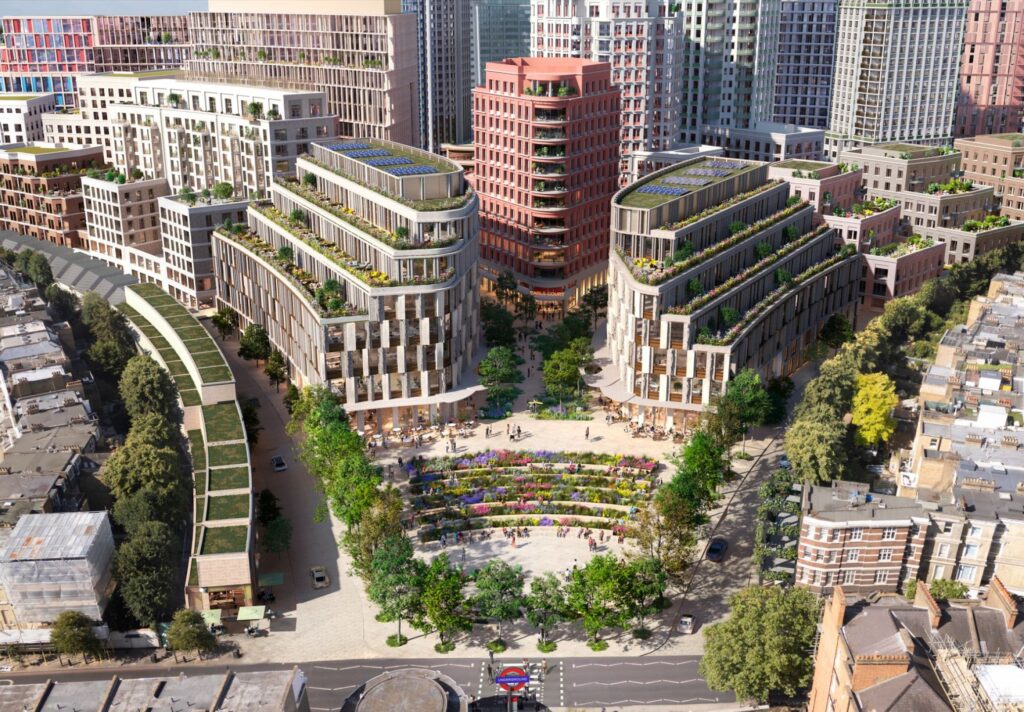 London Plan policies on housing density on major sites have long been based on net rather than gross residential densities. These net… Read more »
- The Annual General Meeting (AGM) of the Friends of the Scrubs will be held on Wednesday 30th September at Brickfields Hall, 68A Eynham Road,… Read more »
- Duck food, sourced and packaged by The Friends of Ravenscourt Park is now available from the Paddenswick Tea Gardens cafe! Buying a… Read more »
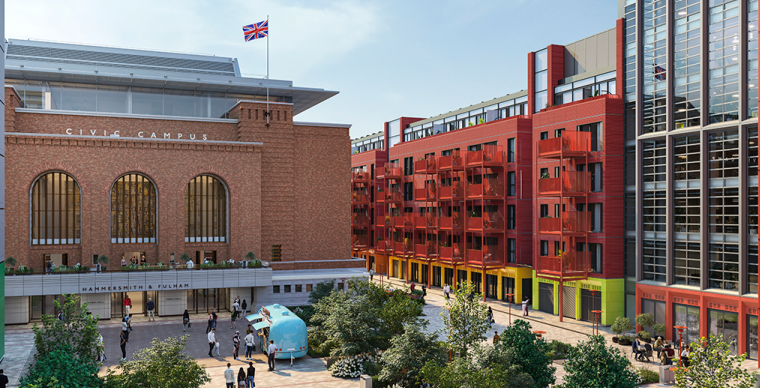 It’s that time of year again! Our AGM is your chance to hear how the association has got on over the past… Read more »

Most Popular Articles This Week


 ©2026, The Hammersmith Society | Privacy | Contact | Join | @ Subscribe | ⓘ
Campaigning for over sixty years