We welcome as members individuals and organisations who care for Hammersmith

As a Member, you will receive regular updates outlining our activities, giving you the opportunity to participate in consultations and campaigns. We'll invite you to our Awards Evening and AGM, and other events. Members are always encouraged to take an active part in the work done by the committee – come along and see if you can help.
The membership year runs from 1st Jan, and only costs £6 for individuals, £8 for couples or families, and £15 for organisations. Additional voluntary donations always welcome.
 Join Here
- Published: 30 Aug 2020

The disappearing Crossrail opening date
Crossrail passes through the top of our borough at OPDC, where it joins HS2, the UK’s other high profile and eyewateringly expensive rail project. This, contrasted with failing local infrastructure such as the unfunded Hammersmith Bridge and now A40/A3220 viaduct, puts us in a rather unique position to examine the unfortunate nexus of government megaproject largesse, delays, structural failures, and an apparent absence of funds to maintain London’s essential local infrastructure.
Here we look at why UK railway construction costs spiral out of control, and how projects might be better planned and managed as has been achieved elsewhere, and ask if these projects are even the right transport solutions for the 21st century ?
Construction projects still typically employ analogue leaders in a digital age
Mega transport projects are almost always fraught with delays and cost overruns because of the often inappropriate governance and leadership. Inappropriate leadership – really ? Surely they’re run by Captains of Industry with huge experience and many letters after their names ? But the leadership is most often bound up with the management of high budget, and perceived high risk items, such as tunnelling with Tunnel Boring Machines (TBM) – the so called “bricks and sticks” – often 80%+ of the initial budget.

Another day at the TBM office (here for the SuperSewer)
Appointments like these often address last century’s problems, a bit like taking over a British Leyland production line, only to discover that it’s now staffed by strike-free German-made robots, seemingly little delayed by the pandemic, at least here in Hammersmith. These elements are significantly lower risk than they once were, because of such mechanisation and associated technologies, engineered processes, resulting in tighter controls and more repeatability “at the coalface”, even though still beloved of TV documentaries with some false jeopardy added to spice them up. Still, documentaries do serve a valuable purpose in illustrating the point – the operator at the controls of the TBM deep underground is using a computer keyboard, mouse, several screens, a desk phone, with not a shovel in sight.
To re-purpose a phrase from the last decade, these projects still typically employ analogue leaders in a digital age. It’s commonly assumed that the “backroom boys” will sort of the hidden techie stuff – keep out of the detail. WRONG! This is where the risks are nowadays, in signalling and other heavily software-based systems, sometimes poorly designed code, frequent legacy issues, often clunky low-performance or de-facto interfaces (sometimes as simple as on/off dry contacts, AKA electromechanical relays, or their software equivalent “control points”), logical “gotchas” and subsequent system integration problems.
The issue is peculiarly amplified in railways, where proven operational safety is expected, yet a lot of what could provide that – 100% reuse of existing proven designs, robot style, ironically more akin to a modern tunnelling process – allowing the project to focus solely on what must be changed, is in this environment, swamped by commercial, time, perceived risk, or political pressures to use this supplier or that solution. This results in yet another bespoke railway with the inelegant compromises that Heath Robinson would recognise. Amplifying the misconception that the project is some sort of smooth production-line shown in the plans, the term “production design” is regularly misused, whereas the earlier compromises mean the endeavour has unwittingly become a “prototype design” – the approach to building a unique prototype like Crossrail or HS2 vs. a production design for 1000, or 100,000 units a year are rather different – your scribe has done all three.
Future leaders should present their software engineering credentials at the door
Continued
- Published: 05 Jun 2020

Hammersmith Bridge underside and steelwork – May 2020
The Society’s committee is of the view that as part of the renovation work, there is a great opportunity to improve the Bridge to make it better suited to future needs, requiring more space for pedestrians and cyclists, as mentioned in our last article. Our proposal is to widen the pathways to allow safe and satisfactory bidirectional walking on one side, and bidirectional cycling on the other, so that cyclists no longer need to compete with road traffic, significantly improving safety. Currently, because of the somewhat narrow walkways, it’s not possible to safely cycle or even pass easily when walking, certainly not in a wheelchair or buggy. We think this can be done both at modest cost (certainly compared with the Garden Bridge!) and largely independently of the planned repair works, so as not to lengthen the closure. We have a brief update on repair works at the foot of this article.
The bridge’s narrow pathways for most of the span measure approximately 1.6m, widening at the pillars to approximately 1.8m, but still too narrow for bikes to pass safely (one of the reasons cyclists have to dismount currently), let alone to support social distancing needed now, and possibly in the future. We’ve now looked at the structure in a little detail, and, as shown on the photos here, the pathways are supported by simple cantilevers, apparently bolted on.

Hammersmith Bridge – historical repairs (photo: Keepingthingslocal)
Steelwork underneath the bridge was repaired section by section in the 1970’s, and a new grid of substantial longitudinal girders replaced the originals (pierced where bridge hangers meet the deck). Historic photos (right) show the original, very much less substantial steelwork. Given the scope of the repair works, and amount of money and time to be spent on repairs, there seems little reason not to now consider the attached pathways in more detail, especially if the planned temporary bridge removes the need to keep it open during the works.
Continued
- Published: 29 Apr 2020

coronavirus (imperial.ac.uk)
Hammersmith and Fulham Archives want to hear about people’s experiences during the pandemic. Working with our partner charity UNITED In Hammersmith and Fulham, the Archives is documenting the experience of the coronavirus pandemic of all those who live, work or play in the Borough.
All submissions will be deposited permanently in the Borough Archives as a community memory of this unprecedented time. The Archives staff are seeking selfies with personal stories, photographs featuring empty streets, children’s rainbows, your workplace or shop notices, and artwork or poetry. Details of what sounds like a fascinating community project can be found here
For those interested in family history, Ancestry Library Edition has kindly been made available remotely to library members during the H&F library closures – details here
- Published: 15 Apr 2020
Heathrow Expansion was temporarily derailed by the Judicial Review (JR) in February, ruling the Airports National Policy (ANPS) illegal through its non-compliance with the existing UK Climate Change Act, and by extension, the Heathrow expansion plans that relied on it. By law, the Climate Change Act commits the UK government to reducing greenhouse gas emissions by at least 100% of 1990 levels (net zero) by 2050.

Heathrow expansion 2019
There have been many setbacks to the Airport’s expansion plans over the years from Terminal 5 onwards: claims that several top politicians would stop expansion, elongated planning enquiries, and many anti-expansion campaigns, but like the addict it appears to be, suffering Compulsive Shopping Disorder, Heathrow Airport Limited (HAL) keeps coming back for just one more hit, claiming that it will then be satisfied. Like it’s maniacal namesake in Stanley Kubrick’s epic 2001 – a Space Odyssey, to accept this would be to seriously misjudge the machine.
HAL’s public response to the JR is “10,000 quality apprenticeships by 2030, New Routes and 180,000 new Jobs”, plus the inevitable appeal against the judgement. While new routes could be created easily with a new runway, they could also be created by displacing cargo and short-haul flights onto greener options, such as rail or electric vehicles (remembering that Heathrow is actually the UK’s largest cargo destination, with 1.8 million tons in 2018: up 20%, matching passenger volume increases since T5 opened). The other two claims stretch credibility beyond reason, given that Heathrow currently employs 76,000, the expansion would represent a more than doubling in size. Or perhaps that gives a clue as to the full plan ?
Heathrow doesn’t appear to be addressing the issues that most of us care about – the effect on the environment, surface transport, and the lives of residents in large parts of the South-East – all the more so having recently become used to not being woken at or before 6AM with fewer flights during the Coronavirus pandemic; Heathrow has temporarily reduced to single runway operation. In the new Greta-inspired world, HAL makes additional claims regarding sustainability, but it again stretches reason that the discredited greenwash baked into last year’s consultation could have been warmed over sufficiently to pass muster this time round.
Continued
- Published: 09 Apr 2020
Along with others, the Society’s activities have been severely curtailed during the government’s enforced lockdown. We’ve found a little solace in the popular Zoom video-conferencing application (used with appropriate security precautions), and on Monday this week, keeping to schedule, managed our first online committee meeting – with 75% attendance.

Online committee meeting
The committee decided that the Society should use some of its limited funds to make a donation of £1000 to Hammersmith residents in need of support at this difficult time, via our local charity and affiliate Hammersmith United Charities which represents an excellent model of giving relatively small grants to local groups which know what practical help is needed and target it accordingly. The donation will be distributed through their Community Coronavirus Appeal, which is run in conjunction with the Council.
We have inevitably decided to postpone this summer’s AGM until government rules allow us to convene again. We’ll announce a new date when rules change. The Spring Newsletter, which would normally be posted out in April, will be published on this website, as a series of articles released over the coming weeks, with summaries and links emailed to members as usual.
We hope to be in a position to at least make nominations for the 2020 Environment Awards by reviewing what material is available to us via photos, and we encourage you to submit nominations by email if you have a suitable development in mind. We may not be able to visit them, or make a formal award until later in the year, but expect to be able to publish and consider the suitable nominations.
Continued
- Published: 17 Jan 2020
Many journals have pronounced that London’s ‘filthy air’ is killing thousands, and we note that all candidates standing for Mayor of London this year quote Air Quality as a pillar of their campaign. Here, taking the long view, we look more closely at the claims and wider issues, and how they apply to Hammersmith, public transport and cycleways.
According to King’s College, the reference for air quality measurements, London is the 2,516th most polluted city in the world
We think that climate change is the key issue here, and which if properly addressed, would deal with many of today’s air quality issues. The reference work ‘Mortality Effects of Long-Term Exposure to Particulate Air Pollution in the United Kingdom’ (A report by the Committee on the Medical Effects of Air Pollutants [COMEAP], updated 2018), says clearly in its executive summary ‘As everyone dies eventually no lives are ever saved by reducing environmental exposures – deaths are delayed resulting in increased life expectancy.’

Air quality in London started deteriorating about 400 years ago, and for the entire time the Georgians and Victorians were painting the globe pink, sulphur dioxide was around 40 times the current WHO guideline level of 20 µg/m3. It was in fact raining sulphuric acid AKA ‘acid rain’, the effects of which can be seen on the Palace of Westminster or in Turner’s paintings. The Great Smog of 1952 that killed perhaps 12,000 appears as a peak on the graph, and created a level over 10 times the level it is now, but our nonagenarian, and in one case centenarian parents survived and are still here with us, begging the question what effect it had on long term life expectancy.

The answer from COMEAP is around six months if you could (unrealistically) remove 100% of all air pollution from all sources, or more realistically 20 days per µg/m3 removed, plus you have to live to those grand old ages otherwise healthy. Not as much as the headlines or Twitterati would have it.
Of course this isn’t a complete list of pollutants, there’s PM2.5, PM10, NO2, and Ozone which have differing WHO thresholds as shown here, and those with respiratory conditions are much more affected than others, explaining most of the 1952 deaths.
Continued
- Published: 16 Jun 2019

Cllr Harcourt describes Hammersmith Bridge problems
At our AGM on 12th June, members of the audience asked a number of questions about the Bridge.
As we reported in our recent newsletter and over the previous 4 years, the bridge has been in trouble for a long time, not helped by a couple of bomb attacks in its history.
Fortunately Councillor Wesley Harcourt (Cabinet Member for the Environment) was in the audience, and offered us an impromptu update on the works to repair it. He made it clear that the Council is committed to repairing it as a fully working bridge, and that final decisions on the scope of work are yet to made as they depend on the level of funding available from TfL (who want to run double-decker buses), and the Government. The two key issues appear to be:
- The level of structural repair, over and above the minimum required to run the original 7.5 Tonne vehicles, is dependent on the funding available.
- The funding is not yet all in place (principally Government, which as we know is otherwise distracted)
He described the cracks found, and mentioned the details, photos and videos available on the council website here. He also described the effect on traffic on other bridges and roads, notably Chiswick, Putney and to a lesser extent Wandsworth, plus the apparent disappearance of 25% of the bridge traffic, though that may be variability and measurement error. He noted that more environmentally-friendly electric buses actually weigh more due to the batteries, just to add to the mix.
He committed to the council finalising plans and schedule in August, though we have no idea how long the work might take as yet, due to the many variables, and 3 years remains the disappointing figure quoted. We urge the council to embark on the essential repairs as soon as practicable, notwithstanding Government inertia. The outcome of these discussions can’t be resolved soon enough.
Continued
- Published: 24 Nov 2017

H&F parliamentary constituency boundaries proposed 2017
The latest proposals for the changes to parliamentary boundaries seem bizarre.
Of course the existing boundaries are not entirely satisfactory as the Borough is split between two parliamentary boundaries which are not consistent with the original ‘Hammersmith’ and ‘Fulham’ boroughs which were combined in 1968. The new proposals will affect all of us in ‘Hammersmith’ one way or another. For details visit the official website at www.bce2018.org.uk where you can compare the latest (and previous) proposals with the existing boundaries
Our present local MP Andy Slaughter has made a statement under the title Let’s stop Shepherds Bush moving to Brent
- Published: 07 Apr 2016
Melanie Whitlock and I have tried very hard – since the beginning of the year – to secure a hustings for the people of Hammersmith to hear what the main candidates are offering us and ask them questions. There are so many issues that are important to us including of course housing, Heathrow, air quality, the Flyunder, plans for Hammersmith Broadway, tall buildings generally and much more . . . Regrettably although we had secured a venue, St Paul’s Church, and a chairman, Sarah Montague of the BBC Today programme, we have been unsuccessful in persuading either Zac or Sadiq to find time.
Continued
- Published: 01 Jan 2014
Our older archived newsletters (without summaries) are shown below. Click on an image to view/download the pdf  . More recent newsletters are available here.
2013 |
|
|---|---|
 |
 |
2012 |
|
 |
 |
2011 |
|
 |
 |
 |
|
2010 |
|
 |
 |
2009 |
|
 |
 |
 |
 |
2008 |
|
 |
 |
 |
|
2007 |
|
 |
 |
 |
|
2006 |
|
 |
 |
Posted in Newsletters
Tagged Addison/Brook Green/Olympia Affiliations Airports Arts/Culture Avonmore/West Kensington Broadway Conservation Council Counters Creek/Tideway Tunnel Environment / Streetscape Flyunder Government Hammersmith Bridge Local Plan London Plan Major Developments Parks/Open Spaces Riverside Shepherd's Bush Smaller Developments Society/Awards Town Hall Transport/TfL White City

News Topics
Our Diary
-
Community Day
📆 Sat 18th Jul | 11:00 - 17:00
🚩 Ravenscourt Park (map)We're taking a stand - come along and say hello
-
Committee meeting
📆 Mon 14th Sep | 18:00 - 20:00
Recent News


Local and Affiliate News
One news item from each selected source – more on our Local and Affiliate news page. Subscribe to our weekly highlights
- Full Council: Wednesday, 15th July, 2026 7.00 pm Read more »
 Mark Viner's playing at the Bedford Park Festival mass earns praise Read more »
 Over 42 free events with tutors from stage and screen Read more »
 Valued facility on Greyhound Road shuts with just one week’s notice Read more »
 The latest edition of The London Society’s London Explained podcast series took a long time to put together, and I should know:… Read more »
 Over the last six months I’ve written twice about data centres, highlighting both the challenges and opportunities that they present to local… Read more »
 The West London council confirmed that it was now focusing on keeping the bridge open for cyclists, pedestrians and river traffic Read more »
 Last week, Monday 29 June to Sunday 5 July, marked ASB Awareness Week – where safety partners throughout the UK worked together… Read more »
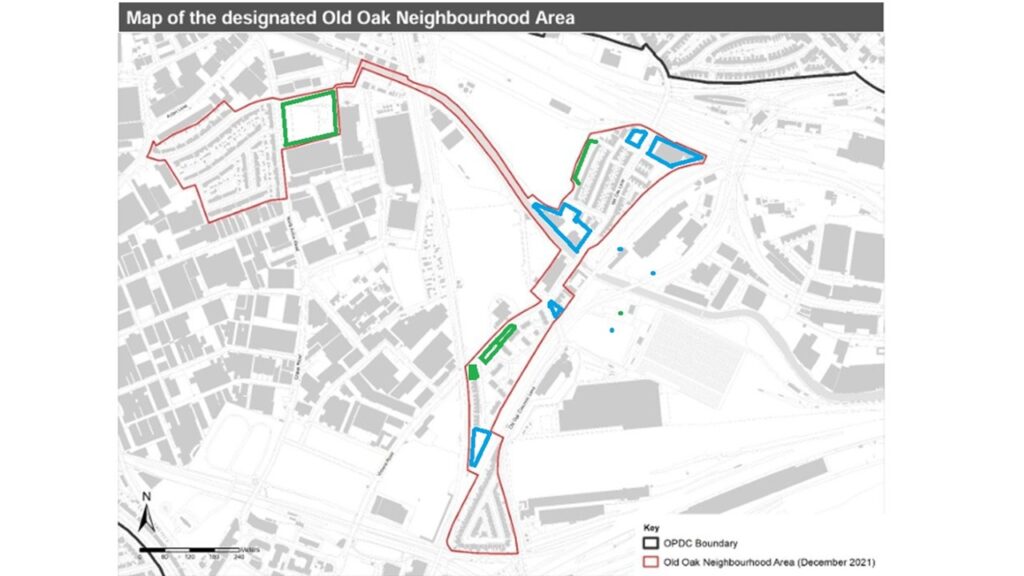 The Forum’s open meeting on July 2nd agreed to the start of an two month public consultation from July 8th to September… Read more »
 Last week we held a well-attended talk on the subject of Planning Enforcement, chaired by Brian Keane of PE&T, which we recorded.… Read more »
 We are celebrating the quashing of an inspector’s two decisions to refuse to register new commons in Hayle, Cornwall. On 30 December 2020, two applications were made to register common… Read more »
- As notified to all members in our June newsletter, we will be holding an open meeting of the Forum and the St… Read more »
- Hammersmith Bridge - closed to carsAccording to a BBC news item on 1 July, Hammersmith Bridge will remain closed to vehicles indefinitely… Read more »
 Many of us were very concerned to hear of a local break in and burglary in the middle of the morning through… Read more »

Most Popular Articles This Week


 ©2026, The Hammersmith Society | Privacy | Contact | Join | @ Subscribe | ⓘ
Campaigning for over sixty years