We welcome as members individuals and organisations who care for Hammersmith

As a Member, you will receive regular updates outlining our activities, giving you the opportunity to participate in consultations and campaigns. We'll invite you to our Awards Evening and AGM, and other events. Members are always encouraged to take an active part in the work done by the committee – come along and see if you can help.
The membership year runs from 1st Jan, and only costs £6 for individuals, £8 for couples or families, and £15 for organisations. Additional voluntary donations always welcome.
 Join Here
- Published: 15 Jun 2021

Proposed Hammersmith parliamentary constituency boundaries 2021. New proposed boundaries shown in red, 2017 in blue
We’ve been alerted to new proposed changes to the parliamentary constituency boundaries, and there’s a distinct feeling of deja-vu. Checking the annals, it was in 2017 when the last proposal surfaced.
At the time, Tom said that the “changes to parliamentary boundaries seem bizarre” – perhaps someone listened as they were quietly parked. Equally bizarre this time, in an effort to even up constituency sizes to around 75,000, Hammersmith is again split from Fulham, with a nod to the old borough boundary of 1968, but the significant change is the proposed East-West merger to create a “Hammersmith and Chiswick” constituency, split between two separate councils and administrations.
The north of the existing Hammersmith constituency would move to Ealing/Acton as proposed in 2017, though the line is further north matching the northwards march of the H/F boundary.
It would radically alter our sitting MP’s constituency, meaning Hammersmith being represented by two MP’s (North / Central), with a total of 3 MP’s across H&F (North / Central / South), all of whom would have split constituencies (the other halves being Ealing / Chiswick / Chelsea) to dilute their efforts, and potentially reduce the voice of Hammersmith. Or perhaps more is better? Make your views felt in the consultation.
The proposals shown above, despite their apparent non-political origins, could also appear to be politically motivated according to BBC analysis, as they may favour the ruling party. The proposed new boundaries are shown in red, the 2017 version in blue. More information can be found on the Boundary Commission website, where the consultation runs until 2nd August.
- Published: 15 Jun 2021
Her Majesty’s Government has decided that Gigabit broadband (FTTP) will help overcome recent economic woes, bridge the digital divide, and level up, and has declared £5 billion public funding for the first million homes and businesses. Initially, it correctly prioritises those most in need – often in rural or semi-rural locations – but at £5000 a pop, it needs to be worth it. Time to look closer to home, and see how this relates to Hammersmith – and our conservation areas – if and when it’s promoted widely here. Some green markings have appeared adjacent to “Post Office” manholes hereabouts, so this may be sooner rather than later.
You’ll doubtless know that so-called “fibre broadband” is already here – but what might “Fibre To The Premises” (FTTP) mean – and should you opt for it ? Below, we look at the implications for you and the streetscape, the technologies being deployed, and, by running the numbers, show that provided you and the Telcos are doing the right thing – several of which are mentioned – your home would be hard pressed to need the virtues of FTTP for a good many years to come – if ever.
The slowest 20% get 17M, the average 56.7M, and the top 20% get 150M

Hammersmith FTTC Broadband Cabinets

Recent street markings
Currently if you have “fibre” and aren’t on Virgin, you’re unlikely to have FTTP, you probably have fibre to a green cabinet less than a few hundred metres away, known as “Fibre To The Cabinet” (FTTC). Then, most often, the familiar phone wires, but somewhat shorter than before, which, with some updated tech in the green box and your home router, yields a big speed-up.

Local Broadband map (Thinkbroadband)
Here in Hammersmith, as one of the denser areas of London, we’re quite well served for broadband, with one or two known not-spots (the Western side of St. Peters Square being one, where our affiliate SPRA is exploring FTTP provision), but generally above London average speeds Published stats show that the slowest 20% get 17M, the average is 56.7M, and the top 20% get 150M. That suggests most are already on FTTC – or better. Several companies are now offering FTTP, Openreach (BT) being just one.

Openreach fibre digging [perhaps your front garden?]
Prompting this article, your correspondent recently sat in on an IET Zoom presentation “Holes & poles : fibre to the home”, exciting stuff if you’re into that kind of thing. The clear message was that the industry has managed to wring out as much as it can from the ancient pair of copper wires that provide landline phones – now rarely used – and diggers are needed for what comes next.
There’s been a substantial discussion about the problematic last few metres from your garden wall or gate to front door. In fact the last 5-10m – never mind the last mile – is often the biggest hurdle, as we discuss later. Logistical, cost and maintenance reasons mean wireless is ruled out, and, as the existing wires have had it, digging up the garden is likely if there are no usable ducts, followed by new holes in the front wall for a fibre “cable” and boxes on the wall. Fortunately fibre being fibre, it’s completely safe, and the consequences of an errant garden fork are inconvenient rather than dangerous, so it need not be buried as deep as main services.
Would it be transformative locally ?
Continued
- Published: 05 May 2021

Changing Rooms [BBC]
So-called property porn continues to make up a good percentage of the TV schedules 25 years after Changing Rooms started Building the Dream in a Location, Location, Location for The Poshest Sleepover in Millionaires’ Mansions, then over to The Great Interior Design Challenge, creating some Grand Designs, and moving on to daytime TV with rather lower budgets and more prosaic ambitions with House Doctor and Homes under the Hammer.
More than one of these shows is approaching its silver anniversary, and you’re sure to have seen many of them – perhaps the daytime offerings too – and possibly even been addicted to one or two ?
In a roundabout way, they’re all selling the story that rising house prices are a Good Thing. The recent publication of the new London Plan ahead of the delayed Mayoral Election this week, presents a good opportunity to take the long view of the property market, and test this hypothesis in the real world.
Over the last two decades, there has been a 46% increase in the number of young people aged 20-34 living with their parents 🔗
The evidence from first-time buyers is that spiralling prices are not such a good idea, especially post-COVID. Excluded from markets such as our own local one, where one bedroom flats start around £250k, younger people have wondered how they’ll get on the mythical ‘property ladder’ for a while now. Having been locked-down for much of the last year, they may be further destined to stay at home with mum’n’dad for the foreseeable, their best hope of ‘moving out’ may be to convert the garage to put a door between parents and the resultant substandard bedsit, or take a government help-to-buy mortgage – one that possibly helps stoke prices more than helps make housing affordable. A poor show all round.

Housing Completions 2020 (MHCLG)
Classic economic theory says that rising prices stimulate the economy and increase house builder’s appetite to build. The statistics don’t bear this out, with completions only just approaching the levels of 15-20 years ago, having been in the doldrums through periods of huge price inflation (with the real possibility of correlation), London being a particular “white spot” despite the highest price rises. Hereabouts there are many factors at play, land availability being just one of them; the theory is too simplistic.
And what of this cash – where does it come from ? From not spending in local shops and hospitality, or just adding to a debt mountain. Neither are good for the real economy, locking away income for the foreseeable, and once on the ladder, the next step involves an increasing gap as prices rise, so any increased disposable income is – disposed of. Best start saving now, or better move up quickly, perhaps by taking on an uncomfortable level of debt, before the price gets out of reach.
There remains a widespread assumption that existing homeowners subscribe to the benefits of rising prices. Pragmatic Marxists might even tell you that releasing equity is a way to feedback escalating values to the proletariat (that’s your children, by the way). But older voters (always sought after, unlike Auntie or marketers, forever chasing the young – discuss), may soon get tired of their children still at home in their 30’s and even 40’s in London, as the direct effect of rising prices, and may start voting otherwise. With the equivalent escalation of the average age of moving out, parents may become too old themselves, and disinclined to move at the time they might be able to release equity, and enjoy it. Taking on what looks & feels like debt, in the form of equity release, probably having spent many years paying down a mortgage, may also be a bitter & alien pill, albeit perhaps a sensible one – for an economist.

Median London House Prices 1995-2020, sorted by 1995 price (ONS)
Hammersmith has the 5th highest median house prices in London. It’s slipped one place since 1995, the graph adjacent is sorted by 1995 prices, when it was 4th, which may surprise you. 1995 prices are shown as the tiny blue bars.
Whatever nuances there are between H&F and anywhere else in town, property inflation has been huge in absolute terms, as shown in the second graphic, and much greater than elsewhere in the UK. H&F is middle of the range at 700%, explaining its 1 place fall in the above race, but the lowest priced boroughs in 1995, such as Hackney and Newham have seen the largest rises in a rather misplaced levelling-up exercise, many would call gentrification. Examine the demographics, and you’ll see the volume of younger people who have moved to those places on an affordability basis, if no other. By contrast, average incomes have doubled in the same period but have been static in inflation-adjusted terms, meaning housing is 350% of the cost 25 years ago (c.f. ratios below), although interest rates are a lot lower if you’re borrowing the money. If you’d been what used to be called prudent – and saved for it – bad luck. Prudence was made homeless a while ago.

Percentage rise in London property by borough (ONS)
Our elders tell us that sky-high London property prices were ever so. In the 50’s and 60’s, newbuilds were cheaper than period properties; in the age of the Space Race and (if only they’d known it) mid-century modernism, bright shiny and new was still less popular than ‘period’, and while affordability continued to decline, property aspirations remained as conservative and static as life’s DNA, a fact confirmed in the government’s recent Design Guide.
Continued
- Published: 20 Feb 2021
It’s now just over six months since the Bridge was closed to pedestrians and cyclists, and over 22 months since it was closed to traffic, yet there is neither a Bridge repair contract nor an alternative crossing facility in place. Repair work will not progress until there is forward funding to pay the estimated £128M cost (over and above TfL funded temporary stabilisation works). Government funding has been offered conditional on a LBHF contribution of £64M, 50% of the cost, as reported in last weekend’s Observer. This is evidently way beyond the LBHF resources; whilst there has been media reference to the potential of council reserves, the  2019 external auditors report states “…Council do have ongoing financial pressures, which need to be addressed in the medium term… As a result, the Council is now maintaining a reserves position that is below the average when compared to other London Boroughs”. Government funding for local authorities has been considerably reduced in recent years, and an uplift in council tax, aside from social and political issues, would only generate additional income of around £650K per 1% rise.

Foster & Partners bridge proposal
Hammersmith Bridge would seem to be a unique and most deserving case for special funding, and it is so frustrating that the critical issue of project financing is not addressed in the government Task Force meetings, despite its obvious importance. However we understand that, separate to the Task Force meetings, LBHF have been exploring initiatives which draw on the private sector, not only in the Foster/Ritblat temporary bridge proposal, but also investigating the viability of private funding, secured on an income stream provided by a toll: this financing method which has been used for a number of other UK bridges, including in London, the Dartford Crossing. LBHF residents would be likely to cross toll-free. We understand LBHF have now submitted a comprehensive financial plan to Grant Shapps based on this funding approach. Consideration might be given to 1% of the toll to be set aside for social funding in Hammersmith, similar to the arrangement on the London Eye ticket price.
Some valuable comparative information has emerged regarding the financing of other London bridges. For the recent £9.6M repairs to Albert Bridge, RBKC paid £2.6M in line with many other bridge repairs as recent research indicates, while TfL paid £7M. The £9M refurbishment of Chiswick Bridge was paid for by TfL. Since TfL are out of funds, the recent upgrade of Wandsworth Bridge was paid for by Wandsworth Council – but since the bridge is a simple cantilever structure, fabricated in steel in 1940, the overall cost was only around £6M, less than 6% of the bill for the 1887 Hammersmith Bridge.
These comparative repair costs highlight the unique problems with the bridge, an ornate, Grade II* listed structure constructed from cast iron and wood in 1887, two years after the first internal combustion engine came off the Benz production line. Before the traffic closure in April 2019, over 20,000 vehicles and 2,000 single-decker buses were crossing the Bridge daily; until total closure in August 2020 16,000 pedestrians and cyclists were crossing daily. Until 1998 heavy goods vehicles and double-decker buses were using the Bridge.
The Bridge is clearly not fit for this purpose. If the outward appearance of the Bridge is to be retained, then within the decorative outer claddings the structure has to be not repaired, but replaced, to create a Bridge which is able to sustain the demands of 21st century traffic. We discuss this in more detail in the accompanying article.
Continued
- Published: 27 Nov 2020

Foster & Partners / Delancey temporary bridge proposal
Bridge proposal
We were surprised and excited in equal measure to see a radical new proposal published by the council, in partnership with Foster and Partners and Sir John Ritblat of Delancey, the company now owning the Earls Court development site. This is designed to temporarily solve the conundrum of getting across the river while the original bridge is repaired. Details can be read on the council’s website, there’s obviously more detailed work needed to bring it to fruition.
Key points are:
- Raised temporary deck envisages crossing for vehicles, pedestrians and cyclists on 2 levels.
- The deck would overlay and rest on the footings of the existing bridge.
- River traffic could pass underneath.
- Costs believed lower and timescale significantly faster than previous plans.
- Partial dismantling and offsite refurbishment of the existing structure while temporary structure in place.
- Transport Secretary given outline brief by H&F Council Leader on 25th November.
There’s been generally positive comment in the press and social media, and we were particularly pleased to see our favoured approach of offsite construction/restoration being embraced, which should improve the quality of the end result.
Funding
Since the public Task Force meeting in October, there have been snippets of gossip from behind the scenes, but little significant progress to report. TfL have been instructed to pay for a temporary ferry river crossing, and to contribute £4M towards the bridge stabilising work, drawing from their recent £1.8B government emergency funding.
Central government has now promised to fund the project, conditional on a substantial contribution from the local authority. LBHF report that funds are not available to meet this demand. The Hammersmith Society and others are pressing the government to take the long view, and release the Bridge funds now, and negotiate separately with the local authority, and this is set out in our letters to the Task Force chairman and the Secretary of State for Transport, as previously published.
Enquiries to LBHF and other parties have revealed some further context to the funding problem. We understand that Hammersmith became involuntary owners of the Bridge in 1985, when the government abolished the GLC (Greater London Council); there is no record of a condition audit taking place at the time, and no maintenance arrangement accompanying the gift, which was perhaps a mistake.
In normal circumstances structural repairs to the bridges over the Thames have been paid for by TfL, with costs of a fraction of the c. £150M budget for Hammersmith Bridge; this very substantial cost arises largely from the design of the structure with cast iron, and design restrictions on the repair methods imposed by Historic England Grade ll* listing status.
Continued
- Published: 23 Nov 2020
Following the Zoom public meeting three weeks ago, we considered our recent articles on the bridge, and, as promised, wrote to Grant Shapps MP, Secretary of State for Transport, Baroness Vere, Chair, and Dana Skelley, Director of the Bridge Task Force, as shown below (click to open).

Letter to Grant Shapps MP, Secretary of State for Transport

Letter to Baroness Vere, Chair of Bridge Task Force

Letter to Dana Skelley, Director of Bridge Task Force
We’ve made suggestions borne of our various architectural & engineering experiences, and feedback from members who contributed, balancing aesthetics, cost-effectiveness, speed of the works vs. longevity & value to the public.
We think the repairs might be done more quickly and cheaply, and the result might last longer and be more useful as a bridge, if the slightly modified approach were taken, as outlined. As an alternative, we’ve also dared to think the unthinkable given the proposed closure duration and costs, and suggested bridge replacement. An architectural competition could be held to decide how to best reuse what is there, but make it fit for the next century as Bazalegette did to the 1827 original, back in the 1880’s. As we’ve said, this need not involve a total loss of the iconic appearance; it would be up to innovative designers to come up with the solution – we’ve already seen ideas coming from local architects and engineers.
With huge sums of central Government capital and revenue expenditure being regularly announced, the cost of solving the Hammersmith Bridge problem seems small by comparison, and given the considerable inconvenience already endured both sides of the river by some of the most vulnerable members of society, the project deserves immediate and full financial support.
- Published: 04 Nov 2020
Many Society members joined the Zoom public meeting with the Bridge Task Force a week ago. A FAQ, links to Task Force reports, and a copy of critical correspondence between the Task Force chairman and LBHF immediately prior to the meeting, can be found on the council website, and a recording of the meeting can be played by clicking on the video image here.
Our report on the meeting has to tread carefully to resist the winds of political bias which seem to be jeopardising project navigation. The exchange of letters between the chairman of the Task force and LBHF reveals the entrenched and opposing positions of government and local authority concerning the funding of the bridge repair programme. At the meeting the Task Force chairman declared that the government is ‘completely ready to fund the entire project subject to local contribution’ – the proportion of this contribution was not defined – while the LBHF deputy leader reported that substantial local authority contribution has already been paid out for the bridge work to date, and LBHF could not afford any further funding.
Alongside the funding impasse, the meeting provided an excellent explanation of the bridge problems, the anticipated repair works, the investigations in progress, and proposals for temporary pedestrian crossings.
A summary of the current critical issues:
- Project funding: government funding is confirmed conditional on LBHF contribution; LBHF and TfL have no funds available to contribute. TfL to fund the ferry crossing and contribute £4M towards the stabilisation works as a condition of their £1.7B second government support grant.
- Engineering works: completion of pre-design survey work requires a further 4-month programme to inspect each upstream pedestal (the lower housings at each end of the suspension chain); the contractor is ready to proceed with the work on release of funding. See project funding statement above.
- Project Plan: LBHF report that they have provided the ‘robust project plan’ called for by the chairman. We would expect to see a review of alternative options including the replacement of the bridge with a modern structure, taking into account the cost and programme viability of restoring a bridge built over 130 years ago for a very different traffic type and density.
- Temporary crossing (stage 1): ferry transport for pedestrians and cyclists has been investigated and can be operational within 66 days of contract commitment and release of funding. See project funding statement above.
- Temporary crossing (stage 2): pedestrian and cycle use of the bridge can be resumed for a limited period after installation of temporary stabilising frames over the pedestals. Obtaining the necessary statutory planning consents and carrying out site construction would require around 7 months; estimated cost is £14M. See project funding statement above.
- Project programme: overall period for completion of the works as currently foreseen, including measures to meet TfL increased traffic loading requirements, is estimated at approximately 6 years – from release of funding.

Bridge permanent stabilisation – cast iron pedestals – slide from meeting
We’re a little concerned that substantial time and costs are currently being allocated for shoring up the cast iron pedestals that are clearly a long way past their best: 4 months/£2.3M blast cleaning prior to 7 months investigation and temporary stabilisation/£13.9M, followed by 21 months/£32M permanent stabilisation, in addition to a planned temperature control system to lower the risk of further cracking.
Continued
- Published: 04 Nov 2020

Planning for the future
In March of this year the government promised legislation to improve the supply of new homes, including legislation on building safety, rental reform, social housing – and an update to the planning system.
Following this, a government White Paper Planning for the Future proposed very significant changes to the planning process for public consultation which closed last week.
Changes to the planning procedure
At present, LBHF planning applications are assessed against the development policies in the LBHF Local Plan, in the London Plan, and in the government NPPF (National Planning Policy Framework). The White Paper proposes a new approach: a new form of Local Plan, replacing the current format of more abstract policy guidance, by a format with a prescriptive system of development rules and a design code. The Local Plan would also include borough zone plans, which would identify three categories of development:
- Growth areas where ‘substantial development’ would be suitable (similar, we suggest, to Earls Court, Old Oak Common etc)
- Renewal areas such as existing built areas where development is encouraged (Hammersmith Town Centre, for example)
- Protected areas like conservation and heritage areas, green belt and parkland.
Planning zones
In Growth and Renewal areas, proposals which are compliant with the Local Plan in height, use-type etc, and compliant with the government NPPF rules, would be effectively guaranteed an automatic outline planning consent, providing a level of certainty in site purchase values. At the next stage, a full planning application, with detailed proposals, would be granted consent if the proposals comply with the more detailed rules and design codes of the Local Plan.
Community involvement
Public consultation in the planning process would be limited to the stage when the new Local Plan is put together by the local authority: community involvement would be excluded from full planning application stage, because (it is argued) the application would be assessed against rules which have already been agreed through public consultation.
The intention is to establish a clear set of planning rules, which are in line with government policy, and have been agreed through community consultation; armed with these certainties applications would avoid the ambiguities of policy interpretation and community objection which (it is said) can delay the full planning application stage.
Design codes

CreateStreets – Bonnington Square
To illustrate examples of acceptable design and styling, and to provide a basis of resolution of design disagreements, Design Codes would form part of the Local Plan, and would be reviewed through public consultation when the new Local Plan is being put together. Design codes would be coordinated with the government’s National Design Guide, itself heavily influenced by the CreateStreets campaign and to the emerging National Model Design Code. To help the process, a chief officer for design and place-making would be appointed within each local authority.
Continued
- Published: 30 Sep 2020

Hammersmith Bridge closed: Motor traffic:10th April 2019; Completely:13th August 2020
A head of steam is certainly building up for Bridge repairs, especially as winter approaches, but it remains to be seen whether this will translate into action.
After much media/social media coverage, including stories on London TV news, a task force was set up on 9 September, chaired by Baroness Vere (roads minister), which includes representatives of the local councils, TfL and Network Rail (for their experience of cast iron bridges), the Port of London Authority and GLA. The task force’s project director is Dana Skelley, a chartered civil engineer, formerly director of roads for London and responsible for the London-wide roads modernisation ahead of the London Olympics and the repairs to Hammersmith Flyover.
Completing the full repair of the Bridge is currently predicted to cost £141-£163m, with stabilisation just to allow safe pedestrian and river traffic at £46m, considerably more than first envisaged. We covered the announcement of a temporary pedestrian/cycle bridge in April, which is believed to have been costed at less than £10m. Before lockdown, planning was to be sought for this during the summer with construction starting this autumn, but this has not happened. We followed up in June with our ideas about widening the pathways while work progresses elsewhere, making the bridge suitable for safe bidirectional cycling and walking; these are also clearly ideas yet to be considered given the new circumstances of complete closure.
Neither the Council nor TfL can finance costs at this level, so government support is essential. The possibility of tolls to finance the work has not been ruled out, indeed some are campaigning for this to make more funds available to speed up the work.
Continued
- Published: 30 Sep 2020
The national picture for COVID-19 is mixed with some areas much more affected than others. Despite well-publicised issues around test-track-and-trace, in a world of “big data”, the Government has made significant efforts to publish quite detailed data at various levels, if not always easy to tease out. At borough level, infection, test positivity, and death data is available, and we have also included relevant hospital data for our local NHS Trust, Imperial.
To help members better gauge the local situation, we’ve used this data to create an interactive chart, both here, and pinned to the head of the website for the time being, automatically updated every day in the early evening. Due to the well-known delays in test results, be aware that latest numbers are always revised upwards for severa days after initial publication, so we now filter the newest unrepresentative figures – check here regularly for updates.
The interactive map shown adjacent provides infection data in the last week by “MSOA” (Middle Super Output Area), representing c.7200 people, an area which approximates a council ward. H&F has the distinction of having the physically smallest MSOA in the country – E02000378 – Shepherds Bush South. Click on the map to see more information about each area.
H&F council COVID-19 advice is here.
H&F HealthWatch
We’ve been contacted by our member Jane Wilmot, also a member of the local H&F HealthWatch committee who want to find out how H&F residents have used GP practices during lockdown and in particular uncover any experiences of health inequality. HealthWatch is a statutory committee of the independent regulator, the Care Quality Commission (CQC).
If you would like to help, please:
- Complete the survey by 12th October: Survey Monkey link
- Share the survey among all your contacts including any contacts on Twitter
- Alert anyone you know who does not have a smart phone or internet access to let them know they can contact HealthWatch for a hard copy, ask for help in completing the survey etc.
If you would like any assistance in completing the survey or would like it in another format, please contact H&F HealthWatch at or call 0203 886 0386. Healthwatch Hammersmith & Fulham address: 141-143 King Street, W6 9JG.

News Topics
Our Diary
-
2026 AGM and Awards Evening
📆 Tue 13th Oct | 18:30 - 20:30
🚩 The Sulgrave Club, 287 Goldhawk Road, W12 8EU (map)
-
Committee meeting
📆 Mon 23rd Nov | 18:00 - 20:00
Recent News

The area outside Goldfinger’s Grade II* listed Greenside school has been transformed with a landscaping scheme funded by the Council’s Green Investment …


Local and Affiliate News
One news item from each selected source – more on our Local and Affiliate news page. Subscribe to our weekly highlights
 The following is a blog recently written by the lawyer Simon Ricketts which is intended to help developers to get a planning… Read more »
 We are celebrating the recognition of an ancient public footpath from Eastry to Hammill in East Kent. In August 2022, the society… Read more »
 Violently assaulted partner while out on licence Read more »
 Event with artist, author and designer hosted by Chiswick Pier Trust Read more »
- Cabinet: Monday, 14th September, 2026 7.00 pm Read more »
 Annual exhibition to take place at the POSK Gallery Read more »
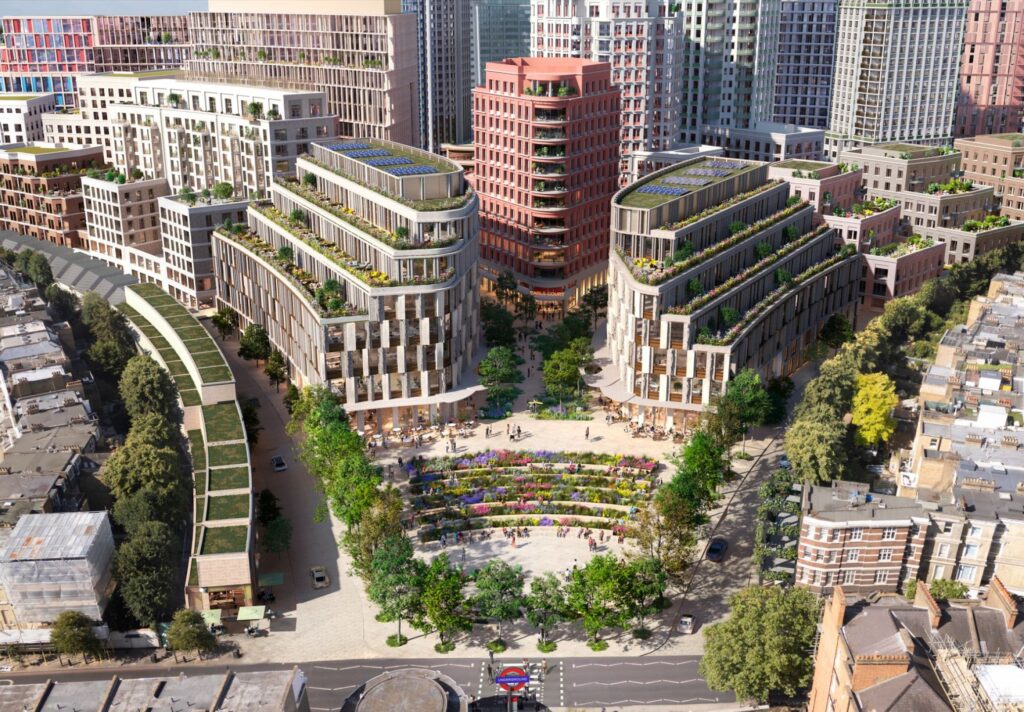 London Plan policies on housing density on major sites have long been based on net rather than gross residential densities. These net… Read more »
- Approaching Monkenholt, a late 18th Century, Grade II listed house just north of Chipping Barnet, I tried to imagine the scene in… Read more »
- OPDC Planning Committee: Thursday 10 September 2026 6.00 pm Read more »
- The Annual General Meeting (AGM) of the Friends of the Scrubs will be held on Wednesday 30th September at Brickfields Hall, 68A Eynham Road,… Read more »
- With the summer holidays nearly over, it’s time to start getting ready for the new school year. We’ve put together a list… Read more »
- Shepherds Bush Railway Bridge Gets a MakeoverIn another small victory for the Campaign To Fix Uxbridge Rd, the Shepherds Bush Railway Bridge has been… Read more »
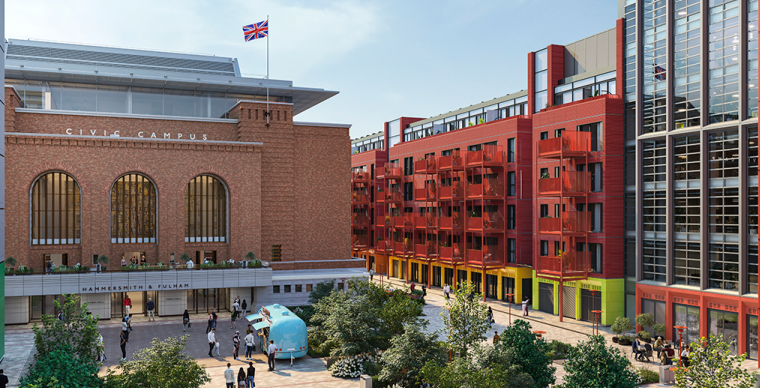 It’s that time of year again! Our AGM is your chance to hear how the association has got on over the past… Read more »
 What would you say if you were told that a 22-acre brownfield site in London’s zone 3, well connected to overground, underground… Read more »

Most Popular Articles This Week


 ©2026, The Hammersmith Society | Privacy | Contact | Join | @ Subscribe | ⓘ
Campaigning for over sixty years