We welcome as members individuals and organisations who care for Hammersmith

As a Member, you will receive regular updates outlining our activities, giving you the opportunity to participate in consultations and campaigns. We'll invite you to our Awards Evening and AGM, and other events. Members are always encouraged to take an active part in the work done by the committee – come along and see if you can help.
The membership year runs from 1st Jan, and only costs £6 for individuals, £8 for couples or families, and £15 for organisations. Additional voluntary donations always welcome.
 Join Here
Ravenscourt Park and Grove wards, the park and St. Peters conservation area down to the river.
Councillors:
Ravenscourt: Collins, Walsh,
Grove: Cowan (also leader), Rowbottom

Ravenscourt Park walled garden
- Published: 27 Jun 2022
![Mayor presents Environment Award 2022 to Flanagan Lawrence [Jason Flanagan & Barbara Twine]](https://i0.wp.com/www.hammersmithsociety.org.uk/wp-content/uploads/2022/06/Mayor-presents-Environment-Award-2022-to-Flanagan-Lawrence--scaled.jpg?w=198&h=144&ssl=1 "Mayor presents Environment Award 2022 to Flanagan Lawrence")
![Mayor presents Nancye Goulden Award 2022 to Elder Press Cafe [Lindsay and Andrew Elder]](https://i0.wp.com/www.hammersmithsociety.org.uk/wp-content/uploads/2022/06/Mayor-presents-Nancye-Goulden-2022-to-Elder-Press-Cafe-scaled.jpg?w=198&h=131&ssl=1 "Mayor presents Nancye Goulden Award 2022 to Elder Press Cafe")


(AGM Photos: Franco Chen. Click for full-size versions)
We were delighted to announce our 2022 Awards at the AGM at Latymer Upper School on Wednesday 22nd June, introduced by committee member Derrick Wright and kindly presented by our patron, Cllr Emma Althorp, the new Mayor of Hammersmith & Fulham. The large number of members and supporters present were provided excellent hospitality for which we would like to thank Latymer. Full details and a narrative are posted on our 2022 Awards page; more AGM photos and administrative documents are posted on our 2022 AGM page.
Summary

‘Gentle Density’
Our guest speaker was Nicholas Boys Smith, of CreateStreets, and the CreateStreets Foundation, who gave an inspiring presentation, showing why we don’t need 55 storey towers to solve housing problems, and that real people prefer what CreateStreets refer to as “gentle density”.

The Environment Award was given to The Palladium on Shepherds Bush Green. We visited it earlier this year and were impressed with the design quality provided by the same architects, Flanagan Lawrence, who transformed the Dorsett next door, and to whom we also gave our Environment Award in 2015. This area of the borough has seen significant improvements in the last few years, and we hope that the hotel currently under construction on the North side of the Dorsett lives up to the high standards set.

Unfortunately this year there were no projects of the right type or scale nominated for the Tom Ryland Award for Conservation.
 The Nancye Goulden Award was given to the Elder Press Café which recently opened in South Black Lion Lane, W6. This conversion has been carried out with unusual care and sensitivity – the shop window is retained to bring life and light which animates this little street and the builder’s yard is brought back to life as an outside seating area with fine new timber gates thrown open during the day.
 For the first time in several years we presented the Jane Mercer Award for “proactive co-operation, collaboration and communication”. The Green Project, Shepherds Bush provided exactly this, an initiative setup by local residents to make the neighbourhood around Sawley Road W12 greener, and at the same time to bring the community together.
 Wooden spoons were awarded to the council for a failure to fully engage with their own green agenda by keeping new street trees alive and overseeing the generally inadequate tree pits partly responsible, which were similarly awarded in 2013, 2014, and 2015; and for an unfortunate lack of inclusivity afforded by the King Street Cycleway, C9, with everyone but cyclists losing out unnecessarily, some significantly.
- Published: 02 Apr 2022

108-116 Glenthorne Road – Hotel Proposal

Dalling Road Open Space, St David’s Day 2019
[Photo: Richard Jackson]
We’ve been keeping an eye on the plans to redevelop the parade of shops that many will know as ‘The Fireplace Shop’ at the western end of Glenthorne Road, seen in the background of adjacent photo, before it closed a couple of years ago.
The plans (ref 2021/03464/FUL) are for a 23-bed boutique hotel with café on the ground floor, and are not out of scale with the road or the existing buildings (the addition of a set-back mansard is planned as shown, similar to others opposite). A public consultation was held in late September last year at the Grove Neighbourhood Centre, which we attended.
But a concern is that being on a busy corner of the one-way system, and needing regular servicing via Studland Street adjacent, the level of activity may be too intrusive for the residents nearby and would often occur during antisocial hours, plus there’s a particular overshadowing problem noted for 50 Studland Street alongside. The project really needs a little more development, and a thorough review of the transport statement and travel plan included in the application.
A joint letter of objection with our affiliate BRA is attached.
April 2023 update
A number of relatively small changes have been proposed as part of a revised planning application to address the planners, neighbour’s and our concerns under ref: 2022/03664/FUL, but there remain a number of issues on which we and BRA commented:  Comments
- Published: 26 Jan 2022

Former Royal Masonic Hospital site extents [Savills brochure]
The former Royal Masonic Hospital site, recently marketed by Savills as “a landmark development opportunity”, is currently under offer. Sitting in a conservation area, surrounded by listed housing and overlooking Ravenscourt Park, the Grade II* hospital building and its later additions occupy a plum site in the heart of Hammersmith.

Royal Masonic Hospital – entrance hall
[Savills brochure]
Opened by King George V and Queen Mary in 1933, its steel-framed modernist architecture by Tait & Lorne famously won an RIBA Gold Medal as the best building of 1933, while its interiors, fixtures and fittings were custom designed throughout in the same Art Deco style.
But times changed, and after a controversial sale in the 1990s, although its Art Deco interiors continued to make frequent appearances in films and in television series like Poirot, subsequent owners proved unable to find a viable healthcare use. And after standing empty for 15 years, the main building will need considerable investment in refurbishment and restoration.

BFI RMH film [click to view]
A short promotional film made in 1970 gives us a fascinating glimpse into the hospital in its heyday. Fifty years ago, it was a self-contained organisation with its own kitchens, laundry, laboratories and a nursing school and staff accommodation, all set in 10 acres of immaculately kept grounds.

Royal Masonic Hospital [Freemasonry Today]
Following discussions with Council planners, the agents, Savills, are now saying that ‘medical use’ covenants need no longer apply and suggest a range of alternative possibilities for future development. Only the main building, with its twin entrance pillars representing Healing and Charity, is listed. The site also contains several smaller buildings which are described as targets for demolition and redevelopment – even “possible upward extensions”.
Any development on this scale and in this location will have a significant impact both on the park and the local community, so it is vital that we should all have a say in the future of this important part of our Hammersmith heritage.
- Published: 01 Oct 2021


We were pleased to announce our 2021 Awards at the AGM at Riverside Studios on Wednesday 29th September, introduced by committee member Derrick Wright and presented by our patron, Cllr P J Murphy, Mayor of Hammersmith & Fulham. The large number of members and supporters present were provided excellent hospitality in the River Room. Full details and a narrative are posted on our 2021 Awards page; more AGM photos and administrative documents are posted on our 2021 AGM page.
(AGM Photos: Louisa Whitlock. Click for full-size versions)
Summary
Our Guest Speaker was Sherry Dobbin, from FutureCity, who spoke about unlocking the potential of city places with some fascinating ideas for how this might work for Hammersmith Town Centre. She showed several existing examples from around the world and an installation opened at The Shard on the same day.
 Our Environment Award was given to The Quaker Meeting House in Bradmore Park Road. We first visited as it was completed in October 2020, and were immediately impressed with the quality of design and construction, its environmental credentials, and the feeling of serenity. Our original article is here
 The Tom Ryland Award for Conservation was given to the Mission Hall in Iffley Road which has now been given a new lease of life through a major conversion and refurbishment to provide office, meeting and community facilities.
 The Nancye Goulden Award was given to the landscaping of 245 Hammersmith Road. The unusual stairs & inclined lift immediately set it out as something different. The landscaping and recreational benefits provided by this very substantial development set a great example of how we can restore people priority in the bustle of traffic and commerce which makes up the town centre.
Wooden spoons were awarded to two utilitarian horrors – 5G masts and their associated street clutter, and the ugly Thames Water fountains.
 After the Awards, we turned to our usual AGM business, including Chairman’s report. Finally we reminded all present that in 2022, as our new banner and anniversary logo shows, the Society turns 60. We are seeking ideas to celebrate the occasion next summer – please send us your thoughts.
- Published: 15 Jun 2021
Her Majesty’s Government has decided that Gigabit broadband (FTTP) will help overcome recent economic woes, bridge the digital divide, and level up, and has declared £5 billion public funding for the first million homes and businesses. Initially, it correctly prioritises those most in need – often in rural or semi-rural locations – but at £5000 a pop, it needs to be worth it. Time to look closer to home, and see how this relates to Hammersmith – and our conservation areas – if and when it’s promoted widely here. Some green markings have appeared adjacent to “Post Office” manholes hereabouts, so this may be sooner rather than later.
You’ll doubtless know that so-called “fibre broadband” is already here – but what might “Fibre To The Premises” (FTTP) mean – and should you opt for it ? Below, we look at the implications for you and the streetscape, the technologies being deployed, and, by running the numbers, show that provided you and the Telcos are doing the right thing – several of which are mentioned – your home would be hard pressed to need the virtues of FTTP for a good many years to come – if ever.
The slowest 20% get 17M, the average 56.7M, and the top 20% get 150M

Hammersmith FTTC Broadband Cabinets

Recent street markings
Currently if you have “fibre” and aren’t on Virgin, you’re unlikely to have FTTP, you probably have fibre to a green cabinet less than a few hundred metres away, known as “Fibre To The Cabinet” (FTTC). Then, most often, the familiar phone wires, but somewhat shorter than before, which, with some updated tech in the green box and your home router, yields a big speed-up.

Local Broadband map (Thinkbroadband)
Here in Hammersmith, as one of the denser areas of London, we’re quite well served for broadband, with one or two known not-spots (the Western side of St. Peters Square being one, where our affiliate SPRA is exploring FTTP provision), but generally above London average speeds Published stats show that the slowest 20% get 17M, the average is 56.7M, and the top 20% get 150M. That suggests most are already on FTTC – or better. Several companies are now offering FTTP, Openreach (BT) being just one.

Openreach fibre digging [perhaps your front garden?]
Prompting this article, your correspondent recently sat in on an IET Zoom presentation “Holes & poles : fibre to the home”, exciting stuff if you’re into that kind of thing. The clear message was that the industry has managed to wring out as much as it can from the ancient pair of copper wires that provide landline phones – now rarely used – and diggers are needed for what comes next.
There’s been a substantial discussion about the problematic last few metres from your garden wall or gate to front door. In fact the last 5-10m – never mind the last mile – is often the biggest hurdle, as we discuss later. Logistical, cost and maintenance reasons mean wireless is ruled out, and, as the existing wires have had it, digging up the garden is likely if there are no usable ducts, followed by new holes in the front wall for a fibre “cable” and boxes on the wall. Fortunately fibre being fibre, it’s completely safe, and the consequences of an errant garden fork are inconvenient rather than dangerous, so it need not be buried as deep as main services.
Would it be transformative locally ?
Continued
- Published: 08 Mar 2021

Ravenscourt Park Tea House – from 2021/00539/LBCHF
The Ravenscourt Park Tea House, a popular stopping point in the park, has been in a dilapidated condition for some time, and been a concern of the Friends of Ravenscourt Park, as well as being on Historic England’s Buildings At Risk register. It closed in 2019 largely because of its increasingly poor condition.
The Friends, chaired by our committee member Annabelle May, had a very informative and encouraging meeting recently with senior planning officer Steve Hollingworth and head of capital projects Nilesh Pankhania. Two architects from Burrell Foley Fischer also attended, and showed their detailed plans for total external refurbishments, using the approved materials, with the aim of making the building weather proof and usable again. A stark revelation was the neglect and inappropriate patching-up of past decades.

Ravenscourt Park Tea House – from 2021/00539/LBCHF
These works also include the much-needed total redesign and refurbishment of all the public toilets on the site. The planning application has been lodged, and they hope to be able to start works in early summer. We were told that funding has been identified.

Ravenscourt Park Tea House – 1831 – from 2021/00539/LBCHF
As the Friends have campaigned for a long time about the deteriorating state of this important 200 year old Grade II historic building, this was all extremely good news, and as a focal point in the Park we all look forward to seeing it in use as a café again before too long.
- Published: 26 Oct 2020


(Click on images for full-sized versions, then scroll through the set)
Members of the committee were very pleased to be offered a socially-distanced tour earlier this month around the recently completed Quaker Meeting House in Bradmore Park Road, opposite the Grove Neighbourhood Centre. Designed by Satellite Architects, chosen from a field of 126 candidates, and built by local firm Syntec Projects, it comprises the main meeting hall, library, children’s room, office, kitchen and shower room facilities.
Our member Victoria Timberlake has been instrumental on the New Meeting House Committee to get this project from inception to completion through many hurdles over a period of 17 years. We first reported on plans for the proposed development in our October Newsletter of 2014.
The previous post-war meeting house stood in a rather noisy location adjacent to the A4 and in the way of the new Town Hall development for which its site was required. The Council offered the new site as a swap, and we think this new use is an excellent fit for the area.
The new building brings a welcome break in the line of terrace houses on Bradmore Park Road, reminiscent of the open playground space that went before. Brackenbury is lucky to have this new neighbour, with its refreshing display of design enthusiasm enriching surface and form: the intriguing circular shape of the building, the gates, screens and brickwork on the street boundary. Careful design and quality of construction dress the functional needs of the interiors, and bring a quiet and serene air to the circular Meeting Room, full of light from the high clerestory windows and the views to the meadow garden behind, while maintaining privacy for the neighbours.
The space to the side and rear of the meeting house has been sown as a wild flower meadow, and will be spectacular next summer. Alongside this greening, the building uses FSC (Forest Stewardship Council) sourced materials, and is designed to be environmentally efficient, with solar panels and CO2 sensors for occupancy detection, adjusting air circulation in each space accordingly. The low energy building database records it as AECB (Association for Environment Conscious Building) standard certified.
Continued
- Published: 30 Aug 2020
Health scares, 18 metre masts, autonomous vehicles, economic recovery, critical national infrastructure, Huawei… It’s a long list.

2020/01852/TEL56: Rylett Road / John Betts House: 5G proposed mast and cabinets
In Hammersmith we’ve started to see planning notices for 5G base stations, ironically mostly from the company named Three, and yes, since you ask, they are using Huawei.
From the Society’s perspective, our concerns centre on the mast height, positioning, and the associated, rather retro, street clutter. There’s some further reading at the foot of the article, but first, to get some perspective, let’s get our terminology clear, review the most prevalent public concerns and take quite a hard look at the benefits – both real and more far-fetched.
The most widely used 5G band in the UK will be 3.6GHz…
…5G is just as safe as 4G, 3G and GSM.
– Institution of Engineering and Technology
A quick canter through some confusing G’s

1G to 5G phones
Here 1G means ‘First Generation’ AKA Analogue ‘brick’ phones of the 1980’s, 2G (AKA ‘GSM’ or ‘Global System for Mobile Communications’), a typical Nokia from the late 1990’s, 3G, the first phones with really usable Internet connections, and today’s 4G, typified by a smartphone – Apple or Android. There was even a 2.5G and we mention 4.5G later.
The gifts of Heinrich Hertz, or a billion of them, come in the form of a Gigahertz (GHz), the frequency a thousand times the Megahertz we’ve had since VHF FM radio days. 1G to 4G phones have used various radio frequencies over the years, depending on operator and country, from 800MHz up to 2.6GHz, but the operating frequency used doesn’t directly affect the data speed as far as the user is concerned. WiFi is sometimes confusingly termed 2.4G or ‘2.4 Gig’ or ‘5 Gig’, referring to bands – 2.4GHz (the same frequency as a microwave oven but a minuscule fraction of the power) and 5GHz: a less congested, shorter range band that has nothing to do with 5G: 5th generation mobile technology.
In the digital world we similarly have Megabits describing the speed of received data – whatever the technology that delivered it – and the Gigabit of your scribe’s home, and likely your office’s high speed Ethernet wired network. We won’t discuss the many flavours of WiFi on top of the frequency bands mentioned: A, B, G, N AC, AX… a story seemingly involving yet another G, until WiFi leapfrogs 5G by changing it’s letters to numbers, becoming WiFi 4, 5, and 6, and in future extending into a new 6GHz band. That’s the GG’s corralled 🐴
Members will doubtless have read the conspiracy theories about 5G and the pandemic, as well as other suggested health dangers. However, for 5G, the radio spectrum is in fact being used in very much the same way as earlier generations of mobile technology – even reusing some of the same bands – yet more efficiently, and we now have 30+ years of evidence on the effects of electromagnetic emissions from mobile handsets, 1G to 4G. Specific new concerns arise around the possible use of millimetre-band (26 GHz), but this is a long way off being implemented, and only then for some very specific & limited applications due to extremely short range.
The most popular 5G band, 3.6 GHz, is slightly higher than current ranges, the implication may be more base stations as range is slightly reduced, but other bands may be used to compensate. The 700MHz band for example, cleared in June this year (responsible for the loss of several HD TV channels from Crystal Palace), has yet to be auctioned off, but is earmarked by OFCOM for 5G.

Mobile emissions
If you are at all concerned about health effects, first check and understand the implications of the SAR value for your existing 2G/3G/4G phone, which have been published by manufacturers since the days of 2G when such concerns first arose – or better, stop using it now !
Unfortunately in addition to the above health concerns, the 5G cause has been muddied, and probably harmed by overzealous marketing, too many G’s and spurious claimed benefits – we prefer to keep to the tried-and-trusted recipe of ‘more & faster’, on which it certainly will deliver.
Continued
- Published: 06 Jul 2020

12-14 Wellesley Ave – 2019 proposal
The Hammersmith Society is supporting our affiliate, the Brackenbury Residents Association and the local action group in objecting to the development proposed for the former Aston Martin garage at 12-14 Wellesley Avenue.
The application scheme proposes a 3-storey building, significantly higher than the street building line, with 1,800 square metres of office space for an estimated 150 employees, in a street with a residential population of around 80. We reported that an earlier application for a larger scheme was refused planning consent and lost a subsequent appeal – refer to our related stories with more recent coverage in last winter’s newsletter. The current, slightly reduced scheme was again refused consent earlier this year.

Former Nicholas Mee garage, Wellesley Ave
The applicant is appealing against the refusal, and the local residents group is inviting support for their petition against the development.
Hammersmith Society’s letter of objection
Posted in Consultations News
Tagged Affiliations Ravenscourt/Grove Smaller Developments
- Published: 27 Jun 2020

Save our Skyline – River and King St views
Local residents will remember John Jones, who was for many years Chairman of our affiliate, the Ravenscourt Society, and who died in April. For several decades he was a formidable defender of his patch of Hammersmith from ill-judged development and Council efforts to sell off land on the fringes of Ravenscourt Park.
He threw himself into the battle against the first Town Hall development plans in 2010-12, chairing a number of packed public meetings on behalf of the Save our Skyline coalition. The campaign notably led to a Council Planning Committee meeting so crowded with objectors it had to be moved to the Great Hall of Latymer School. At that time, the Hammersmith Society worked with him to successfully see off the 15-storey glass towers around the Town Hall and a footbridge over the A4 which would have very considerably reduced the Furnivall Gardens’ open space.
A barrister by profession, he used his professional and forensic skills in the service of local causes. His manner was a mixture of the magisterial and the mischievous, backed up by serious local knowledge and commitment. He also chaired public meetings for the Ravenscourt Action Group calling for Council action on anti-social behaviour.
An engaging obituary can be found in The Guardian following this link
The Ravenscourt Society was founded in 1971 and is no longer active, but perhaps there are residents in the area who would like to revive it; a local residents’ association is a good way to stay in touch with what is going on at the Town Hall, channel local concerns, and to build a neighbourhood network.
More: Video describing the SOS campaign
Continued

News Topics
Our Diary
-
2026 AGM and Awards Evening
📆 Tue 13th Oct | 18:30 - 20:30
🚩 The Sulgrave Club, 287 Goldhawk Road, W12 8EU (map)
-
Committee meeting
📆 Mon 23rd Nov | 18:00 - 20:00
Recent News


The area outside Goldfinger’s Grade II* Greenside school has been transformed with a landscaping scheme funded by the Council’s Green Investment scheme …


Local and Affiliate News
One news item from each selected source – more on our Local and Affiliate news page. Subscribe to our weekly highlights
 23 year old Seth Ashby Hawkins joins the board Read more »
- : Council Tax Base and Collection Rate 2027/28 and Delegation of the Business Rate Estimate Read more »
 Access will be limited to Hammersmith & Fulham borough residents Read more »
 According to research by the Home Builders Federation (HBF) nine in ten local authority planning departments in England and Wales are understaffed,… Read more »
- Conservative outrage over the prospect of Wandsworth increasing its Council Tax by 94 per cent could be considered deeply principled. Kemi Badenoch… Read more »
 Three local schemes make up London's largest regeneration hub Read more »
 Shepherd's Bush GreenWhy is Shepherd's Bush Green still such a mess? Right now the western end of Shepherd's Bush Green feels like… Read more »
- Get your little ones ready for a half-term adventure as In Bloom comes to Lyric Square from Sunday 4 October to Friday… Read more »
 In my ongoing quest to find built environment practitioners taking on public health challenges in the communities they serve, I rarely experience… Read more »
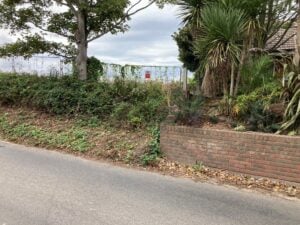 We are celebrating the recognition of an ancient public footpath from Eastry to Hammill in East Kent. In August 2022, the society… Read more »
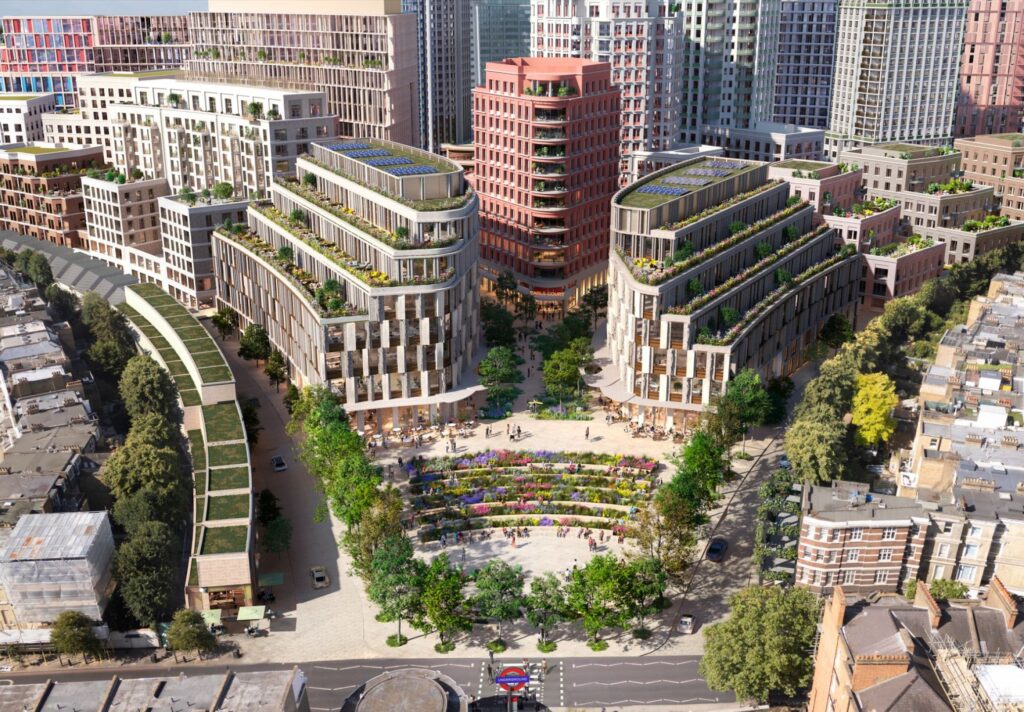 London Plan policies on housing density on major sites have long been based on net rather than gross residential densities. These net… Read more »
- The Annual General Meeting (AGM) of the Friends of the Scrubs will be held on Wednesday 30th September at Brickfields Hall, 68A Eynham Road,… Read more »
- Duck food, sourced and packaged by The Friends of Ravenscourt Park is now available from the Paddenswick Tea Gardens cafe! Buying a… Read more »
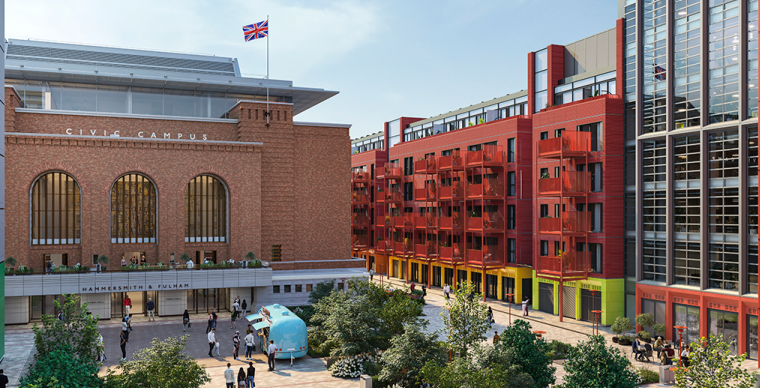 It’s that time of year again! Our AGM is your chance to hear how the association has got on over the past… Read more »
Most Popular Articles This Week


 ©2026, The Hammersmith Society | Privacy | Contact | Join | @ Subscribe | ⓘ
Campaigning for over sixty years