We welcome as members individuals and organisations who care for Hammersmith

As a Member, you will receive regular updates outlining our activities, giving you the opportunity to participate in consultations and campaigns. We'll invite you to our Awards Evening and AGM, and other events. Members are always encouraged to take an active part in the work done by the committee – come along and see if you can help.
The membership year runs from 1st Jan, and only costs £6 for individuals, £8 for couples or families, and £15 for organisations. Additional voluntary donations always welcome.
 Join Here
- Published: 01 Oct 2021


We were pleased to announce our 2021 Awards at the AGM at Riverside Studios on Wednesday 29th September, introduced by committee member Derrick Wright and presented by our patron, Cllr P J Murphy, Mayor of Hammersmith & Fulham. The large number of members and supporters present were provided excellent hospitality in the River Room. Full details and a narrative are posted on our 2021 Awards page; more AGM photos and administrative documents are posted on our 2021 AGM page.
(AGM Photos: Louisa Whitlock. Click for full-size versions)
Summary
Our Guest Speaker was Sherry Dobbin, from FutureCity, who spoke about unlocking the potential of city places with some fascinating ideas for how this might work for Hammersmith Town Centre. She showed several existing examples from around the world and an installation opened at The Shard on the same day.
 Our Environment Award was given to The Quaker Meeting House in Bradmore Park Road. We first visited as it was completed in October 2020, and were immediately impressed with the quality of design and construction, its environmental credentials, and the feeling of serenity. Our original article is here
 The Tom Ryland Award for Conservation was given to the Mission Hall in Iffley Road which has now been given a new lease of life through a major conversion and refurbishment to provide office, meeting and community facilities.
 The Nancye Goulden Award was given to the landscaping of 245 Hammersmith Road. The unusual stairs & inclined lift immediately set it out as something different. The landscaping and recreational benefits provided by this very substantial development set a great example of how we can restore people priority in the bustle of traffic and commerce which makes up the town centre.
Wooden spoons were awarded to two utilitarian horrors – 5G masts and their associated street clutter, and the ugly Thames Water fountains.
 After the Awards, we turned to our usual AGM business, including Chairman’s report. Finally we reminded all present that in 2022, as our new banner and anniversary logo shows, the Society turns 60. We are seeking ideas to celebrate the occasion next summer – please send us your thoughts.
- Published: 05 May 2021

Michael Cartwright unveils the Capability Brown Statue
The Hammersmith Society very much regrets the recent death of Alderman Michael Cartwright, Councillor for Hammersmith Broadway ward from 1992 to 2018, Deputy Leader 2014-2018, and Mayor 2017-2018.
A diligent public servant, Mike became Deputy Leader of the Council in 2014, leading the Administration to introduce the largest number of Council-funded police in the Borough’s history.
While chair of the Association of London Government’s Transport and Environment Committee, he was key to saving and expanding the London Freedom Pass – an invaluable benefit for older residents.
Mike was also a local magistrate for thirteen years, becoming Chair of the Bench. He was instrumental in a series of measures to support women dealing with domestic violence.
He was governor of three borough schools – Flora Gardens Primary School, Sacred Heart School and Larmenier and Sacred Heart Primary School, chaired Mortlake Crematorium Board, and served on the Western Riverside Waste Authority.
This Society came to know him best as a longstanding member of the Council’s Planning Committee. As a Chartered Surveyor he was not only expert but trenchant and perceptive. Combined with long experience, his qualities made him a formidable force on the committee. We were honoured that he should unveil the Capability Brown Statue in one of his first Mayoral duties, in May 2017.
With grace and good humour Michael Cartwright flourished as Mayor of Hammersmith and Fulham in his final year as a Councillor. Such was his stature, in 2019 he was given the honour of Freedom of the Borough, its highest civic distinction, and was made an Alderman following a unanimous vote of thanks by all the Borough’s councillors – an honour which meant a lot to him.
A rock for colleagues, wise, witty and kind, he made a huge contribution to the wellbeing of others in a life of public service.
- Published: 10 Apr 2021

181 Talgarth Road – April 2020 RSHP scheme
In April last year we reported on the hotel development proposed for the former West London Magistrate’s Court site at 181 Talgarth Road, a proposal which would include two hotels: a 442-bedroom, 23-storey luxury hotel, and a 440-bed, 10-storey tourist hotel. Permission for the development was agreed in July, and after referral to the Mayor’ office the consent was confirmed in December.
Since then, with the change in economic circumstances, the developer Dominvs Group has chosen to revise the scheme: retaining the tourist hotel, but providing Student Accommodation for up to 696 students, possibly linked to the Imperial College White City campus, in place of the 23-storey luxury hotel.

181 Talgarth Road – March 2021 proposed scheme
Initial proposals are for a student block with massing generally similar to the approved luxury hotel block, but adjusted to reduce the maximum height by two storeys, to 68 metres, and to enlarge the plan to add 2,400 sq. m floor area. We understand that TP Bennett, architects of King’s House at the other end of Shortlands, are to be appointed for this building, and that the accommodation would be run by Scape who are well-known in the sector.
No change is proposed to the tourist hotel design, but the landscaped public realm within the site would become a student amenity space, providing access to the student cycle store – a more mundane provision which lacks the tempietto, restaurant and bar which created a welcome spark in the earlier scheme. The prospect of a revised planning application has revived the considerable public opposition to the earlier development, and the Society is participating in consultations currently taking place.

181 Talgarth Road – 2021 proposed public realm
This new scheme opens a further chapter in the uncomfortable history of this important site. The story began with the sale of the land by the Ministry of Justice, evidently failing to follow Cabinet Office guidelines which require that, prior to commercial sale, sites in public ownership should be assessed for residential, educational or similar public benefit. The sale of the Magistrates Court site was advertised with enticements including ‘precedent for tall buildings’ and reports of ‘positive pre-application feedback from LBHF’ without revealing the LBHF advice received. It is not clear if the £42m purchase price paid by Dominvs was based on a development valuation gleaned from the ‘evolving’ Town Centre Masterplan – a plan which has been evolving since 2015, but has still not been reviewed through public consultation. The provisional Masterplan currently circulating is based on a plan which incorporates the completed A4 fly-under tunnel, describing a misleading urban context for the hotel site.
Continued
- Published: 29 Apr 2020
181 Talgarth Road is the site where the former West London Magistrates building stands, located between the Ark office building and the BP garage, at the foot of the flyover.

West London Magistrates court: Initial design – now superseded
After the closing of the court facilities in 2017, the site was sold for commercial use, and in January 2019 the new owner submitted a planning application for a 800-bed hotel development. The proposals attracted widespread opposition from the local community including the Hammersmith Society, and as a result, in an unusual and public-spirited move, the developer, The Dominvs Group, chose to set aside the application, despite receiving a planning report recommending approval.
After discussions with LBHF, the Dominvs Group appointed a new design team with architects Rogers Stirk Harbour and Partners (RSHP), who are also the architects for the Town Hall Civic Campus project.

West London Magistrates Court: RSHP redesign
The new design team were set to work to a demanding programme, and the Society joined a series of consultation meetings with the site neighbours, in particular the residents of the streets south of the site, whose outlook would have been dominated by the double slab block of the earlier scheme.
A planning application for the new scheme was lodged at the beginning of April, and the Society has now reviewed the proposals and returned comments to LBHF. The application may be viewed on the planning website here: 2020/00915/FUL.
UPDATED: Our detailed review is here:
 Letter to LBHF – Hammersmith Society comments
Continued
- Published: 09 Feb 2020
We attended the Policy and Accountability Committee (PAC) meeting on 9th September which quickly deteriorated into a pro/anti cycling stooshie. The two extremes expressed were roughly “build it now and just get on with it”, reflecting a populist mantra du-jour, and on the other side “they don’t ride safely or follow the Highway Code…” Significant climate change, anti-car and pro-air quality assertions were also made. Despite all of us being pedestrians at some point, and there being around 1000 cyclists per day compared with up to 1000 bus users per hour along King St, there were few speaking for the overwhelming majority.
These arguments serve to polarise the debate, create heat, yet shed little light. Our view is one of the practicality and evidence regarding safety and air quality that doesn’t support the existing plan. The evidence shows that the Broadway and Fulham Palace Road (the nearest analogy/datapoint to King St.), have higher NO2 levels than Talgarth Road, and far more than any side road. Adding a cycle lane wouldn’t reduce pollution according to TfL’s own AQ report but would slow buses to walking pace through removal of bus lanes, particularly on Hammersmith Road.

CS6 with accident hotspots 2018
TfL’s 2018 data from their exemplar CS6 built outside their HQ, Palestra, shows that most serious accidents still happen at junctions, for which despite all the cost, environmentally damaging concrete, and negative effects on other road users shown, this type of segregated path is ineffective in protecting the cyclist. ROSPA analysis shows that 75% accidents occur at or near junctions, and a peculiarity of London are the 20% of fatal accidents with HGV’s, often turning left into cyclists, for which the mayor is making new provisions.
As shown, minor accidents are also recorded at bus bypasses, which is unsurprising. Those complaining that cars are ‘the problem’ may note that at the time this photo was taken (lunchtime, June 12th 2019) after a meeting at TfL’s HQ, only buses and commercial vehicles were causing pollution and being delayed. We all still need bin collection lorries, the post, deliveries of items that won’t fit on cargo bikes and so on. The overwhelming majority, especially elderly, very young, disadvantaged and vulnerable people need buses and bus lanes (removed for CS6 above, and planned for removal as part of TfL’s CS9). We don’t relish King Street or Hammersmith Road looking anything like this.
Continued
Posted in Consultations News
Tagged Broadway Cycling Environment / Streetscape Transport/TfL
- Published: 17 Jan 2020

Click on the newsletter image to open the pdf
Posted in Newsletters
Tagged Addison/Brook Green/Olympia Affiliations Airports Broadway Conservation Council Counters Creek/Tideway Tunnel Cycling Education Environment / Streetscape Hammersmith Bridge Major Developments OPDC Ravenscourt/Grove Riverside Smaller Developments Town Hall Transport/TfL West London Magistrate's Court White City
- Published: 17 Jan 2020
Many journals have pronounced that London’s ‘filthy air’ is killing thousands, and we note that all candidates standing for Mayor of London this year quote Air Quality as a pillar of their campaign. Here, taking the long view, we look more closely at the claims and wider issues, and how they apply to Hammersmith, public transport and cycleways.
According to King’s College, the reference for air quality measurements, London is the 2,516th most polluted city in the world
We think that climate change is the key issue here, and which if properly addressed, would deal with many of today’s air quality issues. The reference work ‘Mortality Effects of Long-Term Exposure to Particulate Air Pollution in the United Kingdom’ (A report by the Committee on the Medical Effects of Air Pollutants [COMEAP], updated 2018), says clearly in its executive summary ‘As everyone dies eventually no lives are ever saved by reducing environmental exposures – deaths are delayed resulting in increased life expectancy.’

Air quality in London started deteriorating about 400 years ago, and for the entire time the Georgians and Victorians were painting the globe pink, sulphur dioxide was around 40 times the current WHO guideline level of 20 µg/m3. It was in fact raining sulphuric acid AKA ‘acid rain’, the effects of which can be seen on the Palace of Westminster or in Turner’s paintings. The Great Smog of 1952 that killed perhaps 12,000 appears as a peak on the graph, and created a level over 10 times the level it is now, but our nonagenarian, and in one case centenarian parents survived and are still here with us, begging the question what effect it had on long term life expectancy.

The answer from COMEAP is around six months if you could (unrealistically) remove 100% of all air pollution from all sources, or more realistically 20 days per µg/m3 removed, plus you have to live to those grand old ages otherwise healthy. Not as much as the headlines or Twitterati would have it.
Of course this isn’t a complete list of pollutants, there’s PM2.5, PM10, NO2, and Ozone which have differing WHO thresholds as shown here, and those with respiratory conditions are much more affected than others, explaining most of the 1952 deaths.
Continued
- Published: 16 Jun 2019

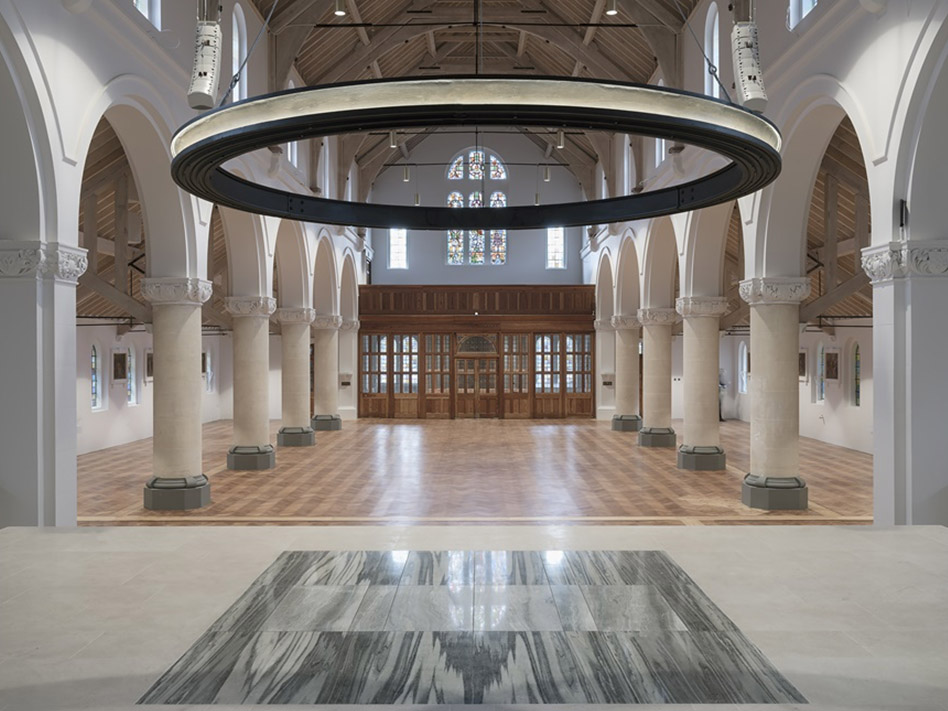


We were pleased to announce our 2019 Awards at the AGM at Olympia on Wednesday 12th June, introduced by committee member Derrick Wright and presented by our President, Prof. Hans Haenlein. The large number of members present were provided excellent hospitality by Olympia in their Apex Room. Full details and a narrative are posted on our 2019 Awards page; the AGM photos and administrative documents are posted on our 2019 AGM page.
Summary
In our 30th year of Awards, we renamed our Conservation Award the Tom Ryland Award for Conservation in honour of our past Chairman. We were delighted to present it for the first time to St. Augustine’s Church in Fulham Palace Road.
There were four Nancye Goulden Awards this year, in two distinct pairs, all are projects which have made positive contributions to the Hammersmith streetscape.
The first two are King Street shop fronts: Paintbox Studios and Coffeeology. The other two awards recognise another type of improvement to the streetscape in the form of the Hammersmith Grove Parklets and The Planting under the Flyover. The wooden spoon went to phase 1 of Sovereign Court.
We were also given a detailed presentation by SSPARC architects covering the history of Olympia and the extensive redevelopment plans, followed by an update from RSHP architects covering the Town Hall redevelopment plans. In a Q&A session, Councillor Wesley Harcourt kindly gave us an impromptu update on the Hammersmith Bridge situation.
- Published: 24 May 2019
Members of the Committee visited our 30th Annual Award Nominations on Sunday 19th May and shortlisted them. They’re all shown on the nominations page in their categories, with a selection here.
If you would like to comment on them, or make suggestions for winners, please use the comment form on the above page, or on Instagram.


Award winners will be announced at the AGM at Olympia on 12th June.
Members, guests, and friends will be warmly welcomed.
- Published: 30 Apr 2019

Click on the newsletter image to open the pdf
The Special 20-page Anniversary Newsletter has been published, celebrating 30 years of Hammersmith Society Awards. Printed copies are being distributed to subscribing members.

News Topics
Our Diary
-
Committee meeting
📆 Mon 13th Jul | 18:00 - 20:00
-
Community Day
📆 Sat 18th Jul | 11:00 - 17:00
🚩 Ravenscourt Park (map)We're taking a stand - come along and say hello
-
Committee meeting
📆 Mon 14th Sep | 18:00 - 20:00
Recent News


Local and Affiliate News
One news item from each selected source – more on our Local and Affiliate news page. Subscribe to our weekly highlights
 Concern over road changes, Soho House Festival and conflicts of interest Read more »
 Over the last six months I’ve written twice about data centres, highlighting both the challenges and opportunities that they present to local… Read more »
- Civic societies and community groups are often depicted – and from various directions – as nimbys, blockers and stubborn conservationists. They are… Read more »
 The West London council confirmed that it was now focusing on keeping the bridge open for cyclists, pedestrians and river traffic Read more »
- Full Council: Wednesday, 15th July, 2026 7.00 pm Read more »
- Cabinet: Monday, 6th July, 2026 7.00 pm Read more »
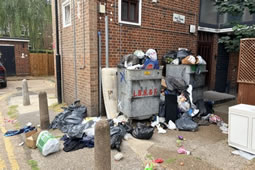 Council CCTV cameras fail to deter dumping by block of flats Read more »
 Connect2H&F aims to bypass traditional recruitment routes Read more »
 Last week, Monday 29 June to Sunday 5 July, marked ASB Awareness Week – where safety partners throughout the UK worked together… Read more »
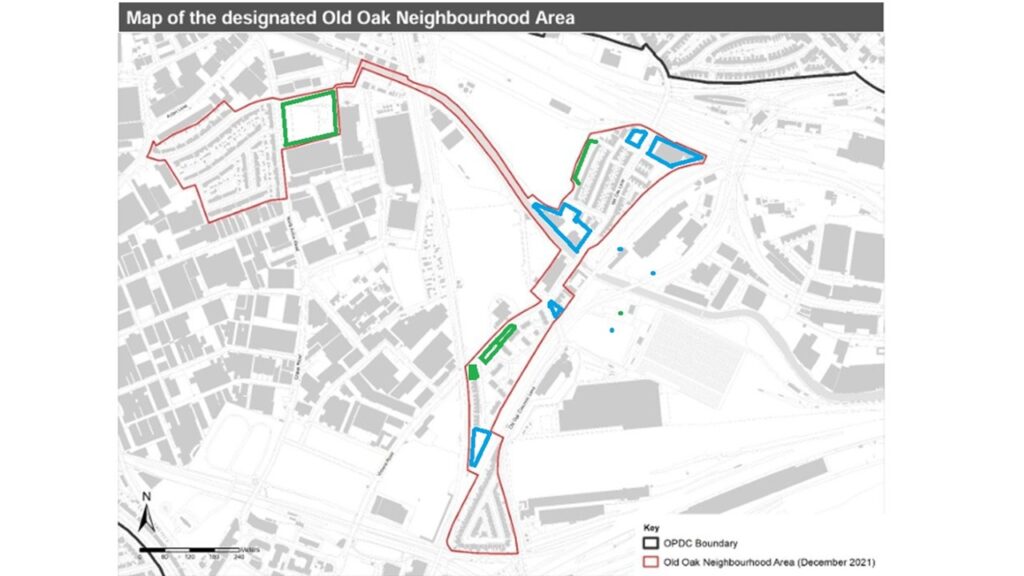 The Forum’s open meeting on July 2nd agreed to the start of an two month public consultation from July 8th to September… Read more »
 James Small-Edwards, the London Assembly Member for West Central, said he will continue to press TfL to do the works Read more »
 Last week we held a well-attended talk on the subject of Planning Enforcement, chaired by Brian Keane of PE&T, which we recorded.… Read more »
 We are celebrating the quashing of an inspector’s two decisions to refuse to register new commons in Hayle, Cornwall. On 30 December 2020, two applications were made to register common… Read more »
- As notified to all members in our June newsletter, we will be holding an open meeting of the Forum and the St… Read more »
Most Popular Articles This Week


 ©2026, The Hammersmith Society | Privacy | Contact | Join | @ Subscribe | ⓘ
Campaigning for over sixty years