We welcome as members individuals and organisations who care for Hammersmith

As a Member, you will receive regular updates outlining our activities, giving you the opportunity to participate in consultations and campaigns. We'll invite you to our Awards Evening and AGM, and other events. Members are always encouraged to take an active part in the work done by the committee – come along and see if you can help.
The membership year runs from 1st Jan, and only costs £6 for individuals, £8 for couples or families, and £15 for organisations. Additional voluntary donations always welcome.
 Join Here
- Published: 06 Feb 2024
The council has reworked several pieces of longstanding planning work, and is asking for feedback from you in a series of consultations – details in our diary. We’ve been keen to progress this matter for a while, and it’s good to see new activity. Firstly we should set the historical context, to better understand how we got here, what’s new, and not so new.

2015: Town Centre Working Party supports “West London Link” vision/Flyunder
Longstanding members will recall the 2008 Flyunder proposals that were developed originally by the West London Link group of architects and Hammersmith BID, including our former chairman Tom Ryland as a leading light, and then presented to the London Festival of Architecture that year. A significant part of that plan involved a reworking of Hammersmith to face more towards the river, by removing the awkward A4 spur road to the Broadway (seen above), and connecting King Street to St Paul’s Church, creating a much better and more identifiable ‘centre’. The flyunder would have been funded by building over what is now the A4, linking the roads cut in the 1950’s. This website maintains a series of articles under the flyunder tag, that details some of this work, along with the WLL website above which includes a detailed archive and feasibility study from the time.

Flyunder as proposed in 2008
The potential money ran out fairly spectacularly a year later when the finance industry melted down, but the whole issue had its first revival in 2011 when the flyover closed and was thought to be doomed. However the 2012 Olympics came to the rescue, because, as those imbued in the dark arts of Olympic transport will know, there are very strict maxima laid down for journey times between Olympic venues, no doubt causing the Parisians sleepless nights ahead of this year’s games. Without a flyover, the time to the western venues such as the rowing in Eton would be easily exceeded. That logic led to the special Olympic Travel Lanes, of which there is still the odd vestige if you know where to look. The flyover, as a piece of critical Olympic transport infrastructure, was patched up quicker than you can say ‘Hammersmith Bridge’, and then said to be good for about another fifty or sixty years.
The Hammersmith Residents Working Party was an early version of what came to be called resident-led commissions, which produced the Grimshaw report of 2019 addressing the central Hammersmith regeneration area. Sadly due to the range of topics covered and the divergent nature of the competing demands and constraints, the HRWP couldn’t agree the outcomes in the report and it was never adopted as a Town Centre Supplementary Planning Document as intended.
Continued
- Published: 20 Dec 2023

Hammersmith Study Group: Exhibition: Ravenscourt Park (1970)
There should of course be an obvious answer to the question of what constitutes a park. Summer’s faded into a distant memory, so it’s a good time to take stock, with a season of site visits, reviews of virtual CGI, and actual wooden models of new developments in full swing, showing the newly alluring sunlit ‘park’ images, here in our mid-winter. So far, these suggest that many a developer has rather different idea to us, but perhaps it’s just a naming thing.
Celebrating our parks
Without even considering Wormwood Scrubs, we have several wonderful parks in H&F, the largest of which – Ravenscourt and Bishop’s Parks – provide for almost every conceivable outdoor leisure need, even including exhibitions and Laser shows. From basketball nets in the north to a paddling pool in south, taking in sufficient space to play several team games – of football or cricket – in the middle, tennis courts, toddlers playgrounds, dog exercise areas north and south, popular all-weather football pitches adjacent, and greenhouses and community gardening alongside. Even a renovated and listed Tea House. And that’s just Ravenscourt Park.

Beckett Wharf park
Bishop’s Park has a Grade I listed palace adjacent, the river and riverwalk too. This gives us a pretty comprehensive idea of the purposes of a park. We even have possibly the world’s smallest park, Beckett Wharf Park, between the bridge and Riverside Studios. One of our members has recently worked with Kier Construction to renovate it as part of a community contribution.

Ravenscourt Park, November 2023
The Open Spaces Society, to which we’re affiliated, noted recently that parks are under unprecedented pressure from commercial activities, and we see a little of that here with fairs, concerts and so on, but those are modest by comparison with say, Hyde Park, where a good part is cordoned off for most of the summer for the huge ‘BST’ outdoor concerts. Even so, some damage occurs as the photo adjacent shows.

Lewis Cubitt park
New parks
Perhaps we’ll get a better feel for the modern take on a ‘park’ or open space by looking at recent developments? Kings Cross seems a reasonable place to start, with the possibility to do what it likes with public spaces and presumably with few budgetary constraints. The ‘park’ shown adjacent is about the size of a communal garden of the type you might find in Notting Hill, the difference being that this is expected to be shared by a thousand or more people, the original by perhaps a hundred or two. There is perhaps no coincidence that the name of this example is connected to one of the great 18th century builders, Cubitt, rather than a name we might choose, say, Capability Brown.
A review of some proposed new developments we’ve looked at might help. We don’t have to go far for CGI proposals, and to compare then with some recently built. Mayoral Opportunity Areas, notably Old Oak and it’s environs provide good hunting grounds, in addition to those actually in the borough. The evidence suggests that developers, rather than producing fanciful CGI’s, might perhaps go and visit some of the many Victorian and Edwardian parks around us to see what they do, and what their public values might reasonably look like.

Earls Court: CGI proposed ‘park’

Westfield Residential: CGI (under construction)

The Grand Union (Alperton – 2023)

The Grand Union (Alperton – 2023)

HS2 Old Oak CGI ‘Parkland’

Original CGI for ‘Old Oak park’
Which one of these new developments has the space to play a team game of some sort or an individual game of tennis? Or any of the other activities listed above? Perhaps one.
Increasing physical activity must be a central part of everything we do
Continued
- Published: 06 Dec 2023

Shepherds Bush Market proposal
The council held a planning committee meeting on 5th December, as noted in our Hammersmith Weekly email, with the majority of the agenda devoted to the market redevelopment proposal. Officers have recommended consent.
After a short speech by one objector, following on from a rather longer exposition of the proposal by the planning officer and daylight consultant, the meeting was spectacularly derailed by protesters related to a group called ‘Protect Shepherd’s Bush Market’, and then cancelled.
We first engaged with the developers in October 2020, and most of the committee has been to one or more of the four exhibitions in various locations in the market over the last three years. The development hasn’t changed significantly over this time, it was born as a large set of buildings, somewhat awkwardly dropped into the Old Laundry Yard. We made our observations public back in April.
We followed up with a  letter to the planners in August when the plans had been published and we’d reviewed them, detailing a significant number of issues that need to be addressed before any consideration of consent, these being:
- CGI views: roof plant enclosures/29 Pennard outlook after dark/views with the site
- Roof plant enclosure on HS6 diagram
- Mitigation of intrusion on Pennard Road houses
- Daylight conditions in the Market area
- Concrete panels finish
- Playground provision
- Individuality of stalls
- Market paving
- Damp-proofing railway arches
- Landscape maintenance
- Design of passage at 42 Goldhawk Road
- Independent scrutiny of daylight report.
We were pleased to hear the independent daylight specialist’s review at the start of the planning meeting, addressing one of the concerns. This shows that there are some daylight issues, but they appear fairly modest for neighbours. However one or two locations will be significantly affected in and around Pennard Mansions, and mitigation needs to be provided, in addition to proper consideration of the likely limited daylight in the market, due to the size of the proposed overshadowing building – point 4. The meeting ended abruptly before we’d heard answers to the other equally important issues that we’d raised.
Continued
- Published: 30 Nov 2023

Hammersmith Weekly,
5th November 2023
Today we announce Hammersmith Weekly, an email containing a roundup of news focussed on our shared interest in the built and natural environment in Hammersmith. Responding to feedback from our continuous member survey and the related AGM announcement that we no longer intend to print newsletters in pre-pandemic form, it’s a pick of the week, curated and concise version of selected additions to our Local and Affiliate news, and new Architecture and Construction news pages over the last 7 days, plus excerpts of any of our own articles published in the week. For completeness, we’ve added our upcoming diary events and selected Tweets addressing relevant matters of interest for Hammersmith and nearby.
We’ll continue to send our normal Society update emails accompanied by editorial for members and supporters when we publish our own articles; Weekly is a separate and optional email to save you trawling through so many of the available websites and emails. You can expect a dozen or so short curated excerpts in a weekly email, with links to the source websites for the full stories – example adjacent. Please consider supporting the third party sources directly if you’re interested in their content. Sign up here
A reminder of how our local news page works: where available, we automatically syndicate news from the websites of our affiliate organisations, plus a number of other relevant local and nearby public sources, including mention of ‘Hammersmith’, ‘OPDC’, ‘Old Oak’ or ‘Shepherds Bush’ in Parliament and by the GLA, and Hammersmith and Fulham Council’s Cabinet, Economy, Arts, Sports, and Public realm PAC, plus Planning committee feeds.
As the example adjacent shows, we’ve been testing it on ourselves and refining it for a month or two now, and recent topics have included: TfL funding, several questions in the House about the funding of HS2 and Hammersmith bridge, Council cabinet and planning meeting updates, London Forum updates on local planning reform, matters that affect London in the King’s speech in parliament, the Leaning Lady statue (to which we pledged £500), an update on Fulham Town Hall, improvements to Google Maps to include safer cycling routes, updates on OPDC approval of more 55 storey towers, threats to London parks from commercial exploitation, an update from Coningham police panel, Wormwood Scrubs PSPO, and Brackenbury area flooding. An archive is kept here, so you can see what it’s all about.
Sign up
If you ARE already a member or supporter receiving our emails, please go to an email we’ve sent you – any will do – and click on the “update preferences” link in the footer. This will take you to a personalised page where MailChimp will offer to send you an update email, so you can add Hammersmith Weekly to your preferences, like so:

Subscription options
Updating your preference is unfortunately a little convoluted so as to make sure you’re updating your own and not someone else’s, plus GDPR constraints which mean we can’t just send it to you without your permission.
If you’re NOT already a member or supporter, subscribing to our emails, please sign up here.
Continued
- Published: 30 Nov 2023

Community Schools Programme – Avonmore Primary School and flats as proposed
As advertised in our diary and mentioned in recent news, the council consulted on its proposals for a new Avonmore Primary School in the first week of October via three events: two in-person at the current school in Avonmore Road, and one online. We attended the two in-person events, and noted that they were quiet.
Residents were also invited to comment via the council’s website. The council say that a hundred people responded, which included us as attendees, and we noted the survey did no more than provide a comment box, lacking specific questions.
We supported our affiliate Avonmore Residents Association (ARA) in their running of an independent and much more specific consultation to enable residents to have their say. 102 individuals responded, and of these 46 also provided their comments.
The quantitative survey results are clear: by a large margin the majority of residents are ‘concerned’ or ‘highly concerned’ on each of a dozen specific issues, including those relating to residential amenity and loss of public land which we’ve raised in the past.

Avonmore Consultation – Feedback
Equally importantly, the vast majority (>80%) agree that the council has not consulted adequately and further, that its claims of majority public support can’t be substantiated. The full background to the building on school land issue can be found in our education section.
- Published: 08 Oct 2023

Riverbed geotechnical bore drilling
You’ll probably have noticed a drilling rig in the river adjacent to the bridge in recent weeks. We understand that in addition to geotechnical bores through the main piers, the rig is in the river to drill bores to investigate the riverbed strata to understand just how strong it is, if and when the Foster-COWI temporary bridge goes ahead.
While the relevant people and equipment are onsite, bores are also being drilled into the foundations alongside Digby Mansions, to ensure the chain anchorages and bridge abutments are in good shape. So far it appears that Bazalgette and his predecessor, Tierney Clark, did good enough jobs, and the foundations can take the extra loads.
The separate ‘stabilisation’ works are progressing, as we reported before, the concrete has been poured into the troublesome pedestals. However, there have been delays in getting the steel support frames built and ready to lift the main bridge chains, allowing the bearings to be replaced. That work is yet to start, which means that the delayed schedule for the bridge to open to cyclists this month looks like it’ll stretch out further. We don’t have a schedule yet for when the bearing replacements will be complete and the bridge reopened, restricted to pedal power.
As far as funding the Foster-COWI proposal and full refurbishments are concerned, the LBHF website says that the ‘business case’ was submitted to the DfT in Dec 2022, and our local and affiliate news page threw up this question from Hansard last week mentioning its ongoing review. It’s not clear how much progress this represents.
Meanwhile, MP’s North and South of the river have spotted an opportunity to ask the government to drop a crumb from the post-HS2 feast to progress the project, while also noting the inevitable cost increase, now to over £200m. More than a crumb then – and we’re hungry for a positive answer.
Continued
- Published: 06 Sep 2023

H&F wheelie bins
Members have been writing to us about council plans for wheelie bins in some areas, though parts of the borough already have them from a pilot scheme. Our interest is to ensure that they don’t damage the streetscape and the wider environment through excessive or unnecessary deployment of plastic, especially of the large and/or dayglo variety.
The council circulated leaflets to 16,000 households in the borough announcing more wheelie bins and food waste containers. To date, there has been no suggestion of a public consultation process with residents before deployment, which hardly matches the philosophy of ‘Doing things with residents, not to them‘ listed against every council policy. There is a possible opportunity to reject them, but only after the fact, through an unpublished ‘reassessment’ process. Out would go your dustbins (if you have them) and in would come tall and bulky plastic bins – one for waste and one for recycling. You would also be given a smaller food waste container.
To take the food waste first – for the majority who do not have a compost bin, this container may be helpful. It would remove food from black bags and so reduce ripping and spillage. It can be locked to prevent animal access and the waste will be processed to make fertiliser. So far, so good.
The large bins are another matter. Not only are they much taller than a regular dustbin at about 1.1m, and therefore much more obtrusive above a wall or fence, they are also bulky and take room in a front garden. For residents who pride themselves on an attractive and green garden this will come as a blow. Where are the bins to go? Who is to pay for the necessary re-paving?
As the bins have to be wheeled out to be emptied their access has to be clear – no shielding them behind shrubbery. If you normally do not have a bin you would be required to have two. Bins would be the first thing that greets you and your visitors, and the ‘kerb appeal’ of your home and the whole street could be significantly harmed as the photos below show, reducing amenity, social and financial values, to the detriment of all – aside from an unspecified figure on the council’s bottom line.
Bin sizes

World’s fastest wheelie bin- 88km/h
The standard 240L dayglo green recycling bin is the largest size commonly available, and three – yes three – times the size of the a conventional 80L bin, which is about half the height, and one-sixth of the weight – empty. It can hold five bin bags, or the weight of a large grown man, as many a comedy sketch – or recent world speed record – confirms. The black ‘waste’ bin at 140L is nearly twice the size of a conventional bin. This represents an aggregate of just about five times the bin storage space you probably have now, and in a world increasingly short of space, and trying to reduce waste of all sorts, appears to send a very odd message.
Continued
- Published: 17 Jul 2023


(AGM Photos: Franco Chen. Click for full-size versions)
We were delighted to announce our 2023 Awards at the AGM at 245 Hammersmith Road on Thursday 29th June, with the Awards introduced by vice-chairman Richard Winterton and kindly presented by our guest speaker Andy Slaughter MP. Members and supporters were provided excellent hospitality for which we would like to thank the 245 staff, and of course our very own Robert Iggulden and his many assistants.
Award details and the associated narrative are posted on our 2023 Awards page together with a link to the updated spreadsheet of all Awards since 1990, and matching interactive Awards map. More AGM photos and the administrative documents are posted on the dedicated 2023 AGM page.
Summary
After a rapid run though the mandatory AGM procedures, approving the 2022 minutes, 2023 accounts, and committee re-elections, our guest speaker needed no introduction. As our local MP, with Twitter handle @Hammersmithandy, he has over 40 years experience as local councillor, deputy then leader in 1996, and an MP since 2005. He talked about the various battles over the West Ken. estates that were originally given over to CAPCO for redevelopment as part of Earls Court, then reclaimed, the continuing issues with Charing Cross Hospital, the Bridge, flooding, and then onto large developments and the general pace of redevelopment, with a particular discussion on Shepherds Bush Market. He also mentioned that with the recently confirmed electoral boundary changes, his constituency is, not for the first time, being radically reshaped to lose the northern half to Ealing, while he could gain Chiswick in the new ‘Hammersmith & Chiswick’ constituency should he be elected next time. He subsequently answered a number of questions from the audience including a topical one about Thames Water.

This year the main Environment Award was given to The Hoxton on Shepherds Bush Green. An addition to its own merits discussed in detail in the narrative, the building achieves the unusual feat of making a slightly awkward red brick building adjacent – Lawn House – fit better into the streetscape, so that the whole of ‘The Lawn‘ can be seen as a piece, perhaps the most characterful stretch of buildings in the borough, having won 2 further awards from us: the Dorsett (2015), and the Palladium (2022).
 We again presented the Jane Mercer Award for “proactive co-operation, collaboration and communication” to a community gardening project – this time Askew in Bloom . The group shares some of the same enthusiastic members as last year’s winner, the Green Project, but this project has been running independently since 2019. It brings daily joy to what used to be a fairly ordinary W12 thoroughfare, and they are now spreading the word to other parts of the borough, starting with Dalling Road. More power to their collective elbows – and fewer asphalt tree pits!
Continued
- Published: 21 Jun 2023

C9 safety record – collision rate involving pedal cycles King Street
(C9 route only)
The council’s short-notice decision to make C9 permanent was reported in HammersmithToday in March. That would be less significant if the January to June Key Decisions List had mentioned it, or if the cycle and walking commission had been in the loop.
This key decision was made on 6th March – on the cusp of a legal minimum five working days notice, but despite being ‘key’ was not sufficiently important to be discussed at the 17 minute Cabinet meeting that day.
We are in the business of being a ‘critical friend’, as a former chair once put it, and here we need to be critical. An apparent reluctance to encourage public – or even cabinet – scrutiny in such a significant decision making process is concerning. Let’s be clear: we expect a well-designed, safe and efficient public transport system for everyone, and the C9 bidirectional design unnecessarily precludes that simple and democratic vision, marginalising those unable to cycle – and that’s quite a few. We might also reflect on the fact that bicycles are ‘vehicles’ in law, and while cycling is classed as ‘active’, it remains a form of private transport being favoured over actual public transport, while at the same time being encouraged to use a less safe infrastructure.
Without independent design and vetting, the council created and reported on it’s own survey in October/November 2022, on which the decision appears to rest. The detailed report has been redacted which raises its own questions, but the summary is problematic too. Firstly it’s a small self-selecting sample of around 700 people, of whom only around half live in the borough. Secondly, 45% of the able-bodied, and 22% of the disabled respondents said their preferred mode of transport was cycling. But only 3-4% of the public actually cycle according to TfL’s cycling counts, casting respondents as ‘keyboard warriors’, unrepresentative, or both.
The survey data, redacted as it is, shows a design successful enough to split the public 92% against (drivers), 89% for (cyclists), with 68% of disabled respondents not regarding C9 as beneficial. Overall, only 52% of the respondents thought C9 to have a positive impact, and last time that percentage voted for something of significance, there was some notable buyer’s remorse.
Safety
It’s been widely reported by others that this two-way design is, rather then the moniker ‘safer’, actually the more dangerous cycle path, as the accident rate (above) confirms. We’ve disregarded the council’s collision data supporting its decision, as it erroneously compares three years of pre-C9 accidents with less than one year with, while failing to normalise the data as an accident rate, per the chart above. Nevertheless, it still shows a higher percentage of cycle-related accidents since C9.
The risks were evident before implementation as a result of advice from transport experts, including those that have studied Dutch and Danish implementations (the latter removing bidirectional paths in urban areas over a quarter of a century ago on safety grounds), through the council’s own unflattering public engagement exercise (painfully extracted by FOI), it’s own Walking/Cycling Commission – which was not consulted in detail – it’s own Disabled Residents Commission, and, last but not least, us! 80% of accidents continue to happen at junctions, and much vaunted segregation does little other than provide a false sense of security for unwary users, to which we might partly attribute the increased accident rate.
The Disabled Residents Commission didn’t support the existing ‘temporary’ scheme, or the bus bypass concept, their abandoned bus shelters, or staggered pedestrian controlled crossings, and were as surprised as we were to see the 22% claim above. For reference, TfL’s latest data says 83% of disabled and 82% of able-bodied Londoners have never used a bike.
We put these and further specific points to Cllr. Holder, responsible for this policy, who passed them on to officers for detailed response, yet to be received. At the moment, we have no idea what a proposed ‘permanent’ C9 looks like, such is the lack of communication and consultation on this important transport artery.
Updated situation, post-pandemic
Continued
- Published: 12 Jun 2023

Breathe London solar-powered wireless AQ monitor – close up on a lamp post on C9. These are Clarity node S sensors
As an off-beat way to mark the half-century since that iconic song Can the CAN topped the charts in June 1973, in the last six months LBHF has sponsored air quality monitors installed on roadsides near a number of primary schools, and on the C9 cycleway. The short and long-term numbers show that air quality isn’t very poor as claimed, suggesting instead that the Clean Air Neighbourhoods policy should be canned, or rather better, renamed and prioritised towards the basket of the other proposed environmental improvements in an unfortunately misnamed policy. With London Climate Action week around the corner, this is especially true when the extra miles, economic and other downsides of the proposed LTN’s are considered.
The policy aims to improve the overall environment in H&F, and who can deny that’s a good idea? But the unnecessary LTN part of the policy is likely to make the air worse in the worst hot spots, and the PR fails the fact-check, which we explore further below.

Our interactive map of ‘BreatheLondon’ sensors coloured by sponsor, May 2023. Click for more detail
50 monitors in H&F were supplied by Breathe London, as part of a 430+ fleet across London supported by Imperial’s ERG (Environmental Research Group). When they produce data, which can be intermittent because they’re radio linked, they appear to give reasonably consistent results in line with the council’s ‘regulatory’ stations HF4 and HF5 at Shepherds Bush Green and the Broadway, plus a new one, HF7 by Frank Banfield Park, which are run professionally by Ricardo Environmental. Those stations are rather more sophisticated and reliable, covering more pollutants than the NO2 and PM2.5 measured by the new monitors, which are nevertheless of most interest. We’re told that the council is also supplementing these with a private network of sensors, details of which are unavailable, though this from 2021 turns up in searches. In this article, we set the scene for an ongoing citizen science project, building on a previous article
A good news story

Long Term AQ Trends 1970-2020
[ Chief Medical Officer’s 2022 Air pollution report ]
Contrary to many reports, since the H&F Air Quality commission first reported in 2016 (and the 2015 publication of the KCL report the council relies on), average nitrogen oxide levels in the borough have nearly halved, in line with the national figures shown adjacent. The decades-long steep straight-line downward trends previously described, suggests a proportionate and realistic plan is needed to address causes of the remaining local issues, rather than the imposition of unhelpful LTN’s.
PM2.5, though a quarter of the level it was in 1970, is still said by the WHO to be the main concern. While the council’s CAN page describes a good range of issues, it relies on short term pandemic-skewed data to shore up a fragile argument, ignoring long-term trends. If the graph adjacent represented rates of infant mortality, road accidents, heart attack, cancer rates or obesity, everyone would be singing from the rooftops, celebrating great successes. However normal rules don’t apply to Air Quality.
‘Clean Air’ vs. Roads
Continued

News Topics
Our Diary
-
Committee meeting
📆 Mon 13th Jul | 18:00 - 20:00
-
Community Day
📆 Sat 18th Jul | 11:00 - 17:00
🚩 Ravenscourt Park (map)We're taking a stand - come along and say hello
-
Committee meeting
📆 Mon 14th Sep | 18:00 - 20:00
Recent News


Local and Affiliate News
One news item from each selected source – more on our Local and Affiliate news page. Subscribe to our weekly highlights
- Serious questions asked of Hammersmith and Fulham Council after fire at 'neglected' building kills 3
 The fire broke out at the former Over 50s Centre on the White City Estate on the evening of June 20 Read more »
 - Cabinet: Monday, 6th July, 2026 7.00 pm Read more »
- Seasoned observers of London politics weren’t surprised when Conservative leader Kemi Badenoch rolled up at Westminster Council’s 20-storey, 1960s, Victoria Street headquarters… Read more »
 Joanna Averley’s latest newsletter to local authorities’ planning officers covers:- Policy and Guidance Updates New Plan-Making System Update Compulsory Purchase National Scheme… Read more »
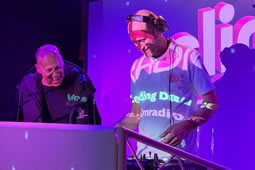 Previously online Slim Radio going live on DAB Digital Read more »
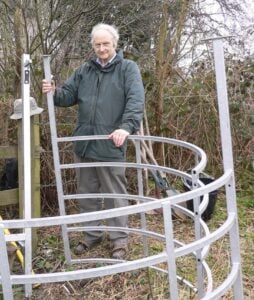 We are extremely sad to report that Chris Beney, our trustee and local correspondent, has died aged 93. He was active to… Read more »
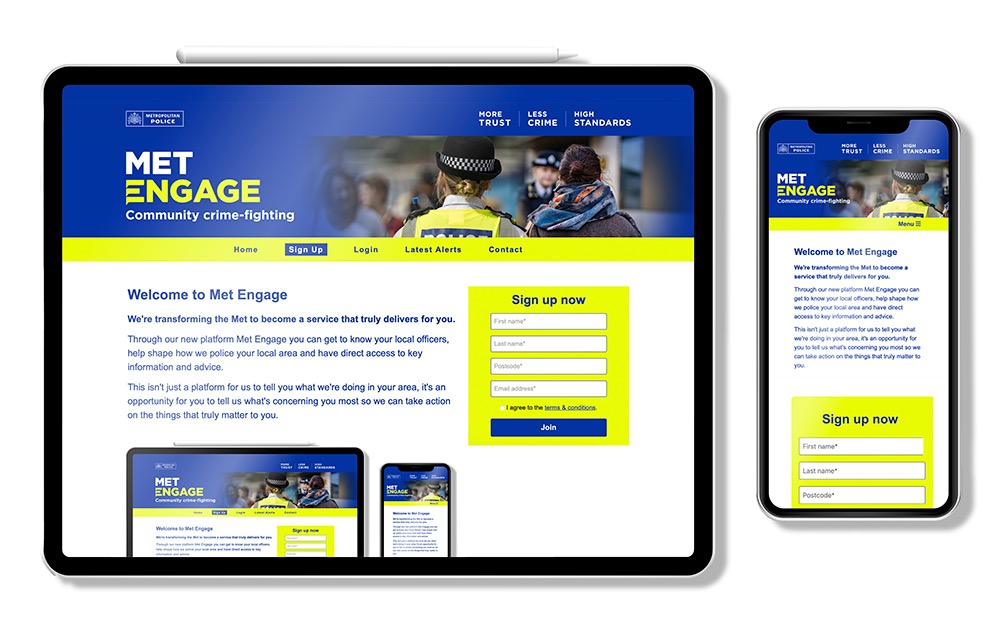 Latest from the local Police Team Drop-in Surgery : Thu 25 Jun 12:00 -15.00 DROP IN SURGERY Dear Residents , Our team… Read more »
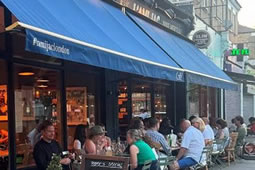 Council still gives wine bar permission to stay open for World Cup matches Read more »
 All bar one of 73 noise complaints made against L'Ami Jac were from someone living above the bar Read more »
- Health & Wellbeing Board: Monday, 22nd June, 2026 6.30 pm Read more »
 CATHNOR PARK AREA ACTION GROUP &SUB GROUP COMMUNICATIONPlease visit our blog for this and other recent posts:http://CPAAG.blogspot.com/ Local Priorities Burglary Message From PCSO Alina… Read more »
- We will again be at Hartswood Tennis Club in Hartswood Gardens for our AGM and Social on Wednesday 8 July at 7pm.… Read more »
 Last week the Soho Society, a civic society “for all the people that have Soho in their lives” voted at its AGM… Read more »

Most Popular Articles This Week


 ©2026, The Hammersmith Society | Privacy | Contact | Join | @ Subscribe | ⓘ
Campaigning for over sixty years