We welcome as members individuals and organisations who care for Hammersmith

As a Member, you will receive regular updates outlining our activities, giving you the opportunity to participate in consultations and campaigns. We'll invite you to our Awards Evening and AGM, and other events. Members are always encouraged to take an active part in the work done by the committee – come along and see if you can help.
The membership year runs from 1st Jan, and only costs £6 for individuals, £8 for couples or families, and £15 for organisations. Additional voluntary donations always welcome.
 Join Here
London Borough of Hammersmith and Fulham Council (LBHF)

- Published: 21st September 2022
Members of your committee, affiliates and resident groups around two primary schools – Avonmore and Flora Gardens – were concerned to see the revival of an unreconstructed Community Schools Programme on the recent council cabinet agenda.

Community Schools Programme – proposed Avonmore Primary School. Note that most greenery is actually Marcus Garvey Park
The agenda item was in effect crystallising the May 2022 Labour manifesto into council policy. However, we wrote 4 letters to the council and an article on the subject in 2020, highlighting concerns about the proposal to develop school land, and doubted that the policy was either wise or even justified on a number of specific points of planning and development practice. Furthermore we are aware that other options have been tabled at both locations and rejected by the council. Early consultations were curtailed by the pandemic, and specific promises were made by the council to pause and continue the conversation before proceeding.
To date, this has not happened, although some undocumented discussions amongst various parties have taken place. Under the circumstances we saw little option but to make a formal deputation to the council meeting, re-iterating community concerns, and making the following points:
Continued
- Published: 5th July 2022
When we last reported on the bridge, the stabilisation works were just about to start. Since then, the council’s contractors have built the ramps to take pedestrians away from the works on the pedestals, and have dismantled the outer casings, completely exposing the troublesome cast iron pedestals for the first time in 135 years, as shown in the photo gallery kindly provided by our member, Jane Bain. Bazalgette’s relatively straightforward design can at last be appreciated, clearly demonstrating the ease with which the pedestals could be replaced by unbolting, as we’ve suggested for some time.
On 28th June, the new Local and Affiliate News page (and homepage sidebar) provided news of the parliamentary adjournment debate initiated by the MP for Putney, Fleur Anderson, and contributed to by our MP Andy Slaughter, and Sarah Olney, MP for Richmond Park, on the subject of bridge restoration funding.
What ensued was a familiar ping-pong between the junior minister on one side, relying on a somewhat worn line that because it’s called Hammersmith Bridge it’s LBHF’s responsibility, and in a pincer movement, MP’s on the other side trying to winkle open the Treasury coffers, making the point that the closure effects are widespread in South West London by reference to Putney Society comments and others, and listing other bridges that are funded in different ways, mostly by TfL, in a ‘policy…all over the place’. It was also made clear that stabilisation work had been started at some LBHF financial risk, given the Task Force delays and machinations around the so-called ‘business case’ that we previously reported.
Worryingly, the business case is now referred to specifically in terms of the stabilisation works, and a further business case is now being requested for the major works to release the established 1/3 government funding. Given unimpeded government largesse elsewhere, and an excessively drawn-out process previously, this might be seen as a further delaying tactic, the politics of which are unclear. The point was made that a similar debate with a similar ping-pong & result occurred a year ago, and that the current TfL funding crisis is hardly helping matters, given its 1/3 agreed funding responsibility. The full debate text is here.
Reference was made to the Prior Information Notice (PIN), which we tweeted at the end of May for expressions of interest in the full restoration works, providing us the hope and expectation that a contractor and plan can be primed, notwithstanding funding. New Civil Engineer reports that 28 organisations have expressed an interest.
Continued
- Published: 5th July 2022

The implications for North Hammersmith of adoption of the OPDC Local Plan by Henry Petersen
Click on the image to open the pdf 
Under the banner ‘Taking a View’, from time to time, we’re pleased to publish articles by members on a subject of their choice, which they believe will be interesting to the wider membership.
Our member Henry Peterson has a a lifetime’s experience in the world of planning, and been a long-term adviser to affiliate St. Helens Residents Association and the Old Oak Neighbourhood Forum. He’s written on OPDC matters extensively, including for us, and his comments were mentioned several times in the recent Local Plan adoption meeting.
Here he takes the long view of what’s happened at OPDC, specifically in its long Local Plan development and eventual adoption on 22nd June, with reference to the falling-out with CarGiant that unravelled its original aims, and suggests what the plan now means for North Hammersmith.
The alarming vision presented is a land-grab to replace the lost CarGiant area, coupled with yet more ultra high-rises on the horizon in North Acton, and indeed 15-20+ storeys all along the boundary of Wormwood Scrubs with poor local public transport, sufficient for LBHF’s leader to withhold his support for another likely overbuilt Mayoral project.
In Henry’s words: “One of London’s last large brownfield areas deserved better.”
If you have an article you would like to be considered, please contact .
Articles are unedited personal viewpoints, and may not always represent the views of the Society
Posted in News Taking a View
Tagged Affiliations Council Local Plan Neighbourhood Planning OPDC Transport/TfL
- Published: 25th May 2022

Edward Woods Estate : solar panels on southern elevations
Our beady eye on planning applications has noted the seemingly innocuous application 2022/00504/CLP for removal of the arrays of a total of around 1000 solar panels across the southern elevations of the three tower blocks alongside the A3220, that form the Edward Woods Estate on the edge of the borough, but also ‘the largest building-integrated renewable energy array in London’.
The panels have recently been assessed as a high fire risk, and the plan is to remove them all, without replacement. Just a few hundred metres from the Grenfell Tower, this is another aspect of the ongoing cladding scandal, with added spice.
We’re fans of renewable energy, (this website is 100% renewably powered by way of a miniscule example), and it was good news seeing such huge arrays installed here in Hammersmith just a decade ago, and now equally disappointing that the greenest borough, can’t find a way to economically replace or remediate them by reducing the risk to acceptable levels, especially in the current energy crisis, in visible support of a very public climate change strategy. We’d like to understand if there are any implications for other buildings with such PV panels, including small residential – read on…
The situation helps highlight more arcane yet significant structural problems in the energy market, which we expand on below, and which despite all the recent column inches on the subject, have not been talked about in mainstream media. Your reward for reaching the end of the article is an insight into why you’re still regularly paying the gas price for wind or solar power.
Edward Woods was ‘The largest building-integrated renewable energy array in London’, the solar part of the project costing around £1m a decade ago. To put it in context, this scale is equivalent to about two years of the entire borough’s Solar Together buying scheme applications (and rather more than actual installations), a scheme which is being promoted by the council at the moment.
Perhaps a significant lesson is staring us in the face? As the climate change team say below, they’re focusing on other interventions instead, namely insulation and boiler replacements which are a more effective use of limited funds, especially on buildings taller than 18m with new post-Grenfell constraints. Take your cue, and look at this offer from the council to provide free Ecofurb Plans to help you identify what’s best to do in your particular circumstances, which can otherwise be a challenge to work out, as we mentioned before.
We approached Cllr. Wesley Harcourt, cabinet member for the Environment, for comment. The council’s climate change team responded with the statement in the blue box below.
Continued
- Published: 18th March 2022
It’s been a relatively quiet six months at the bridge since we last reported on it. LBHF announced the award of a 9-month stabilisation contract to deal with cracks in the cast-iron pedestals, at a cost of £8.9m, and there’s been some to-ing and fro-ing on who’ll pay (finally equally split LBHF, TfL, DfT), setting aside the cost of the future major repairs necessary, still undecided. The stabilisation will enable the main repair and renewal of other components of the bridge to follow in a separate contract.
During the stabilisation contract cyclists will not be allowed on the main carriageway but must wheel their bikes on the walkway – hoardings have gone up to that effect, though social media suggests that the dismounting instructions have yet to reach all quarters!
We noted late last year that the council had observed planning niceties by applying to itself for permission for the stabilisation works under ref 2021/03680/LBCHF. which it formally approved at the end of February. We understand similar has happened on the South side with LBRUT. Subsequently, an application has been lodged for temporary removal of sections of the handrail to allow pedestrians/cyclists to still cross while bypassing the pedestal housings, under 2022/00786/DLBC.
Engineering

Concrete infill from 2021/03680/LBCHF
We remain a little disappointed that the plan still involves pouring concrete into the now infamous cast iron pedestals – not recognised bedfellows – but this is an old comment that has so far been met with a tin ear. We must hope the thermal effects and regular bridge vibration which have been written about at length, and even reported by a concerned member of the public last week, don’t gradually separate or crumble this unusual mixture. If it was a recognised and tested process, a standard method statement would be referenced, but instead the designer has listed an array of materials and notes on the drawings, the word “suitable” signposting a degree of conjecture. We can find no risk assessment to cover the effect of the additional mass, in the light of concerns about the strength of the pedestal footings noted during earlier investigations. The figure mentioned was 6 tonnes per pedestal, and it would be sensible to properly address this risk.
The documents state that Historic England is satisfied that the proposal respects Bazalgette’s design because the pedestals are not visible, which was precisely the point we made last year. If invisible, then remove them and do the job properly as a self-respecting engineer such as Bazalgette would do, having recognised a design or material weakness, and with the existence of better modern materials. Replacing them with something stronger, lighter, maintainable, and built offsite, allowing a quick like-for-like replacement (12 bolts), and future bearing maintenance, without all the onsite paraphernalia and disruption now planned, is the right thing to do, and also cheaper – especially long-term. The existing plan falls into the unfortunate category of being neither fish nor foul – not comprehensive enough to improve function, future maintenance and de-risk the structure, not quick or cheap enough to say it’s a disposable fix until major repairs can be undertaken.
Repair and Renewal
The repair and renewal contract involves replacing 172 hangers, repairing the bearings at the top of the four towers and dealing with defects in many other components to restore the bridge to its former glory, strength and usefulness. There are two options for providing a temporary crossing for the public during this repair work:
-

Foster & Partners bridge proposal
The Foster scheme on which we reported last year, involving a ’tube’ structure within the Heritage bridge passing between the towers and allowing the progressive replacement of bridge sections and components.
- The Beckett Rankine scheme involving a 5-span crossing adjacent to the Heritage bridge.

Continued
- Published: 18th March 2022

A decade of Hammersmith crash data involving a pedal cyclist 2011 – 2020 [ source: crashmap.co.uk ]
The temporary cycle path or Safer Cycle Pathway as the council denotes it, is not without controversy. At the extremes, Cycle Twitterati heap praise on the council for going though with it, and at the other end of the scale, there are a couple of petitions with well over 3000 signatures asking for it to be removed, along with its accompanying scheme in Hounslow (currently being made rather more permanent at the cost of felled mature trees). The good news is that cycling has increased by 7 – 22% since the pandemic, though the maths dictates that this represents an increase from only around 2% to somewhere less than 3% of journeys.
The route now constructed follows the TfL scheme which was issued for public consultation in 2017. TfL encountered widespread opposition to their ideas for high street cycleways both in Hammersmith and elsewhere, and were probably pleased to agree to the LBHF proposal to design and build the scheme, paid for by TfL – and to potentially include King Street improvements at the same time. The idea of a shoppers’ cycleway in King Street and a cycle by-pass on the A4 was agreed to after feedback from the public, and this Society around the time of the 2018 local elections. These ideas failed due to the very public funding problems at TfL, added to by the pandemic, resulting in this ‘temporary’ scheme.
Here we are, stuck in the middle, seeking an equitable solution for the majority of Hammersmith. We have skin in this particular game through participation in the cycle commission last year as we described before. Unfortunately many of the concerns raised by the commissioners, and by ourselves in recent articles have come to pass, and it’s a little concerning to see the “safer” moniker applied – and rewarded on social media with statements such as “I feel safer” – when feeling is not actually demonstrably safer, more a testament to a lack of awareness of the issues, with around £3M spent on this social media-inspired scheme.
Safer for who?
Cyclists? It’s well documented by ROSPA, TfL and the DfT crash data that 75-80% of accidents happen at junctions, (as illustrated by the crashmap above), and there are 23 of those to navigate along the route from the Broadway to Goldhawk Road, only a handful of which are protected by the new wands or other lane segregations. However well-intentioned, arguably it’s disingenuous to encourage the inexperienced and unwary using the word safer when mostly it’s not (more evidence below). Main roads, especially their junctions, can be dangerous for all sorts of reasons, especially when HGV’s are involved, but are essential for the many forms of transport that we all rely on. So why campaign to use them when there are better and safer alternatives nearby ?
The A4 route, has just 2 junctions over the same distance as King St., with just 2 minor incidents in 10 years, admittedly with fewer cyclists, but still a significant number – including regular use by members of the cycling commission – making a comparison worthwhile. Together with with adjacent cul-de-sacs approximating modern LTN’s, caused by the creation of the A4, they provide a measurably safer and less polluted route. We’ll wait to see how the untested slalom in the middle of King Street, and well-documented issues with bidirectional paths fare with all those junctions, but a significant number of cyclists are observed voting with their pedals, and still using the North side of the road Eastbound from Goldhawk Road.
The safety of pedestrians at bus islands/bypasses arises again, and we refer to the dismay of the charity for the blind NFBUK, after reviewing our commission advisers’ chosen reference Sauchiehall Street in Glasgow during visits last year, which rather undermines their advice. By way of confirmation, bypasses are such a hazard to pedestrians – particularly those less able – that TfL buses now need canned announcements which start at the Broadway, warning passengers of the dangers of the cycle lane when disembarking.

C9 Cycle Lane: pedestrian danger signs
Latterly, the council has deployed these rather scruffy temporary signs, tacitly acknowledging the dangers the scheme has created. With significant modifications already ongoing in Hammersmith’s main shopping area, upheaval on the Broadway and in Hounslow, one has to wonder if there’s been a little too much speed and not enough haste. It’s regrettable that the scheme which you see today proceeded without commission review.
Specific issues

6 buses queuing along C9 cycle lane: 7pm
There are number of problems in King St., many at at the Western end, as highlighted by the photo adjacent.
- Local police patrolling the area outside Latymer and West London Free Schools have observed what they describe as a number of ‘near misses’ between vehicles/cyclists/school children. It would appear that the design of the crossing outside the School and the turning into Weltje Rd across the cycle path is causing confusion. The council are aware.
- Pedestrians had been wandering into cyclists on the unusual newly raised road section outside Kings/Mall/Livat. This then had to be removed over the weekend of 12/13th March.
- The manager of Royal Dry Cleaners has reported multiple incidents of people tripping on the raised kerbs of the island bus stop outside his shop. On one occasion someone fell into the road.
- The owner of a restaurant near the King Street slalom reports slips and trips on average every other day at the adjacent bus bypass, and a noticeable loss of trade because customers can no longer stop due to the ‘sterile kerb’.
- Increased pollution (those buses are all diesel-powered).
- Rat-running down backstreets, and frustrated road users honking horns in the evenings.
Buses

Sustainable transport modes 2021
[ source: TFL ‘Travel in London Report’ 14 ]

Bus speeds 2021 [ TfL’Travel in London Report’ 14 ]
Members using buses East-West in the borough report what a poor experience it’s become. Let’s be clear, other than walking, according the TfL data (adjacent), buses carry more passengers than any other transport mode in London, and carry the most disadvantaged members of society. Erosion of bus routes and infrastructure recently (AKA multipurpose peak-time bus lanes replaced by exclusive 24h cycle lanes), mean bus speeds remain at an all-time low having recovered briefly in lockdowns, and are in the bottom 25% of 15 major world cities to the shame of TfL. Belatedly TfL have woken up to this issue, and proposed a solution – banning other road users, and putting in new bus lanes !
Levelling up or down ?
Continued
- Published: 21st September 2021

Bridge pedestal grit blasted
The bridge reopened on the 17th July to some small fanfare. This was after the council’s appointed engineers had blast cleaned the cast iron pedestals so that they could be fully examined for cracks, and the case for continued safe operation could be made.
There are cracks evident in all pedestals to a lesser or greater degree, but they are now assessed as not being critical to structural integrity, provided that the pedestals are not overstressed, which means minimising the movement of the chains that run over them.

Chain heating arrangement (pedestal within housing)

Bridge Chain heater
The temporary solution, which allows the current limited use by pedestrians and bikes, is to heat or cool the chains that run over the pedestals to maintain temperature, so as to keep them in approximately the same place avoiding excess pedestal stress. This is obviously a 24×7 energy-intensive business, a least-worst solution for the time-being. It’s worth noting that even with only pedestrians and bikes crossing, the bridge still sways a little, it is very much a live structure. The current and much reduced-cost proposal for shoring up the bearings on top of the pedestals (“stabilisation works”) is to replace them with elastomeric sliding bearings, at a total cost of around £6m as widely reported, a figure that doesn’t seem unreasonable. Others can judge whether this is a good enough solution for the long term. We’d prefer to be without the nagging doubts of the hidden cast iron bolted-in parts in critical structural positions, to allow the engineering of a robust 100-year + solution using easily replaceable bearings. This wouldn’t be expensive in the scale of the total repair bill, and as we described early this year, fixing the recurring problem effectively for good.
Without going into further exhaustive detail, which can be found in the references listed below, the main issue remains who will pay for the repairs. The most sensible option is to substantially dismantle the existing bridge with the COWI-Foster structure, or other temporary bridge in place for the duration. This would allow it to be properly repaired to a higher quality than can be achieved onsite, including replacing the troublesome cast iron, and might be quicker overall. Consideration should also be given to lightening the structure via a lighter/improved roadway as we’ve mentioned before, so as to lower bridge loadings, potentially raise capacity a little, and we’d very much like to see wider pathways for pedestrians & bikes.
The latest update from the Task Force shows that our council leader and the newly re-appointed government minister responsible, Baroness Vere, are again at loggerheads, this time over the relatively small sum of £6m for stabilisation works, which is why they haven’t started. If they can’t agree on this, how ever will they agree on the £100m+ full repair bill ? We call for a ceasefire and end to hostilities by letter.
References
- Bridge Task Force documents
- New Civil Engineer – bridge reopening
- H&F Bridge page including letters to and fro.
- Barnes Village Bugle (August) with significant detail and discussion of the proposed ferry, now mothballed.
- Published: 6th September 2021

King St. “CS9” as proposed in 2018
Over the last year or so, we’ve been participating in the Council’s resident-led Cycling & Walking Commission, via our membership secretary, along with residents including representatives of one or two affected resident’s associations, such as affiliates SPRA & SBRA.
Due to the pandemic, meetings were held as online workshops, the process being chaired by Cllr. Iain Cassidy, and facilitated by the council’s preferred consultants, WSP, who provided expert guidance and showed design options used elsewhere in the UK and Europe. We heard from several special interest groups including disabled cycling group Wheels for Wellbeing.
Summary
- A two-way temporary cycleway named CW9 is to be built along Hammersmith Road / King St including replacing older track on the right in the one-way part of King St.
- The design is similar to Chiswick CW9 “temporary” scheme including bus bypasses. A halfway-house one-way wand scheme is currently being deployed as a step to the “temporary” two-way scheme.
- Our preferred A4 route is not being actively pursued currently. Any “permanent” scheme, like the original “CS9” is now unfunded.
- The design favours cycling at the unnecessary expense of pedestrians and busses – as a result we have accessibility, safety and increased pollution concerns – this doesn’t appear to be a fair and equitable solution for Hammersmith.
- The E-Scooter Trial is an independent activity – TfL and DfT to review results.
Terms of Reference

Modal Share 2019
All London : Inner London has significantly lower car use. (Source TfL)
In common with TfL’s leanings, most discussion was around cycling, with a healthy proportion of commissioners chosen for those credentials, despite the clue in the name (and Terms of Reference) Cycling and Walking Commission, we therefore felt the need to keep walking and other users on the agenda as (almost) everyone walks if they can, and the number of journeys by foot + bus represents at least 40% of all journeys. As shown, walking represents a 25% “modal” share, but is often the Cinderella of the show by needing no specific new infrastructure – or does it ?
Continued
Posted in Consultations News
Tagged Affiliations Council Cycling Environment / Streetscape Transport/TfL
- Published: 11th August 2021

Cllr Colin Aherne [photo: LBHF]
Councillor Colin Aherne, a long serving member of the Council’s Labour Group, has died after suffering a heart attack last month. Colin had a remarkable record of public service with LBHF: he was councillor for White City & Wormholt, and served on both the planning committee and the licensing committee for 35 years.
He was chair of governors of Wormholt Primary School for over 30 years. Born in 1944 in Tredegar, South Wales, initially opting to join the army rather than go down the mines, he was elected to the Council in 1986, soon becoming chief whip to the Labour group. His death is a great loss for the borough.
There’s a longer tribute on the council’s website, and an obituary in the Guardian.
- Published: 15th June 2021

Proposed Hammersmith parliamentary constituency boundaries 2021. New proposed boundaries shown in red, 2017 in blue
We’ve been alerted to new proposed changes to the parliamentary constituency boundaries, and there’s a distinct feeling of deja-vu. Checking the annals, it was in 2017 when the last proposal surfaced.
At the time, Tom said that the “changes to parliamentary boundaries seem bizarre” – perhaps someone listened as they were quietly parked. Equally bizarre this time, in an effort to even up constituency sizes to around 75,000, Hammersmith is again split from Fulham, with a nod to the old borough boundary of 1968, but the significant change is the proposed East-West merger to create a “Hammersmith and Chiswick” constituency, split between two separate councils and administrations.
The north of the existing Hammersmith constituency would move to Ealing/Acton as proposed in 2017, though the line is further north matching the northwards march of the H/F boundary.
It would radically alter our sitting MP’s constituency, meaning Hammersmith being represented by two MP’s (North / Central), with a total of 3 MP’s across H&F (North / Central / South), all of whom would have split constituencies (the other halves being Ealing / Chiswick / Chelsea) to dilute their efforts, and potentially reduce the voice of Hammersmith. Or perhaps more is better? Make your views felt in the consultation.
The proposals shown above, despite their apparent non-political origins, could also appear to be politically motivated according to BBC analysis, as they may favour the ruling party. The proposed new boundaries are shown in red, the 2017 version in blue. More information can be found on the Boundary Commission website, where the consultation runs until 2nd August.

News Topics
Our Diary
-
Committee meeting
📆 Mon 1st Jun | 18:00 - 20:00
-
Committee meeting
📆 Mon 13th Jul | 18:00 - 20:00
Recent News


Local and Affiliate News
One news item from each selected source – more on our Local and Affiliate news page. Subscribe to our weekly highlights
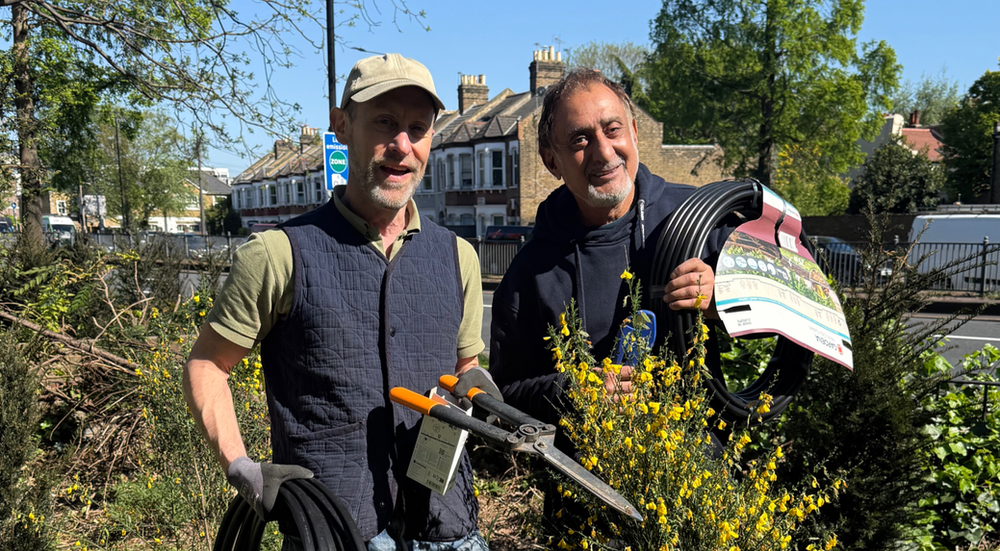 We were delighted to welcome 40 students from St Paul’s Girls’ School and their teachers to Berestede Road recently to help with… Read more »
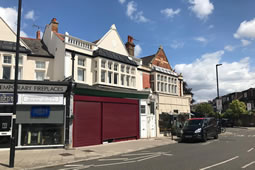 The Velvet Corner described as ‘premium neighbourhood retail concept' Read more »
 The King’s Speech included proposed legislation to increase investment in social housing. The Social Housing Bill was introduced into the House of… Read more »
- Green and Liberal Democrats councillors in Lambeth have struck a surprise political deal that looks set to end Labour control of the… Read more »
 An appeal for information from Hammersmith and Fulham Council has quickly gone viral on social media Read more »
 Hammersmith and Fulham Council was held by Labour on May 7, when the party took 38 of the 50 seats available Read more »
 Fleet to be tested ahead of planned December introduction Read more »
- Full Council: Thursday, 21st May, 2026 8.00 pm Read more »
- Pride Month is just around the corner, and there is a wide range of events and activities taking place in Hammersmith this June. From theatre to community walks and celebrations, there’s something for… Read more »
 Fleet to be tested ahead of planned December introduction Read more »
- : Appropriation of Avonmore Primary School Land Read more »
- Tom House of Tom House Fitness"I'm a personal fitness trainer; I live in Shepherd's Bush with my family, and I love what I… Read more »
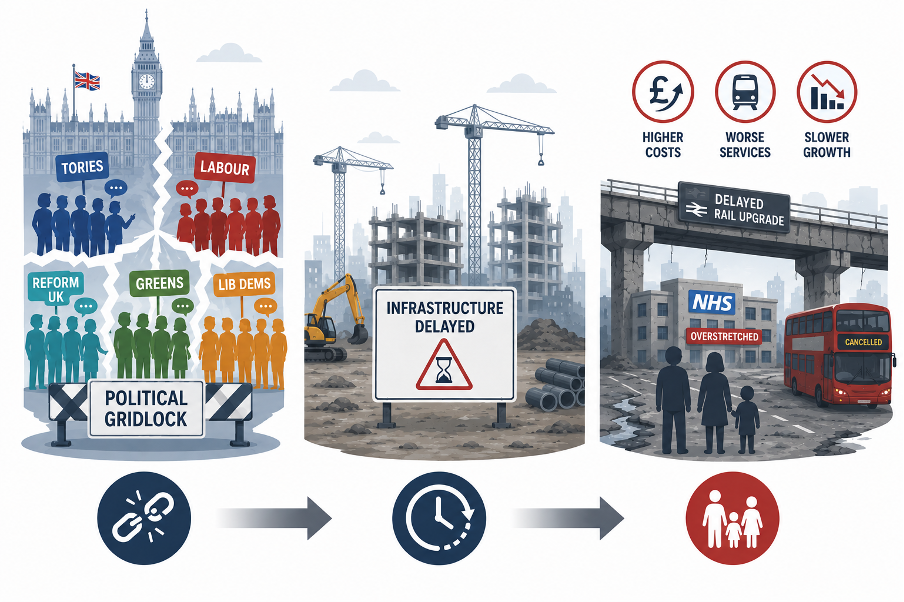 Last week’s elections created a new patchwork of political control of local authorities across the country, reflecting our emerging five-party system. London… Read more »
 The Ramblers and the Open Spaces Society are delighted to have achieved the reopening of a severely blocked public footpath, with broken clapper-bridge, in the parish of St… Read more »

Most Popular Articles This Week


 ©2026, The Hammersmith Society | Privacy | Contact | Join | @ Subscribe | ⓘ
Campaigning for over sixty years