We welcome as members individuals and organisations who care for Hammersmith

As a Member, you will receive regular updates outlining our activities, giving you the opportunity to participate in consultations and campaigns. We'll invite you to our Awards Evening and AGM, and other events. Members are always encouraged to take an active part in the work done by the committee – come along and see if you can help.
The membership year runs from 1st Jan, and only costs £6 for individuals, £8 for couples or families, and £15 for organisations. Additional voluntary donations always welcome.
 Join Here
- Published: 26th August 2025
Environment Award Winner, 2025.
Finely detailed brickwork is the feature in this new development on the corner of Macfarlane Road and Wood Lane opposite Westfield, designed by Maccreanor Lavington for Peabody Housing Association. It replaces the former BBC car park with a pair of appropriately-sized mid-rise buildings, providing 142 affordable homes in a mixture of shared ownership, London Affordable Rent and London Living Rent with 68 x 1 bed, 67 x 2 bed and 7 x 3-bed flats.


There are some echoes of the ‘warehouse chic’ of the 2023 award-winning Hoxton hotel just down the road, plus an echo of the red brick DIMCO buildings on the other side of Wood Lane, which were themselves nominated in 2021.
The use of materials is interesting, and although there is some fakery to the brickwork (common these days), the patterns are original, and the floor to ceiling windows and detailing lift the facades above the ordinary allowing it to not shout ‘social housing’. Care has been used in the design, and as the RIBA journal notes, it has tenant-friendly touches such as heat-regulating shutters. The shutters are said to have been designed to reduce overheating, eliminating the need for air conditioning and opening windows onto a potentially noisy Wood Lane, and the Hammersmith & City railway line immediately adjacent. There’s some interesting detailing internally too. There are a few more photos on our Instagram
- Published: 26th August 2025
Environment Award Winner, 2025.
Hidden away down a tiny lane known as Dimes Place just off King Street, is a new commercial development known as The New Timber Yard, because it was formerly the home of Moss Timber Merchants (by Royal Appointment, specialist Timber Merchant). Having been established for over a hundred years, they moved out to Greenford around 2016, and for a couple of years Dimes Place appeared regularly on our agenda for various reasons, including a change of developer, changes and densification of design, according to the Chairman’s annual report. The site has a lot of adjacency with neighbours all around as the photos show, and the site is somewhat Tardis-like, in that what you see from the street is very much less than the whole.


However, the end result it’s a world away from the hustle and noise of King Street, with attractive planting down the former roadway, taking you to a not insubstantial 200sqm office development, built to BREEAM ‘excellent’ standards, with a welcoming reception area. Tucked away past the shared courtyard with pizza oven and BBQ are further offices, which were – according to the planning portal – originally intended as mews houses, where the former woodsheds were located between the backs of the houses in Cambridge Grove and Argyle Place. There are a few more photos on our Instagram
This is what the site used to look like (click for larger images):
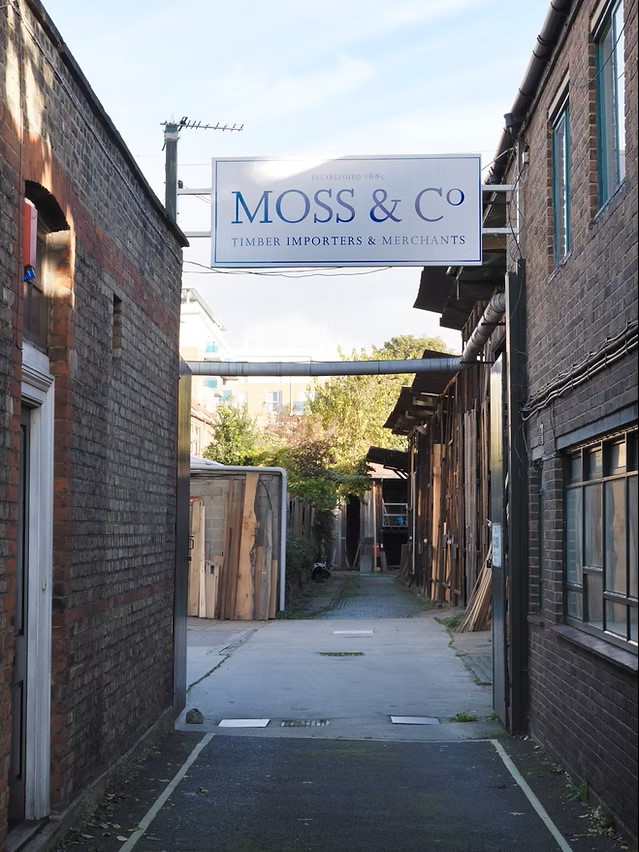
Moss Hammersmith
[Photo: Moss & co]

Moss Hammersmith
[Photo: Moss & co]
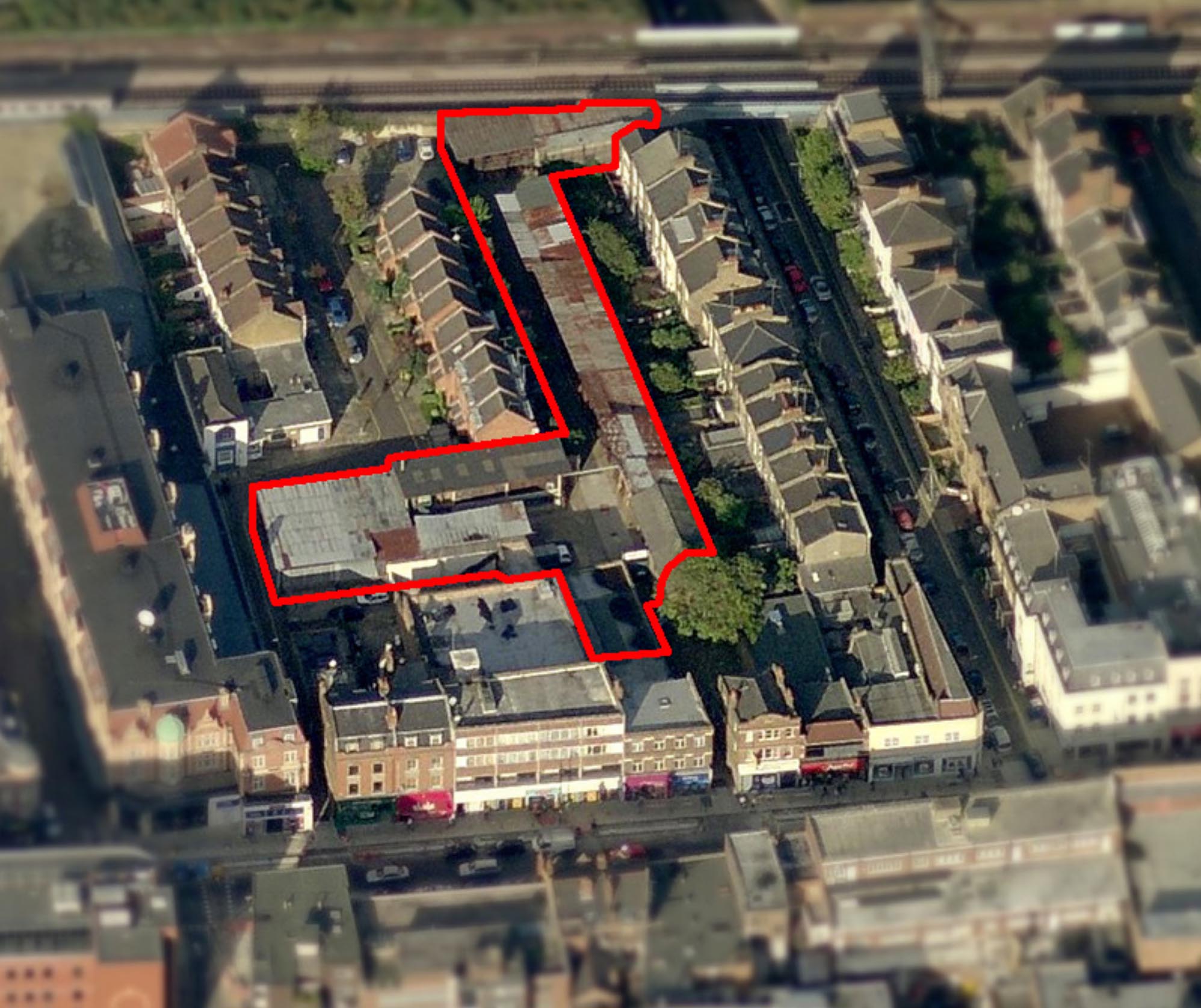
Dimes Place (planning)
- Published: 26th August 2025
Wooden Spoon, 2025.

The Hammersmith Belle
The former Hampshire Hog / Hampshire has struggled in recent years, changing hands, names and formats several times, including in the midst of the pandemic in 2020. It used to have a restrained image commensurate with its elegant 1883 Victorian architecture – see below.
In its most recent incarnation it has joined the Belle pubs and restaurants group as the Hammersmith Belle, and taken on their standard sports bar brand appearance with fake LED-lit mini-trees outside, described in the nomination as having the appearance of a ‘Bulgarian Black Sea beach resort’ (who knew? – Ed).
This fits with an increasing trend for pandemic-inspired pavement encroachments, in a way that can erode the character of a city – building by building – and in the same way that the Uxbridge Road petitioners have mentioned. These do actually require planning consent, and should be the subject of enforcement. In this case, as many, no consent exists.
While it’s good to see this large longstanding establishment being reinvigorated – and in its original function – despite the 4.6 Google review ratings, the unsympathetic paint scheme, the brand’s generic plastic trees, loud signage, and pavement encroachments don’t seem to do the streetscape or building justice. Rather than help make the case for a vibrant sports bar, the additions seem to detract from an otherwise valiant effort to improve the frontage with its many thriving window boxes, and planting in the garish containers next to the trees, which unlike them, is actually real.
For reference, the appearance is shown below – from 2016:

The Hampshire Hog, 2016 [photo: Edward Hands / Wikipedia]
- Published: 28th April 2025
Nancye Goulden Award Winner, 2025.
The replacement of the bus lane in King Street by a temporary cycle lane during the pandemic was not without it’s critics, including in this parish, given its impact on public transport – particularly with the problematic ‘floating bus stops’ pictured, plus the effect on the public realm – two of our top concerns.
But the recent creation of rain gardens, together with gravel replacements for a significant number of tree pits on both sides of the western end of the street represent very significant improvements. The hard landscaping and tree pits were done by Conway under the council’s mandate, paid for by the Green Investment Scheme, but interestingly, the planting was undertaken by HCGA under contract to the council, partly by local volunteers.


The gardens are already maturing after only a few weeks and will surely only get better in time. The adjacent gravel tree pits are a perfect example of what the society has campaigned on for well over a decade, awarding wooden spoons to the council in successive years for failing to improve the ‘asphalt situation’ around the borough’s trees. It didn’t seem to take Conway very long to dig out the old asphalt in around a dozen pits, and replace it with permeable and attractive real gravel. These represent what we’d like to see by default everywhere – of course in creative cooperation with guerrilla gardeners such as the award-winning Askew in Bloom, and The Green Project where they’re planting too.
Posted in Award winners
Tagged Environment / Streetscape Ravenscourt/Grove Society/Awards
- Published: 8th September 2024
Tom Ryland Award for Conservation, 2024.

Ravenscourt Park Tea House

Ravenscourt Park Tea House
The Grade 2 listed, 200 year old Tea House was on the buildings at risk register for some time (see related story), but has now been sensitively restored by the council and made weathertight, along with the adjacent toilet block (to the left of the photos).
The interior is now open and has been let to a third party café operator, providing an agreeable stopping point should the weather not allow the new outside seating to be used. We have some reservations about one or two details of the overprominent building services, and the immediately adjacent landscaping could be improved, but these are minor niggles. The rebuilt glasshouse adjacent, home of HCGA, is worthy of a mention too, though not nominated here.
Posted in Award winners
Tagged Conservation Parks/Open Spaces Ravenscourt/Grove Society/Awards
- Published: 3rd September 2024
Nancye Goulden Award, 2024.
The White City opportunity area has seen a great deal of development in recent years, first Westfield, then the award winning TV centre (2018), Imperial and now White City Place and EdCity. Although the architecture is somewhat mixed and will divide opinion, there are substantive public realm improvements now visible. The L’Oreal building and 1EdCity are especially noteworthy in having active façades.
Developed by education charity Ark in partnership with LBHF, 1EdCity is part of the EdCity campus which includes Ark White City Primary Academy (Ark Swift), community youth zone WEST, and 132 affordable homes.
Click on individual images for full-sized versions


- Published: 3rd September 2024
Nancye Goulden Award, 2024.
The elevations of this Shepherds Bush Green landmark have been renovated in a sensitive and attractive manner that contributes to the street scene. Furthermore, the rear extension and remodelling has created an interesting semi-external space to the rear. The newly tiled façades should be effective in maintaining the appearance of the building in future years.
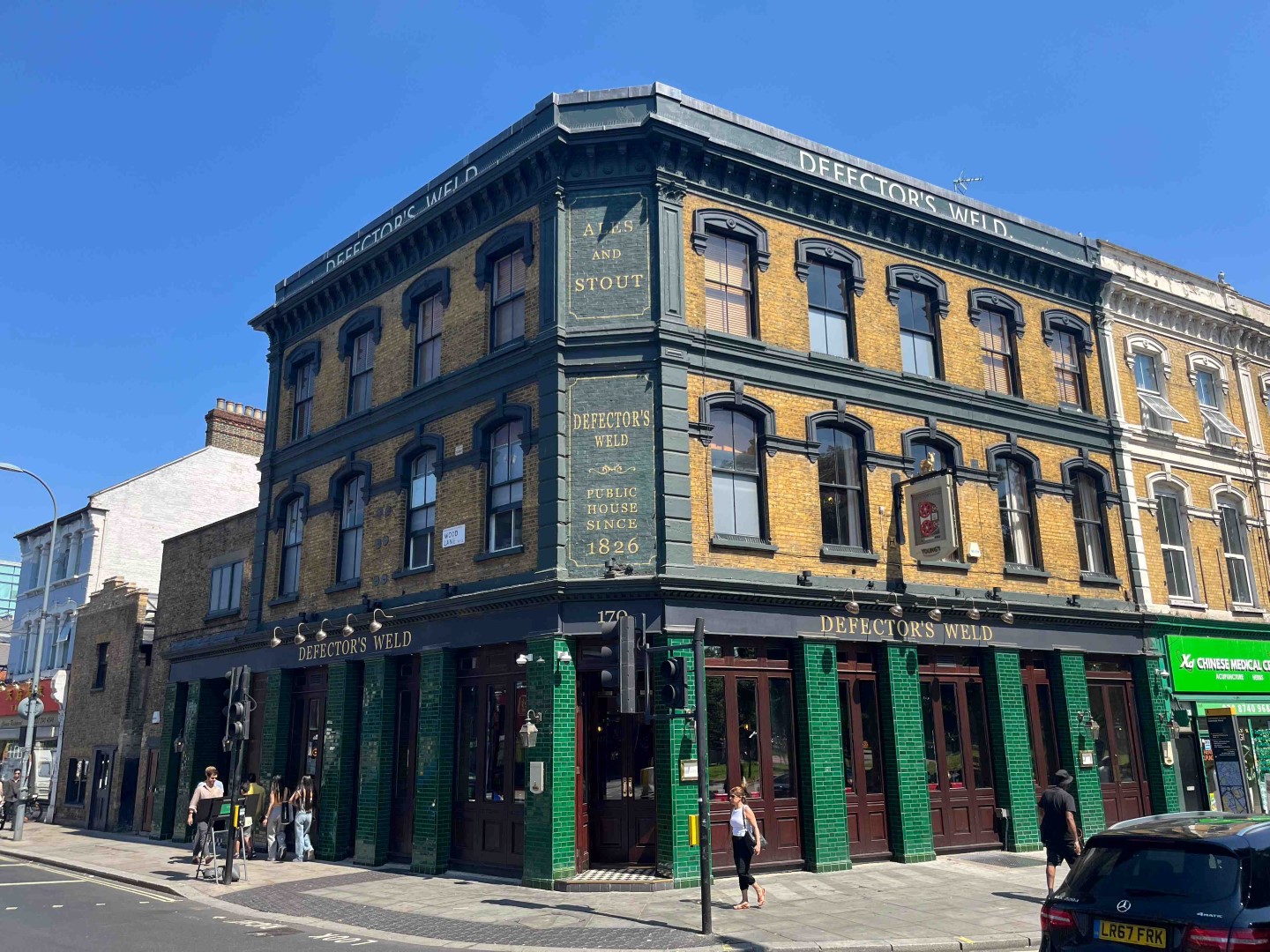
The Defectors Weld 2024
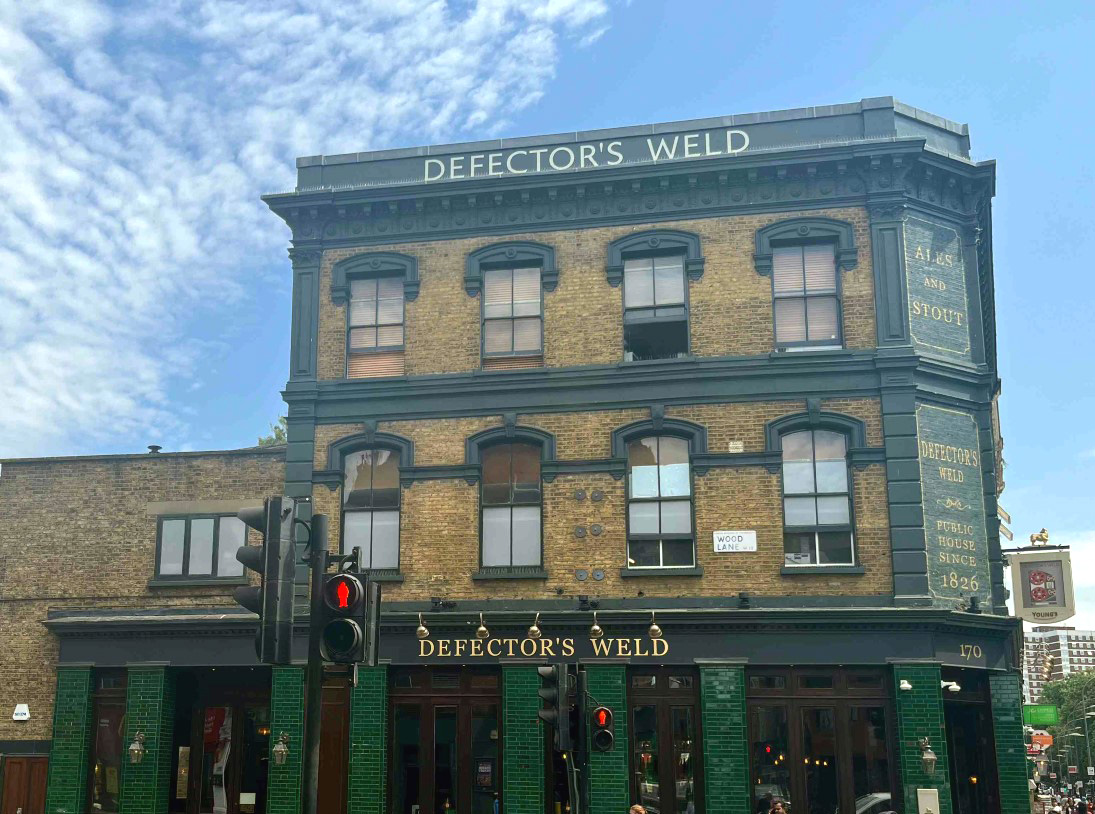
The Defectors Weld 2024
- Published: 2nd September 2024
Tom Ryland Award for Conservation, 2024.
The Leaning Lady was restored this summer, after more than sixty years. Along with other artworks, the statue was a gift to the community from the LCC partly as reparation for the damage caused by the building of the Great West Road through the middle of Hammersmith in the 1950’s. The statue was created by Czech refugee Dr. Karel Vogel in an unusual concrete material that had eroded over time. The restoration project was driven by affiliate SPRA and the council, and managed by Heritage of London Trust who also part funded the project with many local people in a community-driven fundraiser.

Leaning Lady restored 2024
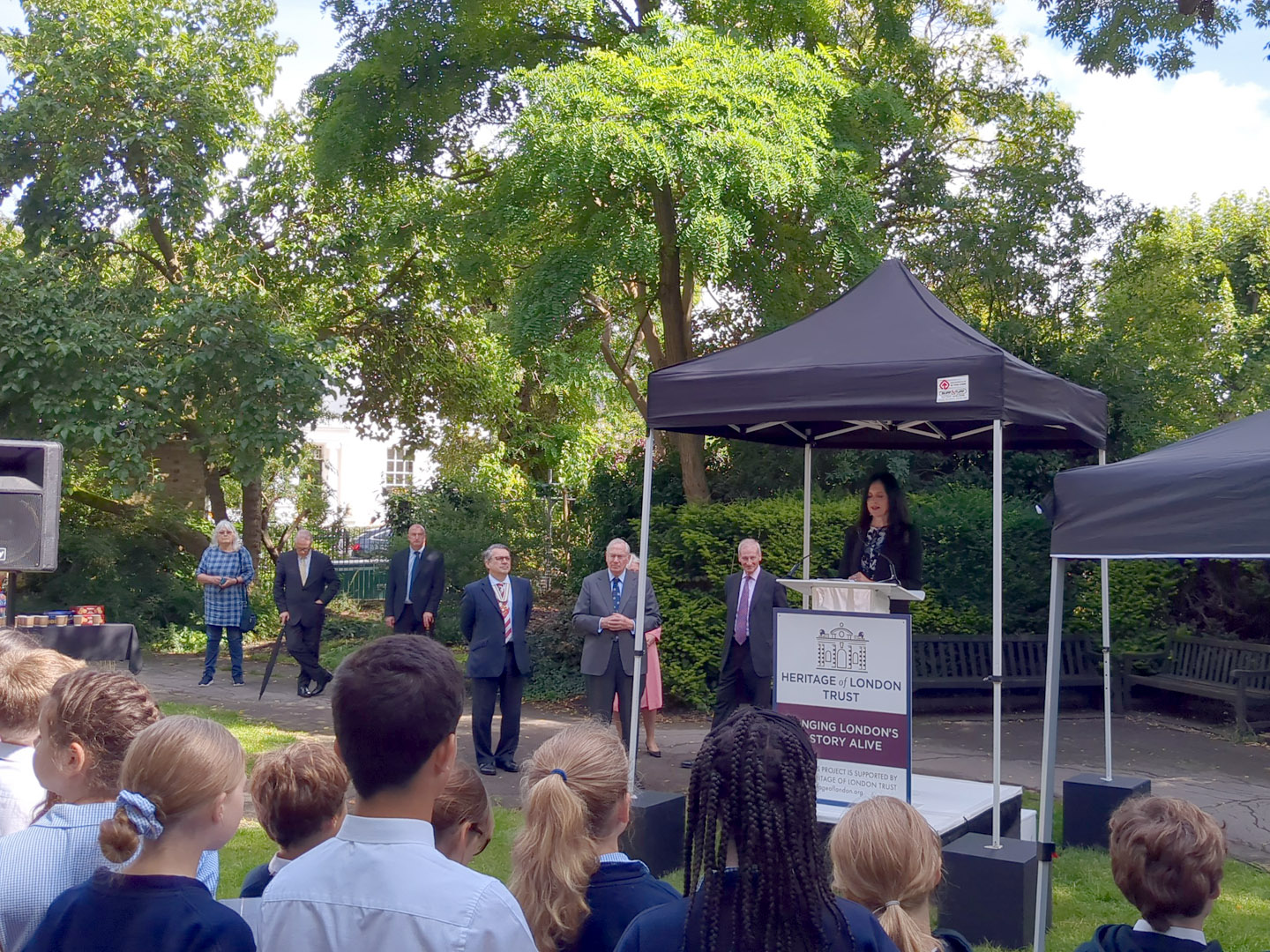
Dr Nicola Stacey of Heritage of London Trust at the unveiling of the restored Leaning Lady Statue with HRH Duke of Gloucester

Leaning Lady unveiling “Proud Places”

Tom Ryland Award for Conservation 2024 – with affiliate S.P.R.A. and Heritage of London Trust [Photo: HOLT]
Visit the above links for the charming story of the unveiling by HRH the Duke of Gloucester, in the presence of many local schoolchildren who created their own projects around the restoration, as part of HOLT’s Proud Places programme.
- Published: 27th August 2024
Wooden Spoon, 2024
For the second time in their short history, the Livat planters have been nominated by a member. They were nominated for their effort in cheering up King Street and Ashcroft Square when they appeared in 2022, but on reflection, the committee decided that they didn’t quite make the grade for an award. Since then, little maintenance appears to have been done in King Street, and they have become an unfortunate eyesore. As every council knows, plants, particularly those in relatively shallow planters need watering, care, and maintenance. That bit of the equation seems to have been missed, and instead they have become impromptu ashtrays for the adjacent ‘smoking benches’.

Livat planters 1
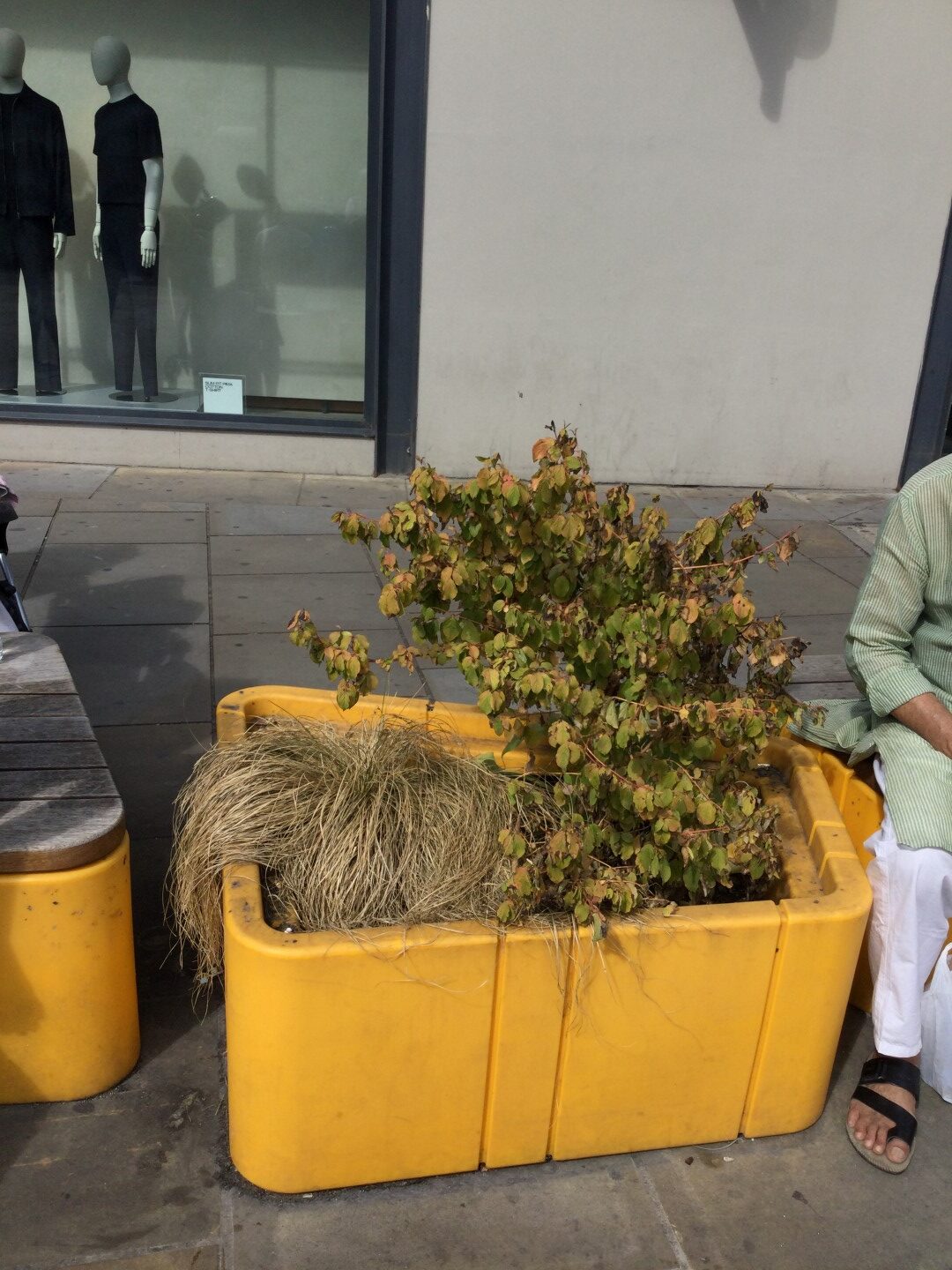
Livat planters 2

Livat ‘smoking bench’
However, upstairs in Ashcroft Square, things are looking up, with some new planting. Perhaps there’s been some guerrilla gardening? Enough to save the planters from the wooden spoon?

For comparison, this is a street scene near the back of Victoria station, showing how a little TLC and suitable arrangement of planters can transform a small area into an attractive ‘parklet’.

Victoria street scene
- Published: 24th July 2024
Wooden Spoon, 2024.
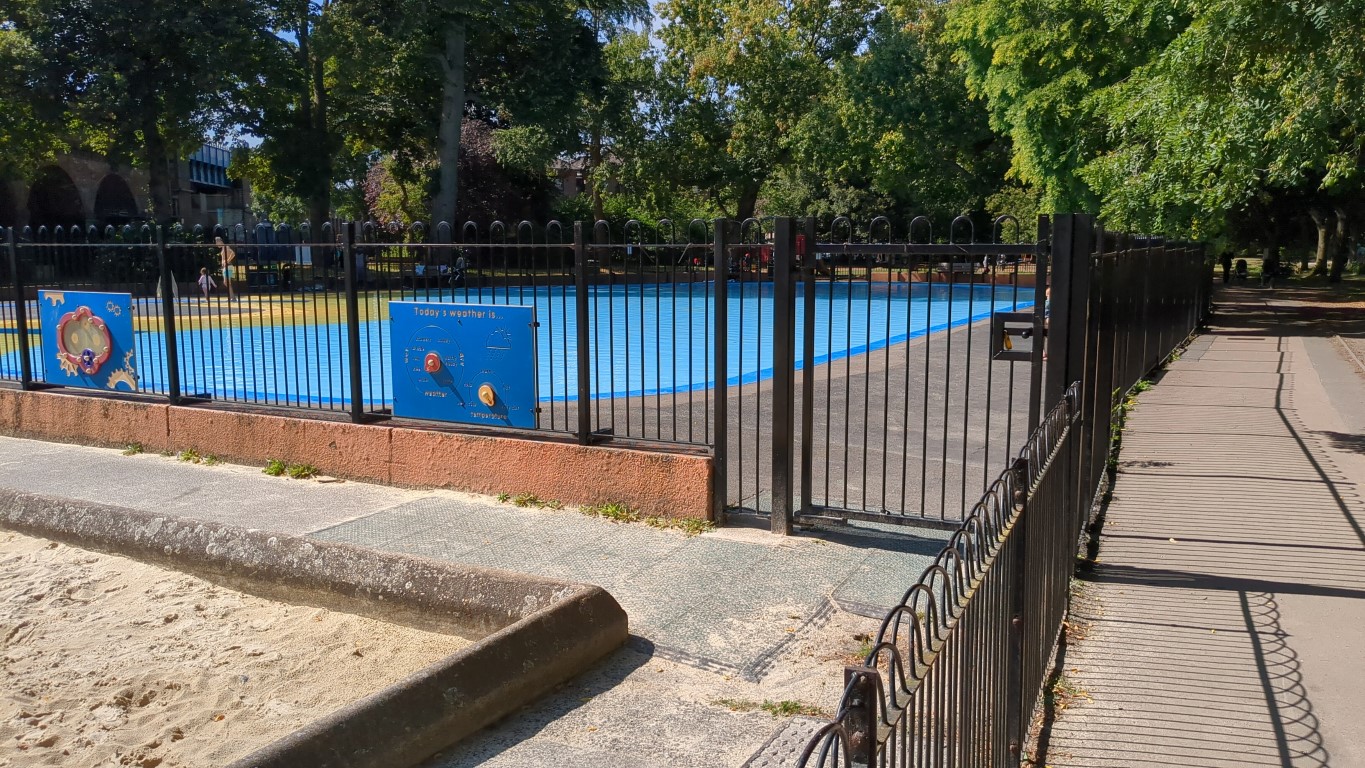
True? It certainly looks like it. First, the popular paddling pool acquired a costly gated cage, a pre-booking requirement taking much the spontaneity out of a summer visit, with numbers, time limits and families frequently turned away. Next, some gates – function unclear – have appeared across the busy Ravenscourt Avenue entrance. Ugly and unwelcoming, these gates not only obscure views into the Park but cause maximum inconvenience and frustration to park users who find themselves having to queue to get either in or out. The Friends of Ravenscourt Park were not consulted on either.

Ravenscourt Park – before
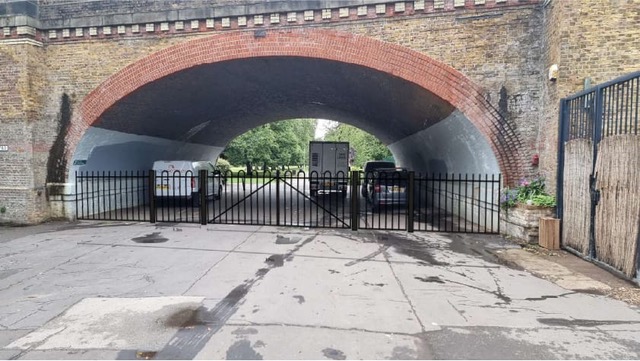
Ravenscourt Park – after
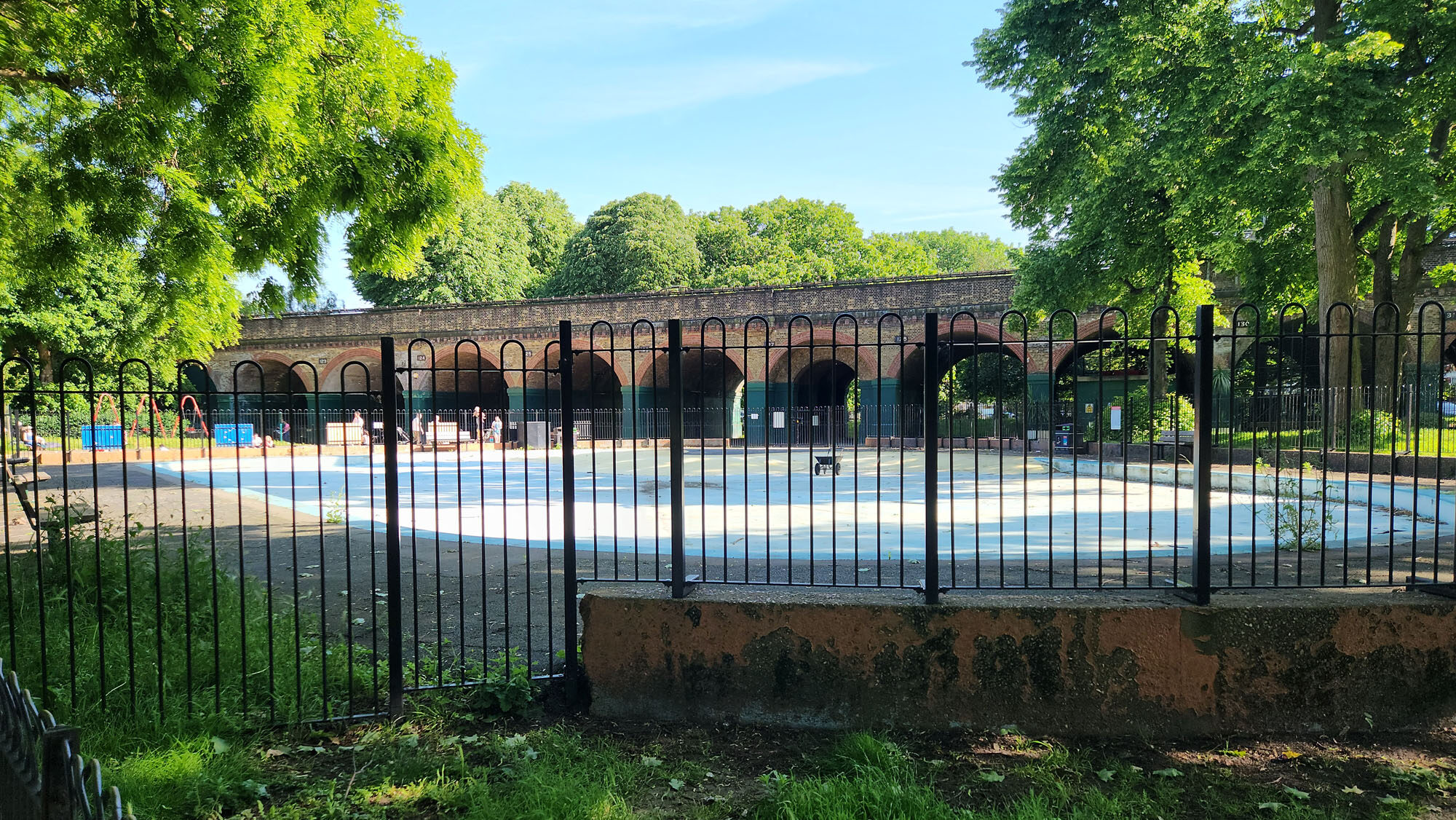
Ravenscourt Park Paddling Pool June 2024
Ravenscourt Park Paddling Pool, August 2024
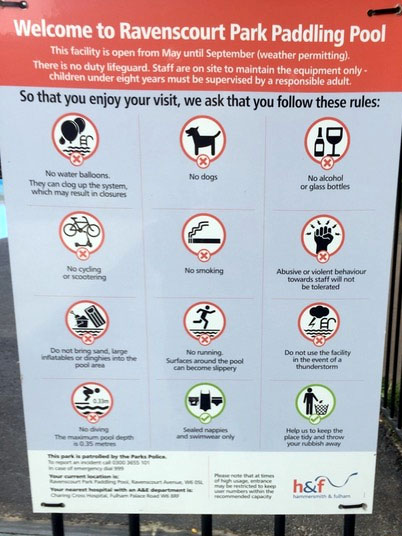
Paddlers beware
Posted in Award winners
Tagged Council Parks/Open Spaces Ravenscourt/Grove Society/Awards

News Topics
Our Diary
-
Committee meeting
📆 Mon 1st Jun | 18:00 - 20:00
-
Committee meeting
📆 Mon 13th Jul | 18:00 - 20:00
Recent News


Local and Affiliate News
One news item from each selected source – more on our Local and Affiliate news page. Subscribe to our weekly highlights

Most Popular Articles This Week


 ©2026, The Hammersmith Society | Privacy | Contact | Join | @ Subscribe | ⓘ
Campaigning for over sixty years