We welcome as members individuals and organisations who care for Hammersmith

As a Member, you will receive regular updates outlining our activities, giving you the opportunity to participate in consultations and campaigns. We'll invite you to our Awards Evening and AGM, and other events. Members are always encouraged to take an active part in the work done by the committee – come along and see if you can help.
The membership year runs from 1st Jan, and only costs £6 for individuals, £8 for couples or families, and £15 for organisations. Additional voluntary donations always welcome.
 Join Here
White City & Wormholt wards, including TV Centre, Westfield & the Imperial Campus developments. See also neighbouring Shepherds Bush
Councillors:
White City: Jones, Perez, Umeh
Wormholt: Schmid, Trehy



- Published: 11 Aug 2021

Cllr Colin Aherne [photo: LBHF]
Councillor Colin Aherne, a long serving member of the Council’s Labour Group, has died after suffering a heart attack last month. Colin had a remarkable record of public service with LBHF: he was councillor for White City & Wormholt, and served on both the planning committee and the licensing committee for 35 years.
He was chair of governors of Wormholt Primary School for over 30 years. Born in 1944 in Tredegar, South Wales, initially opting to join the army rather than go down the mines, he was elected to the Council in 1986, soon becoming chief whip to the Labour group. His death is a great loss for the borough.
There’s a longer tribute on the council’s website, and an obituary in the Guardian.
- Published: 05 May 2021

Changing Rooms [BBC]
So-called property porn continues to make up a good percentage of the TV schedules 25 years after Changing Rooms started Building the Dream in a Location, Location, Location for The Poshest Sleepover in Millionaires’ Mansions, then over to The Great Interior Design Challenge, creating some Grand Designs, and moving on to daytime TV with rather lower budgets and more prosaic ambitions with House Doctor and Homes under the Hammer.
More than one of these shows is approaching its silver anniversary, and you’re sure to have seen many of them – perhaps the daytime offerings too – and possibly even been addicted to one or two ?
In a roundabout way, they’re all selling the story that rising house prices are a Good Thing. The recent publication of the new London Plan ahead of the delayed Mayoral Election this week, presents a good opportunity to take the long view of the property market, and test this hypothesis in the real world.
Over the last two decades, there has been a 46% increase in the number of young people aged 20-34 living with their parents 🔗
The evidence from first-time buyers is that spiralling prices are not such a good idea, especially post-COVID. Excluded from markets such as our own local one, where one bedroom flats start around £250k, younger people have wondered how they’ll get on the mythical ‘property ladder’ for a while now. Having been locked-down for much of the last year, they may be further destined to stay at home with mum’n’dad for the foreseeable, their best hope of ‘moving out’ may be to convert the garage to put a door between parents and the resultant substandard bedsit, or take a government help-to-buy mortgage – one that possibly helps stoke prices more than helps make housing affordable. A poor show all round.

Housing Completions 2020 (MHCLG)
Classic economic theory says that rising prices stimulate the economy and increase house builder’s appetite to build. The statistics don’t bear this out, with completions only just approaching the levels of 15-20 years ago, having been in the doldrums through periods of huge price inflation (with the real possibility of correlation), London being a particular “white spot” despite the highest price rises. Hereabouts there are many factors at play, land availability being just one of them; the theory is too simplistic.
And what of this cash – where does it come from ? From not spending in local shops and hospitality, or just adding to a debt mountain. Neither are good for the real economy, locking away income for the foreseeable, and once on the ladder, the next step involves an increasing gap as prices rise, so any increased disposable income is – disposed of. Best start saving now, or better move up quickly, perhaps by taking on an uncomfortable level of debt, before the price gets out of reach.
There remains a widespread assumption that existing homeowners subscribe to the benefits of rising prices. Pragmatic Marxists might even tell you that releasing equity is a way to feedback escalating values to the proletariat (that’s your children, by the way). But older voters (always sought after, unlike Auntie or marketers, forever chasing the young – discuss), may soon get tired of their children still at home in their 30’s and even 40’s in London, as the direct effect of rising prices, and may start voting otherwise. With the equivalent escalation of the average age of moving out, parents may become too old themselves, and disinclined to move at the time they might be able to release equity, and enjoy it. Taking on what looks & feels like debt, in the form of equity release, probably having spent many years paying down a mortgage, may also be a bitter & alien pill, albeit perhaps a sensible one – for an economist.

Median London House Prices 1995-2020, sorted by 1995 price (ONS)
Hammersmith has the 5th highest median house prices in London. It’s slipped one place since 1995, the graph adjacent is sorted by 1995 prices, when it was 4th, which may surprise you. 1995 prices are shown as the tiny blue bars.
Whatever nuances there are between H&F and anywhere else in town, property inflation has been huge in absolute terms, as shown in the second graphic, and much greater than elsewhere in the UK. H&F is middle of the range at 700%, explaining its 1 place fall in the above race, but the lowest priced boroughs in 1995, such as Hackney and Newham have seen the largest rises in a rather misplaced levelling-up exercise, many would call gentrification. Examine the demographics, and you’ll see the volume of younger people who have moved to those places on an affordability basis, if no other. By contrast, average incomes have doubled in the same period but have been static in inflation-adjusted terms, meaning housing is 350% of the cost 25 years ago (c.f. ratios below), although interest rates are a lot lower if you’re borrowing the money. If you’d been what used to be called prudent – and saved for it – bad luck. Prudence was made homeless a while ago.

Percentage rise in London property by borough (ONS)
Our elders tell us that sky-high London property prices were ever so. In the 50’s and 60’s, newbuilds were cheaper than period properties; in the age of the Space Race and (if only they’d known it) mid-century modernism, bright shiny and new was still less popular than ‘period’, and while affordability continued to decline, property aspirations remained as conservative and static as life’s DNA, a fact confirmed in the government’s recent Design Guide.
Continued
- Published: 29 Apr 2020

Women’s Pioneer Housing, 227 Wood Lane
We reported in the Winter 2019-2020 newsletter that a proposal was being prepared by Architects Allford Hall Monaghan Morris for a new 25-storey tower block to the north of the A40 on Wood Lane.
The proposals replace Browning House, which is a 4-storey social housing block owned by Women’s Pioneer Housing (WPH). They are a housing association providing specialist accommodation.
An application has been submitted for a 29-storey tower, the proposals increasing the number of 2-person, 1-bedroom flats for WPH from 36 to 80, plus creating an additional 350 co-living accommodation units to be rented by developer HUB. These provide compact 1-person studio flats serviced by communal kitchens, living spaces and other facilities.
One justification for the 29-storey tower is the approval granted for the recently completed 34-storey ‘Ziggurat’ tower on the Imperial College White City campus site on the opposite side of Wood Lane. The latter was unpopular locally, but was approved on the basis that it was within the White City Regeneration Area. Tall buildings are only permitted under LBHF Planning Policy and the Mayor’s London Plan if they are considered ‘appropriate’, and are within one of four development areas identified in the Local Plan.
The proposed tower is located outside of the White City development area, which raises the questions: how are applications decided for tall buildings located outside, but adjacent to the outer boundary of development areas ? And whether approvals within development areas can be used as precedent to justify nearby developments outside of the area, that would otherwise not comply with planning policy ?
Continued
Posted in Consultations News
Tagged Local Plan London Plan Major Developments White City
- Published: 17 Jan 2020

Click on the newsletter image to open the pdf 
Posted in Newsletters
Tagged Addison/Brook Green/Olympia Affiliations Airports Broadway Conservation Council Counters Creek/Tideway Tunnel Cycling Education Environment / Streetscape Hammersmith Bridge Major Developments OPDC Ravenscourt/Grove Riverside Smaller Developments Town Hall Transport/TfL West London Magistrate's Court White City
- Published: 24 May 2019
Members of the Committee visited our 30th Annual Award Nominations on Sunday 19th May and shortlisted them. They’re all shown on the nominations page in their categories, with a selection here.
If you would like to comment on them, or make suggestions for winners, please use the comment form on the above page, or on Instagram.


Award winners will be announced at the AGM at Olympia on 12th June.
Members, guests, and friends will be warmly welcomed.
- Published: 06 Sep 2018

 London Open House offers a wonderful opportunity to explore buildings all over London – including in our Borough. The full listing of 27 buildings open to see in H&F over the weekend of 22-23 September is available here. Why not also stroll or cycle round the nominations and winners of our own Environment Awards ?
And as the northern boundaries of the Borough become more important, on both dates there is a walk round part of the Old Oak & Park Royal Development Area led by art historian Magdalen Evans, details here
Continued
- Published: 22 May 2018
Members of the Committee visited this year’s nominations on Sunday 20th May and shortlisted them. They are all shown on the nominations page with just a selection here. If you would like to comment on them, or make suggestions for winners, please use the comment form on the nominations page.
Award winners will be announced at the AGM in the Bush Theatre on 5th July.
Members, guests, and friends will be warmly welcomed.


Posted in Consultations News
Tagged Environment / Streetscape Riverside Society/Awards White City
- Published: 08 May 2018

Click on the newsletter image to open the pdf
- Published: 18 Jan 2018
 Westfield Phase 2 is nearing completion and will be opening soon including the John Lewis store. Westfield, Australian owned, are in the meantime selling out both White City and Stratford East to French giant Unibail-Rodamco for the small sum of £18.5billion and the sale should be completed in the Spring.

DIMCO buildings [Photo: Wikipedia: Alexander Williams]
We were recently invited, together with members of the Historic Buildings Group, to look at proposals for the larger of the DIMCO buildings, the only Listed buildings remaining on site. This one is currently used by Transport for London for storing buses but come the completion of Phase 2 there will be a purpose built facility allowing the freeing up of the Listed shed. The current proposals, still at an early stage, are to convert the building into an entrainment/event venue. Although the the scheme involves inserting of a full mezzanine floor, none of the original fabric will be damaged so that all the interventions will be reversible. We liked the proposals in principle and our concerns were mainly centred on access and egress of up to 3000 people and the capacity of the adjoining streets and public transport system to cope with the potential surge of visitors.

Centre House, Wood Lane
Also in White City we were recently given a presentation of proposals for Centre House. On the site are the rather tired 1960’s buildings on the east side of Wood Lane opposite to old BBC tv centre. The buildings were all used as part of the BBC facility including prop storage, scene building and their engineering department. First sold to Helical Bar, then Imperial College, they will now transfer the site to St James who will develop approximately 520 units of housing, much of it for rent and specifically graduate accommodation for Imperial. It is another large scheme, mainly linear blocks of 9 storeys with a possible towers of 21 and 31 storeys. The architectural treatment has been well considered.
The landscape proposals are potentially excellent although there is limited private or public amenity space. Many of our concerns about scale, height and density and reduced open space have already been eclipsed by decisions already made on White City.
Continued
- Published: 31 Oct 2017

Click on the newsletter image to open the pdf
Posted in Newsletters
Tagged Addison/Brook Green/Olympia Broadway Capability Brown Conservation Council Cycling Environment / Streetscape Local Plan Major Developments Neighbourhood Planning OPDC Parks/Open Spaces Riverside Shepherd's Bush Smaller Developments Society/Awards Town Centre Masterplan Town Hall Transport/TfL Triangle Site White City

News Topics
Our Diary
-
Committee meeting
📆 Mon 23rd Nov | 18:00 - 20:00
Recent News


The area outside Goldfinger’s Grade II* Greenside school has been transformed with a landscaping scheme funded by the Council’s Green Investment scheme …


Local and Affiliate News
One news item from each selected source – more on our Local and Affiliate news page. Subscribe to our weekly highlights
 Report back from Andy Slaughter, MP for Hammersmith and Chiswick Read more »
 Opposition angered by Labour refusal to prioritise a motion on finances Read more »
- Did you enjoy our Summer Festival but have ideas to make it even better? Or is there something you’d like us to… Read more »
 London Forum has published Guidance for Councils on access to planning application information. From 31st October 2026, the National Scheme of Delegation… Read more »
- Born in Kensington in October 1958, Sylvestra Le Touzel has had a varied, distinguished and generally pretty amazing career as an actor… Read more »
- Full Council: Wednesday, 21st October, 2026 7.00 pm Read more »
 Bring four titles along to the morning at Hartswood Tennis Club Read more »
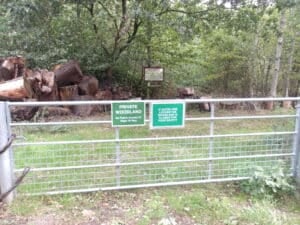 We have revealed that public access to the Midlands National Forest (520 square kilometres)[1], established with the government’s financial support since the… Read more »
 Quiz Night, 11 November, and the Christmas Tree Lighting, 4 December Read more »
 Living on the banks of Old Father Thames gives me a vested interest in the river’s health, usage and upkeep – and… Read more »
- The Mayor of London and GLA have been consulting on a draft version of the next London Plan. The consultation closed on… Read more »
- Hi allTremendous thanks to everyone that participated in scything last month! We managed to cut and collect approximately 30,000 sq. metres of… Read more »
- In today's Daily Mail local journalist Robert Hardman writes about the problems with Shepherd's Bush's Uxbridge Rd - and the campaign to… Read more »
 A new What’s App group has been set up to share info about the parks and gardens within the SPRA area, including… Read more »

Most Popular Articles This Week


 ©2026, The Hammersmith Society | Privacy | Contact | Join | @ Subscribe | ⓘ
Campaigning for over sixty years