We welcome as members individuals and organisations who care for Hammersmith

As a Member, you will receive regular updates outlining our activities, giving you the opportunity to participate in consultations and campaigns. We'll invite you to our Awards Evening and AGM, and other events. Members are always encouraged to take an active part in the work done by the committee – come along and see if you can help.
The membership year runs from 1st Jan, and only costs £6 for individuals, £8 for couples or families, and £15 for organisations. Additional voluntary donations always welcome.
 Join Here
- Published: 18 Mar 2022

A decade of Hammersmith crash data involving a pedal cyclist 2011 – 2020 [ source: crashmap.co.uk ]
The temporary cycle path or Safer Cycle Pathway as the council denotes it, is not without controversy. At the extremes, Cycle Twitterati heap praise on the council for going though with it, and at the other end of the scale, there are a couple of petitions with well over 3000 signatures asking for it to be removed, along with its accompanying scheme in Hounslow (currently being made rather more permanent at the cost of felled mature trees). The good news is that cycling has increased by 7 – 22% since the pandemic, though the maths dictates that this represents an increase from only around 2% to somewhere less than 3% of journeys.
The route now constructed follows the TfL scheme which was issued for public consultation in 2017. TfL encountered widespread opposition to their ideas for high street cycleways both in Hammersmith and elsewhere, and were probably pleased to agree to the LBHF proposal to design and build the scheme, paid for by TfL – and to potentially include King Street improvements at the same time. The idea of a shoppers’ cycleway in King Street and a cycle by-pass on the A4 was agreed to after feedback from the public, and this Society around the time of the 2018 local elections. These ideas failed due to the very public funding problems at TfL, added to by the pandemic, resulting in this ‘temporary’ scheme.
Here we are, stuck in the middle, seeking an equitable solution for the majority of Hammersmith. We have skin in this particular game through participation in the cycle commission last year as we described before. Unfortunately many of the concerns raised by the commissioners, and by ourselves in recent articles have come to pass, and it’s a little concerning to see the “safer” moniker applied – and rewarded on social media with statements such as “I feel safer” – when feeling is not actually demonstrably safer, more a testament to a lack of awareness of the issues, with around £3M spent on this social media-inspired scheme.
Safer for who?
Cyclists? It’s well documented by ROSPA, TfL and the DfT crash data that 75-80% of accidents happen at junctions, (as illustrated by the crashmap above), and there are 23 of those to navigate along the route from the Broadway to Goldhawk Road, only a handful of which are protected by the new wands or other lane segregations. However well-intentioned, arguably it’s disingenuous to encourage the inexperienced and unwary using the word safer when mostly it’s not (more evidence below). Main roads, especially their junctions, can be dangerous for all sorts of reasons, especially when HGV’s are involved, but are essential for the many forms of transport that we all rely on. So why campaign to use them when there are better and safer alternatives nearby ?
The A4 route, has just 2 junctions over the same distance as King St., with just 2 minor incidents in 10 years, admittedly with fewer cyclists, but still a significant number – including regular use by members of the cycling commission – making a comparison worthwhile. Together with with adjacent cul-de-sacs approximating modern LTN’s, caused by the creation of the A4, they provide a measurably safer and less polluted route. We’ll wait to see how the untested slalom in the middle of King Street, and well-documented issues with bidirectional paths fare with all those junctions, but a significant number of cyclists are observed voting with their pedals, and still using the North side of the road Eastbound from Goldhawk Road.
The safety of pedestrians at bus islands/bypasses arises again, and we refer to the dismay of the charity for the blind NFBUK, after reviewing our commission advisers’ chosen reference Sauchiehall Street in Glasgow during visits last year, which rather undermines their advice. By way of confirmation, bypasses are such a hazard to pedestrians – particularly those less able – that TfL buses now need canned announcements which start at the Broadway, warning passengers of the dangers of the cycle lane when disembarking.

C9 Cycle Lane: pedestrian danger signs
Latterly, the council has deployed these rather scruffy temporary signs, tacitly acknowledging the dangers the scheme has created. With significant modifications already ongoing in Hammersmith’s main shopping area, upheaval on the Broadway and in Hounslow, one has to wonder if there’s been a little too much speed and not enough haste. It’s regrettable that the scheme which you see today proceeded without commission review.
Specific issues

6 buses queuing along C9 cycle lane: 7pm
There are number of problems in King St., many at at the Western end, as highlighted by the photo adjacent.
- Local police patrolling the area outside Latymer and West London Free Schools have observed what they describe as a number of ‘near misses’ between vehicles/cyclists/school children. It would appear that the design of the crossing outside the School and the turning into Weltje Rd across the cycle path is causing confusion. The council are aware.
- Pedestrians had been wandering into cyclists on the unusual newly raised road section outside Kings/Mall/Livat. This then had to be removed over the weekend of 12/13th March.
- The manager of Royal Dry Cleaners has reported multiple incidents of people tripping on the raised kerbs of the island bus stop outside his shop. On one occasion someone fell into the road.
- The owner of a restaurant near the King Street slalom reports slips and trips on average every other day at the adjacent bus bypass, and a noticeable loss of trade because customers can no longer stop due to the ‘sterile kerb’.
- Increased pollution (those buses are all diesel-powered).
- Rat-running down backstreets, and frustrated road users honking horns in the evenings.
Buses

Sustainable transport modes 2021
[ source: TFL ‘Travel in London Report’ 14 ]

Bus speeds 2021 [ TfL’Travel in London Report’ 14 ]
Members using buses East-West in the borough report what a poor experience it’s become. Let’s be clear, other than walking, according the TfL data (adjacent), buses carry more passengers than any other transport mode in London, and carry the most disadvantaged members of society. Erosion of bus routes and infrastructure recently (AKA multipurpose peak-time bus lanes replaced by exclusive 24h cycle lanes), mean bus speeds remain at an all-time low having recovered briefly in lockdowns, and are in the bottom 25% of 15 major world cities to the shame of TfL. Belatedly TfL have woken up to this issue, and proposed a solution – banning other road users, and putting in new bus lanes !
Levelling up or down ?
Continued
- Published: 21 Sep 2021

Bridge pedestal grit blasted
The bridge reopened on the 17th July to some small fanfare. This was after the council’s appointed engineers had blast cleaned the cast iron pedestals so that they could be fully examined for cracks, and the case for continued safe operation could be made.
There are cracks evident in all pedestals to a lesser or greater degree, but they are now assessed as not being critical to structural integrity, provided that the pedestals are not overstressed, which means minimising the movement of the chains that run over them.

Chain heating arrangement (pedestal within housing)

Bridge Chain heater
The temporary solution, which allows the current limited use by pedestrians and bikes, is to heat or cool the chains that run over the pedestals to maintain temperature, so as to keep them in approximately the same place avoiding excess pedestal stress. This is obviously a 24×7 energy-intensive business, a least-worst solution for the time-being. It’s worth noting that even with only pedestrians and bikes crossing, the bridge still sways a little, it is very much a live structure. The current and much reduced-cost proposal for shoring up the bearings on top of the pedestals (“stabilisation works”) is to replace them with elastomeric sliding bearings, at a total cost of around £6m as widely reported, a figure that doesn’t seem unreasonable. Others can judge whether this is a good enough solution for the long term. We’d prefer to be without the nagging doubts of the hidden cast iron bolted-in parts in critical structural positions, to allow the engineering of a robust 100-year + solution using easily replaceable bearings. This wouldn’t be expensive in the scale of the total repair bill, and as we described early this year, fixing the recurring problem effectively for good.
Without going into further exhaustive detail, which can be found in the references listed below, the main issue remains who will pay for the repairs. The most sensible option is to substantially dismantle the existing bridge with the COWI-Foster structure, or other temporary bridge in place for the duration. This would allow it to be properly repaired to a higher quality than can be achieved onsite, including replacing the troublesome cast iron, and might be quicker overall. Consideration should also be given to lightening the structure via a lighter/improved roadway as we’ve mentioned before, so as to lower bridge loadings, potentially raise capacity a little, and we’d very much like to see wider pathways for pedestrians & bikes.
The latest update from the Task Force shows that our council leader and the newly re-appointed government minister responsible, Baroness Vere, are again at loggerheads, this time over the relatively small sum of £6m for stabilisation works, which is why they haven’t started. If they can’t agree on this, how ever will they agree on the £100m+ full repair bill ? We call for a ceasefire and end to hostilities by letter.
References
- Bridge Task Force documents
- New Civil Engineer – bridge reopening
- H&F Bridge page including letters to and fro.
- Barnes Village Bugle (August) with significant detail and discussion of the proposed ferry, now mothballed.
- Published: 06 Sep 2021

King St. “CS9” as proposed in 2018
Over the last year or so, we’ve been participating in the Council’s resident-led Cycling & Walking Commission, via our membership secretary, along with residents including representatives of one or two affected resident’s associations, such as affiliates SPRA & SBRA.
Due to the pandemic, meetings were held as online workshops, the process being chaired by Cllr. Iain Cassidy, and facilitated by the council’s preferred consultants, WSP, who provided expert guidance and showed design options used elsewhere in the UK and Europe. We heard from several special interest groups including disabled cycling group Wheels for Wellbeing.
Summary
- A two-way temporary cycleway named CW9 is to be built along Hammersmith Road / King St including replacing older track on the right in the one-way part of King St.
- The design is similar to Chiswick CW9 “temporary” scheme including bus bypasses. A halfway-house one-way wand scheme is currently being deployed as a step to the “temporary” two-way scheme.
- Our preferred A4 route is not being actively pursued currently. Any “permanent” scheme, like the original “CS9” is now unfunded.
- The design favours cycling at the unnecessary expense of pedestrians and busses – as a result we have accessibility, safety and increased pollution concerns – this doesn’t appear to be a fair and equitable solution for Hammersmith.
- The E-Scooter Trial is an independent activity – TfL and DfT to review results.
Terms of Reference

Modal Share 2019
All London : Inner London has significantly lower car use. (Source TfL)
In common with TfL’s leanings, most discussion was around cycling, with a healthy proportion of commissioners chosen for those credentials, despite the clue in the name (and Terms of Reference) Cycling and Walking Commission, we therefore felt the need to keep walking and other users on the agenda as (almost) everyone walks if they can, and the number of journeys by foot + bus represents at least 40% of all journeys. As shown, walking represents a 25% “modal” share, but is often the Cinderella of the show by needing no specific new infrastructure – or does it ?
Continued
Posted in Consultations News
Tagged Affiliations Council Cycling Environment / Streetscape Transport/TfL
- Published: 06 Sep 2021

OPDC local plan
A further consultation stage ended on 5 July. This was made necessary because the Car Giant section of the OPDC area was ruled to be “undevelopable” for the duration of the Plan (as a result of no agreement with Car Giant) – so the quantum of development has to be shifted to the west of the area.
Our member Henry Peterson, on behalf of a coalition of local groups and civic societies, is maintaining that this should require a new Draft Plan, but the Inspector is unlikely to agree. The following is Henry’s synopsis of the case against the Plan, with any references referring to sections of the plan available here :
- With a continuing pandemic, 2021 is not the time to fix in place a Local Plan for one of the last large areas of largely undeveloped land in London. Much is changing, in London’s population trends, commuting patterns, and the type of housing in which people want to live.
- The changes made to the 2018 version of the Local Plan are not small ones. Entirely new locations have been earmarked for high density and high rise housing. OPDC claim in its consultation material that ‘most of the Plan remains the same’. As a result, many local people have not caught up with the fact that proposals dating from 2018 are being substantially altered.
- New plans for Channel Gate with high density, high rise inserted into existing low rise residential areas have been inadequately consulted on and should not be introduced via a ‘modification’ at this late stage, ref MM/PS2/OPDC/P9/1
- OPDC continues to say that these locations for high density housing will be ‘well connected’. In many cases this is not true. With no new Overground or Underground stations, as originally proposed, these locations are poorly served by public transport – check the PTAL ratings. Extra buses on roads heavily congested are not much help. MM/PS2/OPDC/SP/25 and MM/PS2/OPDC/T/1
- The modified Plan does nothing to join up the existing residential areas on the west and east side of the Scrubs, for the next 20 years. We are left with east-west connections through Harlesden or south of the Scrubs at Du Cane Road. Major Modification Figure/PS2/OPDC/PM2
- High density housing which is ‘car-free’ does not mean ‘vehicle free’. This Plan does not reflect the rapid changes taking place on online sales and delivery traffic.
- High rise housing is not what many people want or need in 2021 onwards, given a cladding scandal and the risks of further future lockdowns. Lifts and social distancing do not combine well.
- The 2018 Draft included a ‘major town centre’ at Old Oak North on the Car Giant land. This 2021 version refers at various points to ‘parts of a major town centre’. The location of Channel Gate for ‘major town centre uses’ is not convincing. North Acton is now largely redeveloped but attracts only fast food and chain café outlets aimed at students and a transient population. MM/PS2/OPDC/SP/19 and MM/PS2/OPDC/SP/14 6a.
More on the Old Oak Neighbourhood Forum to which Henry contributes.
- Published: 11 Aug 2021

HS2 on Newsnight
If you saw the HS2 story on last week’s Newsnight, you might be surprised at how so much money has been spent, and how much digging done, including in this borough with parts of Wormwood Scrubs being churned up to break ground for Old Oak station, “the most connected station in the UK”, possibly without the project having been fully thought through.
HS2 Ltd has recently applied for a Compulsory Purchase Order on the area where they are doing works to divert the Sanford Brook Sewer, along the northern border of the Scrubs.
HS2 is the most expensive high-speed railway in the world
– The Economist
The government’s own Major Projects Authority, like longstanding questioners including some of our members, seems have come to the conclusion late in the day that there could be more effective ways to spend huge amounts of capital, such as on East-West and local routes, but this isn’t news. At more than £33M a mile, the more than tripling of the original budget may have swung government thinking, but it was naïve to think this wouldn’t happen, given the expensive optioneering and some fairly obvious gold-plating, plus recent experience with projects like the almost identically overbudget 2012 Olympics – under the same leadership – and Crossrail, now over 3 years late. It is more than a little concerning that such projects continually require a somewhat childish suspension of disbelief, or more politely “optimism bias”, in order to get off the ground, only to wake up with a big government-largesse-fuelled hangover, discovering much of the budget has already been committed and/or spent – quite possibly inefficiently with questionable governance (Oakervee review conclusion 37), and perhaps not in the best place.
In the case of the London Olympics, significant change or cancellation wasn’t an option of course, and we got new sports infrastructure and the repurposed housing via the Olympic village, plus a huge feel-good factor afterwards. But HS2 has no medals, and fewer friends, dubbed by Sir Simon Jenkins as a “£100bn vanity project”, or more simply by The Economist “The most expensive high-speed railway in the world”.
![HS2 Construction [shepherdsbushw12.com]](https://i0.wp.com/www.hammersmithsociety.org.uk/wp-content/uploads/2021/08/hs2construction-300x200.jpg?resize=300%2C200)
HS2 Construction Old Oak/Scrubs [shepherdsbushw12.com]
Can an increasingly poor match with requirements now be blamed on COVID and a supposed waning of travel between cities – often a mainstay of the justification? Not really, video conferencing has been around for decades, and the needs of ordinary people, now relabelled the levelling-up agenda, were secondary in the requirements – probably the root of the problem. Members of the Society may have spotted the writing on the wall in the article a year ago where the gambit of high speed rail was set out using international comparators, and the reality of electric vehicles was suggested as potentially undermining its green credentials (if indeed they are as claimed, when the embodied carbon from concrete has been factored in). We’d like to think Government read the article, but it’s unfortunate if ministers have again been captured by the allure of diggers & Hi-Viz, locally on Wormwood Scrubs, but in many other places too – Hammersmith Bridge excepted.

TBM “Florence” in the Chilterns [HS2 Ltd]
Looking at the situation more positively, and considering what has already been dug, a more appropriate project might be quite the reverse of what is mooted as a new approach – cutting off the northern legs. High Speed rail viability increases with distance up to about a 3hr journey time – the Birmingham route is right on the lower limit of accepted high-speed viability at 100 miles, more a sop to get the project off the ground at lowest(!) cost – the Oakervee Review concurs in conclusion 54. Distraction by way of mooted “high-speed” links Leeds / Manchester, is muddle – in 36 miles, half the length of Crossrail, “high speed” wouldn’t achieved for long enough to be worthwhile.
Continued
- Published: 05 May 2021

Changing Rooms [BBC]
So-called property porn continues to make up a good percentage of the TV schedules 25 years after Changing Rooms started Building the Dream in a Location, Location, Location for The Poshest Sleepover in Millionaires’ Mansions, then over to The Great Interior Design Challenge, creating some Grand Designs, and moving on to daytime TV with rather lower budgets and more prosaic ambitions with House Doctor and Homes under the Hammer.
More than one of these shows is approaching its silver anniversary, and you’re sure to have seen many of them – perhaps the daytime offerings too – and possibly even been addicted to one or two ?
In a roundabout way, they’re all selling the story that rising house prices are a Good Thing. The recent publication of the new London Plan ahead of the delayed Mayoral Election this week, presents a good opportunity to take the long view of the property market, and test this hypothesis in the real world.
Over the last two decades, there has been a 46% increase in the number of young people aged 20-34 living with their parents 🔗
The evidence from first-time buyers is that spiralling prices are not such a good idea, especially post-COVID. Excluded from markets such as our own local one, where one bedroom flats start around £250k, younger people have wondered how they’ll get on the mythical ‘property ladder’ for a while now. Having been locked-down for much of the last year, they may be further destined to stay at home with mum’n’dad for the foreseeable, their best hope of ‘moving out’ may be to convert the garage to put a door between parents and the resultant substandard bedsit, or take a government help-to-buy mortgage – one that possibly helps stoke prices more than helps make housing affordable. A poor show all round.

Housing Completions 2020 (MHCLG)
Classic economic theory says that rising prices stimulate the economy and increase house builder’s appetite to build. The statistics don’t bear this out, with completions only just approaching the levels of 15-20 years ago, having been in the doldrums through periods of huge price inflation (with the real possibility of correlation), London being a particular “white spot” despite the highest price rises. Hereabouts there are many factors at play, land availability being just one of them; the theory is too simplistic.
And what of this cash – where does it come from ? From not spending in local shops and hospitality, or just adding to a debt mountain. Neither are good for the real economy, locking away income for the foreseeable, and once on the ladder, the next step involves an increasing gap as prices rise, so any increased disposable income is – disposed of. Best start saving now, or better move up quickly, perhaps by taking on an uncomfortable level of debt, before the price gets out of reach.
There remains a widespread assumption that existing homeowners subscribe to the benefits of rising prices. Pragmatic Marxists might even tell you that releasing equity is a way to feedback escalating values to the proletariat (that’s your children, by the way). But older voters (always sought after, unlike Auntie or marketers, forever chasing the young – discuss), may soon get tired of their children still at home in their 30’s and even 40’s in London, as the direct effect of rising prices, and may start voting otherwise. With the equivalent escalation of the average age of moving out, parents may become too old themselves, and disinclined to move at the time they might be able to release equity, and enjoy it. Taking on what looks & feels like debt, in the form of equity release, probably having spent many years paying down a mortgage, may also be a bitter & alien pill, albeit perhaps a sensible one – for an economist.

Median London House Prices 1995-2020, sorted by 1995 price (ONS)
Hammersmith has the 5th highest median house prices in London. It’s slipped one place since 1995, the graph adjacent is sorted by 1995 prices, when it was 4th, which may surprise you. 1995 prices are shown as the tiny blue bars.
Whatever nuances there are between H&F and anywhere else in town, property inflation has been huge in absolute terms, as shown in the second graphic, and much greater than elsewhere in the UK. H&F is middle of the range at 700%, explaining its 1 place fall in the above race, but the lowest priced boroughs in 1995, such as Hackney and Newham have seen the largest rises in a rather misplaced levelling-up exercise, many would call gentrification. Examine the demographics, and you’ll see the volume of younger people who have moved to those places on an affordability basis, if no other. By contrast, average incomes have doubled in the same period but have been static in inflation-adjusted terms, meaning housing is 350% of the cost 25 years ago (c.f. ratios below), although interest rates are a lot lower if you’re borrowing the money. If you’d been what used to be called prudent – and saved for it – bad luck. Prudence was made homeless a while ago.

Percentage rise in London property by borough (ONS)
Our elders tell us that sky-high London property prices were ever so. In the 50’s and 60’s, newbuilds were cheaper than period properties; in the age of the Space Race and (if only they’d known it) mid-century modernism, bright shiny and new was still less popular than ‘period’, and while affordability continued to decline, property aspirations remained as conservative and static as life’s DNA, a fact confirmed in the government’s recent Design Guide.
Continued
- Published: 10 Apr 2021

Hammersmith Bridge with Toll, 1827, designed by William Tierney Clark (Hammersmith & Fulham Archives)
We’re pleased to see that a ferry operator has finally been appointed, and conversely disappointed at a low proposed (peak) capacity of 800/hr. total, i.e. 400 each way, cost – not free – £1.55 proposed, though included in hopper & concessionary fares, restricted operating hours of 6am-10pm, and of course the service delay until later this year.
 But as the tale below shows, a temporary bridge was the right solution 140 years ago when the original bridge was falling down through neglect, and remains so today, on the second anniversary of bridge closure.
Accordingly, we  wrote to the Prime Minister recently.

John Dixon by Ian Pearce
Last month we were sent a copy of the lavishly illustrated hardback ‘John Dixon’ by Ian Pearce, published in 2019 (cover shown), which has a fascinating chapter illuminating the design & construction issues of the original Tierney Clark suspension bridge, and its rebuilding as the current bridge, which John Dixon’s company took over in the 1880’s, under Bazalgette and his son Edward.
Readers may order the book direct from the author at the much reduced price of £18 (including UK p&p) using this link.

Hailstone’s book
Here we also need to mention the joint endeavour by the Fulham and Hammersmith, and Barnes and Mortlake Historical Societies in recently updating Charles Hailstone’s 1987 book: A History of Hammersmith Bridge.
To say that the various accounts show history repeating itself would be rather an understatement. Included in Pearce’s book are warnings writ large for those again contemplating tolls and ferries.
A comparative list between then & now:

Hammersmith Bridge under reconstruction, showing Temporary Bridge, by John Archibald Webb
(Richmond upon Thames Borough Art Collection)
✔ A toll that irritated residents both sides of the bridge.
✔ Ownership issues preventing adequate finance & oversight.
✔ Lack of maintenance leading to near collapse.
✔ Concerns over bridge loading capacity, weight.
✔ Questionable strength of bridge chains and hangers.
✔ Roadway disintegration.
✔ Use of inappropriate materials for cost reasons.
✔ Engineers reports unheeded, or “disappeared”.
✔ Plan for a temporary ferry with low capacity & limited hours.
❌ Effect on navigation and the Boat Race.
❓ Temporary bridge, 23ft wide with a separate walkway.
It’s of note that Tierney Clark’s Széchenyi Chain Bridge in Budapest, of similar design to his one in Hammersmith and earlier in Marlow, is also currently closed – for repair and rebuilding – not for the first time, perhaps with some familiar issues ?
During Bazalgette’s 1880’s bridge reconstruction, a temporary bridge was built both wide enough for traffic, and with spans sufficient for navigation and to allow the Boat Race to continue as shown here, in response to the inadequacies of a proposed ferry, an outcry from the residents of Castelnau (@TfL take note), and at the time, a statutory duty to maintain a crossing, needing an Act of Parliament to circumvent. Eventually though, the rebuilding was done in just 30 months, and at a cost of £82,177 which is about £10.5M in today’s money.
Continued
- Published: 20 Feb 2021
It’s now just over six months since the Bridge was closed to pedestrians and cyclists, and over 22 months since it was closed to traffic, yet there is neither a Bridge repair contract nor an alternative crossing facility in place. Repair work will not progress until there is forward funding to pay the estimated £128M cost (over and above TfL funded temporary stabilisation works). Government funding has been offered conditional on a LBHF contribution of £64M, 50% of the cost, as reported in last weekend’s Observer. This is evidently way beyond the LBHF resources; whilst there has been media reference to the potential of council reserves, the  2019 external auditors report states “…Council do have ongoing financial pressures, which need to be addressed in the medium term… As a result, the Council is now maintaining a reserves position that is below the average when compared to other London Boroughs”. Government funding for local authorities has been considerably reduced in recent years, and an uplift in council tax, aside from social and political issues, would only generate additional income of around £650K per 1% rise.

Foster & Partners bridge proposal
Hammersmith Bridge would seem to be a unique and most deserving case for special funding, and it is so frustrating that the critical issue of project financing is not addressed in the government Task Force meetings, despite its obvious importance. However we understand that, separate to the Task Force meetings, LBHF have been exploring initiatives which draw on the private sector, not only in the Foster/Ritblat temporary bridge proposal, but also investigating the viability of private funding, secured on an income stream provided by a toll: this financing method which has been used for a number of other UK bridges, including in London, the Dartford Crossing. LBHF residents would be likely to cross toll-free. We understand LBHF have now submitted a comprehensive financial plan to Grant Shapps based on this funding approach. Consideration might be given to 1% of the toll to be set aside for social funding in Hammersmith, similar to the arrangement on the London Eye ticket price.
Some valuable comparative information has emerged regarding the financing of other London bridges. For the recent £9.6M repairs to Albert Bridge, RBKC paid £2.6M in line with many other bridge repairs as recent research indicates, while TfL paid £7M. The £9M refurbishment of Chiswick Bridge was paid for by TfL. Since TfL are out of funds, the recent upgrade of Wandsworth Bridge was paid for by Wandsworth Council – but since the bridge is a simple cantilever structure, fabricated in steel in 1940, the overall cost was only around £6M, less than 6% of the bill for the 1887 Hammersmith Bridge.
These comparative repair costs highlight the unique problems with the bridge, an ornate, Grade II* listed structure constructed from cast iron and wood in 1887, two years after the first internal combustion engine came off the Benz production line. Before the traffic closure in April 2019, over 20,000 vehicles and 2,000 single-decker buses were crossing the Bridge daily; until total closure in August 2020 16,000 pedestrians and cyclists were crossing daily. Until 1998 heavy goods vehicles and double-decker buses were using the Bridge.
The Bridge is clearly not fit for this purpose. If the outward appearance of the Bridge is to be retained, then within the decorative outer claddings the structure has to be not repaired, but replaced, to create a Bridge which is able to sustain the demands of 21st century traffic. We discuss this in more detail in the accompanying article.
Continued
- Published: 20 Feb 2021
We’ve made several meaningful and thought-through suggestions in the half-dozen articles, and as many letters to the main bridge protagonists in the last year, from simple widening the pathways to make the bridge more accessible, and to improve public safety, to ways to invisibly fix the 19th century structure for the longer term, in a maintainable 21st century way. Put simply, we believe the current premise for repairs has set the engineers off on a bit of a wild goose chase. While much good work has been done, how much is useful under an alternate premise, and at what opportunity cost ?

Bridge anchor (cover removed)
As we pass six months since complete closure, we’ve made it crystal clear that there appears very little, if any, value in repairing the much-debated, though normally invisible, cast iron pedestals shown. We continue to be dismayed that so much attention is paid to evaluating and repairing these simple yet demonstrably unsuitable bolted-in components (c.f. Mott MacDonald summary and more detailed Aecom report) when replacement with modern equivalents is an obvious solution. Not only that, but by including, as we’ve suggested, a built-in lifting or jacking mechanism for the chains in a new design pedestal, future maintenance inspections and bearing replacements (the cause of many of the current problems, and certainly the precipitous closure), would be reduced to perhaps scheduled weekend roadway closures every 5 years or so, at low cost and public impact. This, without even considering the environmental and financial running costs of the proposed chain heating and monitoring systems that would no longer be needed.
Surely we can’t be the first to spot such an opportunity for a better and long-lasting engineered solution at lower overall cost – plus the opportunity to cut a whole phase of repair work ? The question is why can we only find passing reference to renewal as an option in the copious Aecom report? Which is where we return to the issue of the premise, assumed to include retaining the original components.
A false premise

Temporary pedestal support frame
The TfL drawings shown at the public meeting in October, to which we responded, show a temporary support frame for “emergency stabilisation” – already designed – that could be better used during pedestal renewal, using offsite built and tested replacements, instead of a long and expensive (£13.9M + percentage – say half – we don’t have a detailed cost breakdown) of the permanent stabilisation costs, totalling c.£30M.
The current proposal for onsite shoring-up would hardly respect the Grade II* listing, Bazalgette’s design, or materials (assuming that’s the rationale), rendering the pedestals unrecognisable as historic components, especially when infilled with [c. 6 tonnes] of steel fibre reinforced concrete as proposed, and would, according to the Aecom report, leave further nascent cast-iron problems, including a possible failure mode where the cast iron collapses onto the unusual prop/concrete/cast iron mix. The cast iron pedestals would instead make fine museum pieces, to accompany Tower Bridge’s stream engine, removed from service when proven equally obsolete over 40 years ago.
Continued
- Published: 27 Nov 2020

Foster & Partners / Delancey temporary bridge proposal
Bridge proposal
We were surprised and excited in equal measure to see a radical new proposal published by the council, in partnership with Foster and Partners and Sir John Ritblat of Delancey, the company now owning the Earls Court development site. This is designed to temporarily solve the conundrum of getting across the river while the original bridge is repaired. Details can be read on the council’s website, there’s obviously more detailed work needed to bring it to fruition.
Key points are:
- Raised temporary deck envisages crossing for vehicles, pedestrians and cyclists on 2 levels.
- The deck would overlay and rest on the footings of the existing bridge.
- River traffic could pass underneath.
- Costs believed lower and timescale significantly faster than previous plans.
- Partial dismantling and offsite refurbishment of the existing structure while temporary structure in place.
- Transport Secretary given outline brief by H&F Council Leader on 25th November.
There’s been generally positive comment in the press and social media, and we were particularly pleased to see our favoured approach of offsite construction/restoration being embraced, which should improve the quality of the end result.
Funding
Since the public Task Force meeting in October, there have been snippets of gossip from behind the scenes, but little significant progress to report. TfL have been instructed to pay for a temporary ferry river crossing, and to contribute £4M towards the bridge stabilising work, drawing from their recent £1.8B government emergency funding.
Central government has now promised to fund the project, conditional on a substantial contribution from the local authority. LBHF report that funds are not available to meet this demand. The Hammersmith Society and others are pressing the government to take the long view, and release the Bridge funds now, and negotiate separately with the local authority, and this is set out in our letters to the Task Force chairman and the Secretary of State for Transport, as previously published.
Enquiries to LBHF and other parties have revealed some further context to the funding problem. We understand that Hammersmith became involuntary owners of the Bridge in 1985, when the government abolished the GLC (Greater London Council); there is no record of a condition audit taking place at the time, and no maintenance arrangement accompanying the gift, which was perhaps a mistake.
In normal circumstances structural repairs to the bridges over the Thames have been paid for by TfL, with costs of a fraction of the c. £150M budget for Hammersmith Bridge; this very substantial cost arises largely from the design of the structure with cast iron, and design restrictions on the repair methods imposed by Historic England Grade ll* listing status.
Continued

News Topics
Our Diary
-
Committee meeting
📆 Mon 14th Sep | 18:00 - 20:00
Recent News


Local and Affiliate News
One news item from each selected source – more on our Local and Affiliate news page. Subscribe to our weekly highlights
 t’s that time of year again. Our AGM is your chance to hear how the association has got on over the past… Read more »
 University of London wants modern facility to attract elite rowers Read more »
 Issue 138 of Planning in London, the journal of the London Planning and Development Forum, has been published, covering the period July-September… Read more »
 Alan Dore accused of killing 52-year-old Samantha Turner Read more »
 Along with heatwaves, keeping the small boats “invasion” story going and unravelling a Cambridge professor, media herd attention this silly season has… Read more »
- : Capital Programme Monitor & Budget Variations, 2026/27 (Second Quarter) Read more »
 Wins three Great Taste Awards including one for its Pain au Chocolat Read more »
 Thanks to our local correspondent Chris Smith, the ancient way between Bosham and the Itchenor ferry, west of Chichester in West Sussex, has been added to the official map… Read more »
 What would you say if you were told that a 22-acre brownfield site in London’s zone 3, well connected to overground, underground… Read more »
- The Trustees met on 15 June 2026. Minutes of the meeting may be downloaded here. Here is the report on the WSCT… Read more »
- Looking for a simple, meaningful way to bring your team together while making a positive impact in the local community? We can… Read more »
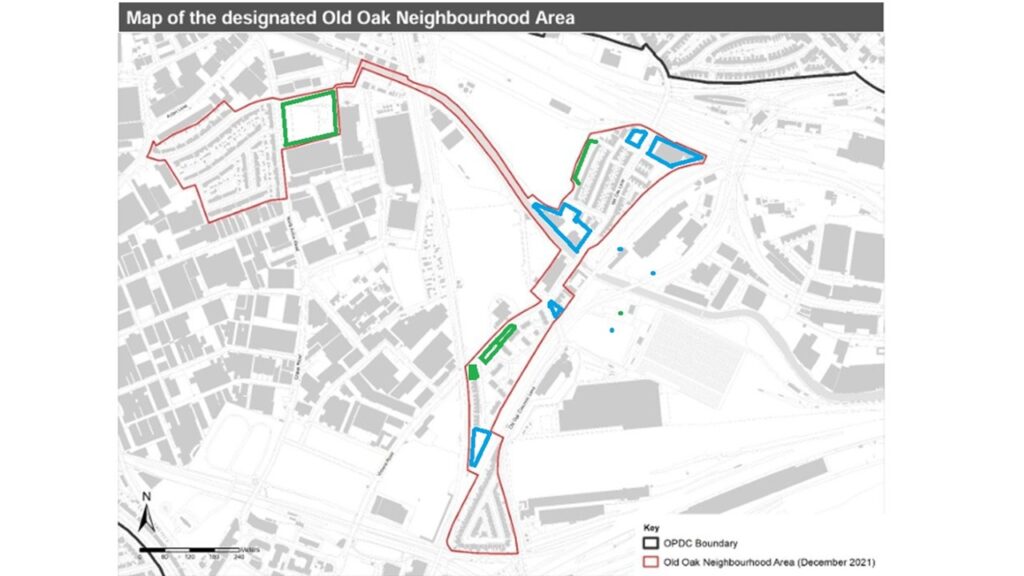 The Forum’s open meeting on July 2nd agreed to the start of an two month public consultation from July 8th to September… Read more »
- As notified to all members in our June newsletter, we will be holding an open meeting of the Forum and the St… Read more »
- Hammersmith Bridge - closed to carsAccording to a BBC news item on 1 July, Hammersmith Bridge will remain closed to vehicles indefinitely… Read more »

Most Popular Articles This Week


 ©2026, The Hammersmith Society | Privacy | Contact | Join | @ Subscribe | ⓘ
Campaigning for over sixty years